Tibetan Terrier
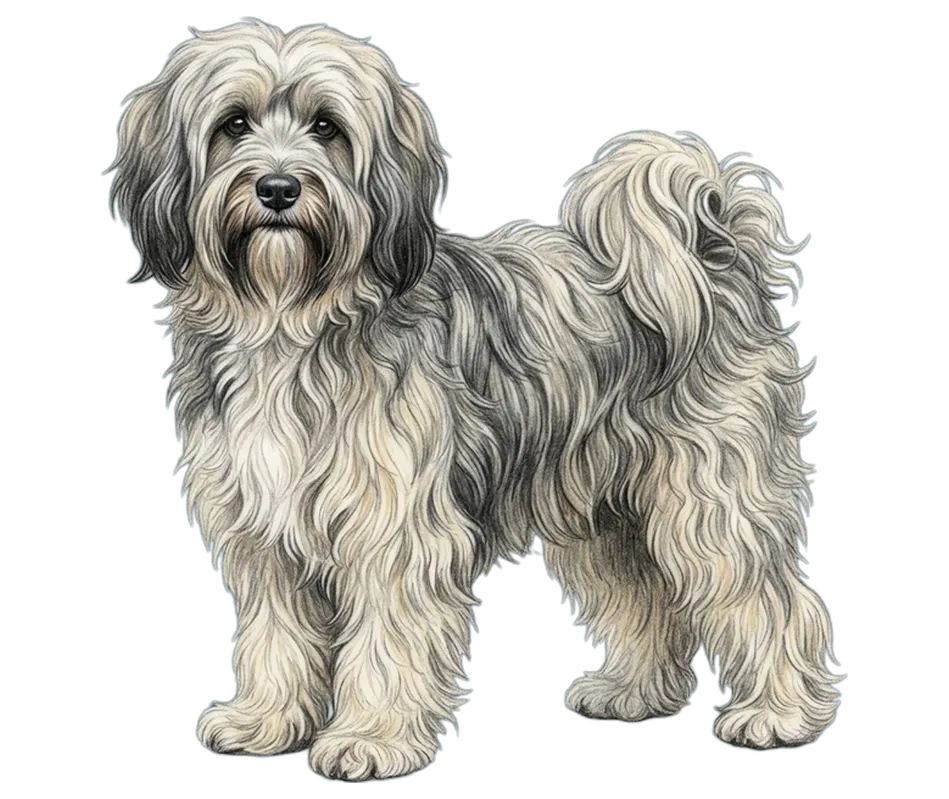
The Tibetan Terrier is a medium-sized companion and watchdog bred for centuries in Buddhist monasteries of the Himalayas — not a true terrier at all, but a devoted, clever, and sensitive family dog wrapped in a profuse double coat and standing on distinctive broad, snowshoe-like feet built for mountain snow. Living well with one means committing to steady coat care, daily exercise that satisfies an agile and alert mind, and patient, consistent guidance for a dog that thinks for itself rather than following on autopilot. Raised with early socialization and a predictable routine, a Tibetan Terrier becomes a warm, watchful shadow that is easy to love.
Daily-care planners
House-training
Moderate to house-trainHouse-training a Tibetan Terrier calls for patience matched to its independent nature: this is a smart dog that learns quickly once it sees the value in a routine, but it is not a breed that simply falls in line for its own sake. Frequent, calm trips outside after meals, naps, and play, paired with warm praise timed to the moment, build the habit far faster than any correction, which tends to backfire with a dog this sensitive. A predictable schedule and close supervision during the early weeks make the difference.
Walks
Moderate exercise needsTibetan Terriers were bred to move — their broad, flat, snowshoe-like feet evolved for covering snowy mountain ground alongside their people, and they carry real stamina as a result. Aim for at least an hour of daily activity split across walks and play, and let their agility shine with games, hikes, or canine sports that also give their clever mind something to do. Their profuse coat handles cold well but can trap heat, so shift exercise to cooler parts of the day and offer water breaks in warm weather. Because they are independent thinkers, loose-leash walking and reliable recall take patient, consistent practice rather than a few quick sessions, and a harness paired with positive reinforcement helps turn walks into calm, cooperative time together.
Plan walksTemperament
For centuries, Tibetan Terriers lived alongside monks in Himalayan monasteries, valued as companions and alert watchdogs rather than working hunters — despite the misleading "terrier" in their name. That history shaped a breed that is affectionate and highly attuned to its people, often described as sensitive and perceptive of household moods, while remaining naturally reserved and watchful around strangers until properly introduced.
Intelligent and independent-minded, Tibetan Terriers enjoy figuring things out on their own terms; they respond best to patient, reward-based training and lose interest quickly under repetition or harsh correction. This same independence, paired with a strong bond to their family, means they can be prone to worry when routines change abruptly or they are left alone for long stretches, so building comfort with alone time gradually is worthwhile. They generally get along well with other dogs and are gentle, sturdy playmates for children, though as with any dog, young children and pets should be introduced thoughtfully and supervised.
Their dense double coat and snowshoe-like feet reflect a dog built for cold mountain climates, so they handle chilly weather easily but need shade, water, and rest during hot or humid conditions. Bred to be active companions on long monastery walks, they carry real physical and mental energy that benefits from daily exercise and engaging routines rather than a sedentary lifestyle.
What life with a Tibetan Terrier asks of you
Grooming & coat
- Grooming effort
- High grooming
- Shedding
- Minimal shedding
- Coat
- Long coat
Exercise & enrichment
- Daily exercise
- Moderate exercise needs
- Mental stimulation
- Moderate mental stimulation
- Trainability
- Independent thinker
Temperament & sociability
- With people
- Politely friendly
- With dogs
- Tolerant of other dogs
- With kids
- Gentle with children (always supervise)
- Barking / noise
- Moderately vocal
- Chase instinct
- Low prey drive
- Time alone
- Moderate separation-anxiety risk
Home & climate fit
- Hot weather
- Moderate heat tolerance
- Cold weather
- High cold tolerance
- House-training
- Moderate to house-train