Silky Terrier
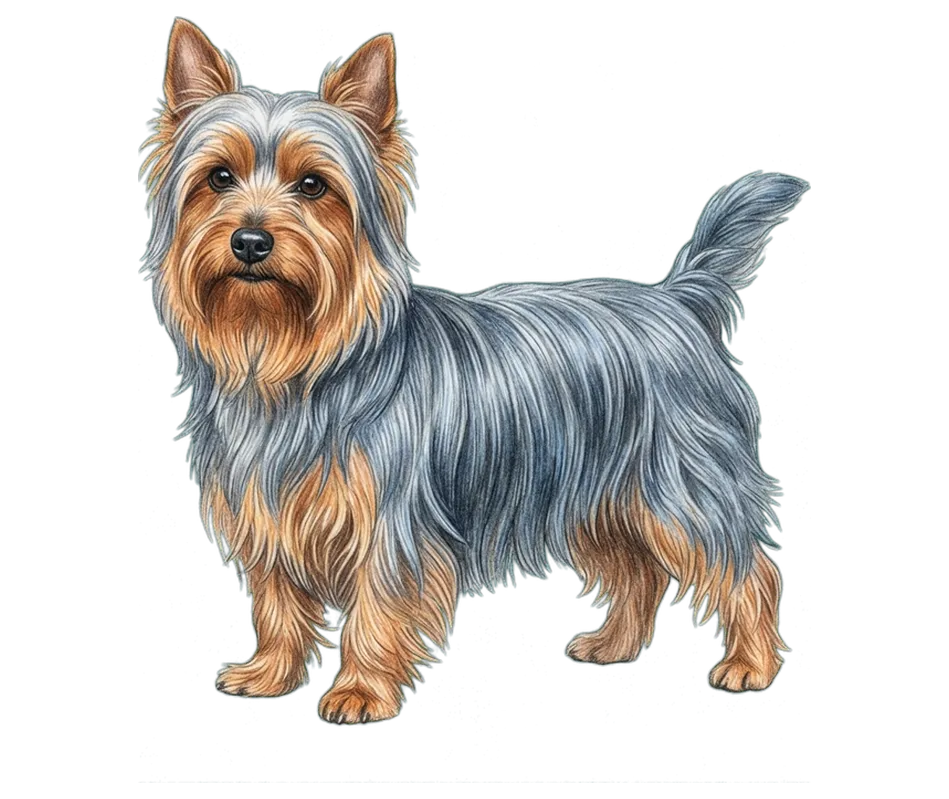
The Silky Terrier was developed in and around Sydney, Australia, by crossing Yorkshire Terriers with native Australian Terriers to create a small, keen ratter that could also be a devoted house companion. That heritage shows up today as a toy-sized dog with a full terrier personality — alert, curious, and quick to investigate anything that moves — wrapped in a glossy, low-shedding blue-and-tan coat. Living well with one means honoring the working terrier underneath the lap-sized frame: secure fencing and a leash for that keen prey drive, regular brushing for the silky coat, and confident, consistent training that respects an independent mind rather than fighting it.
Daily-care planners
House-training
Moderate to house-trainHouse-training a Silky Terrier calls for real patience: like many toy breeds, their small bladders and quick metabolisms mean frequent opportunities to succeed matter more than any single correction. A consistent schedule — outside first thing, after meals, after naps, and after play — paired with immediate, warm praise builds the habit fastest, and a covered crate or pen for supervised downtime helps prevent unnoticed accidents indoors while the routine sets in.
Walks
Moderate exercise needsWalking a Silky Terrier is less about distance and more about management: their keen nose and hunting instinct mean a squirrel, bird, or blowing leaf can trigger an enthusiastic lunge, so a secure harness (easier on the throat than a collar, and kinder for a breed that can be prone to tracheal irritation) and a leash held with intention are non-negotiable, even in a fenced yard. Their light coat and small body mean they chill quickly, so a sweater or coat is worth carrying in cool weather, and hot pavement deserves the same caution as it would for any small-footed dog. A brisk daily walk plus a little off-leash play in a securely fenced space keeps both body and busy mind satisfied.
Plan walksTemperament
The Silky Terrier's ancestors were working ratters on the outskirts of Sydney, and that job shaped a dog that is far more terrier than lapdog in spirit, even at eight or nine pounds. Owners quickly discover a companion that is curious about every rustle in the grass, quick to investigate, and unmistakably confident for its size — a dog that carries itself, and often barks, like something much larger.
That confidence pairs with an independent streak typical of terriers: Silky Terriers are intelligent and capable learners, but they think for themselves rather than deferring automatically, so training goes best with short, upbeat, reward-based sessions and patient consistency rather than repetition or force. Early socialization helps channel their natural alertness into a good watchdog instinct rather than reflexive barking at every passerby, and thoughtful introductions to other dogs and small pets matter given their hunting heritage and prey drive.
At home they are deeply affectionate and enjoy being near their people, which means they can develop real attachment and benefit from a gradual approach to alone time rather than being left for long stretches without preparation. Their exercise needs are moderate for the household — a daily walk plus some active play satisfies most of their energy — but their minds stay busiest with novelty, so puzzle feeders, short training games, and supervised exploration keep a Silky Terrier content. Their small size and assertive personality mean play with young children is best supervised on both sides: gentle handling protects the dog, and calm play protects everyone's fun.
What life with a Silky Terrier asks of you
Grooming & coat
- Grooming effort
- Moderate grooming
- Shedding
- Minimal shedding
- Coat
- Long coat
Exercise & enrichment
- Daily exercise
- Moderate exercise needs
- Mental stimulation
- Moderate mental stimulation
- Trainability
- Independent thinker
Temperament & sociability
- With people
- Enthusiastically friendly
- With dogs
- Selective with other dogs
- With kids
- Good with considerate children (supervise)
- Barking / noise
- Vocal
- Chase instinct
- High prey drive
- Time alone
- Moderate separation-anxiety risk
Home & climate fit
- Hot weather
- Moderate heat tolerance
- Cold weather
- Low cold tolerance
- House-training
- Moderate to house-train