Schipperke
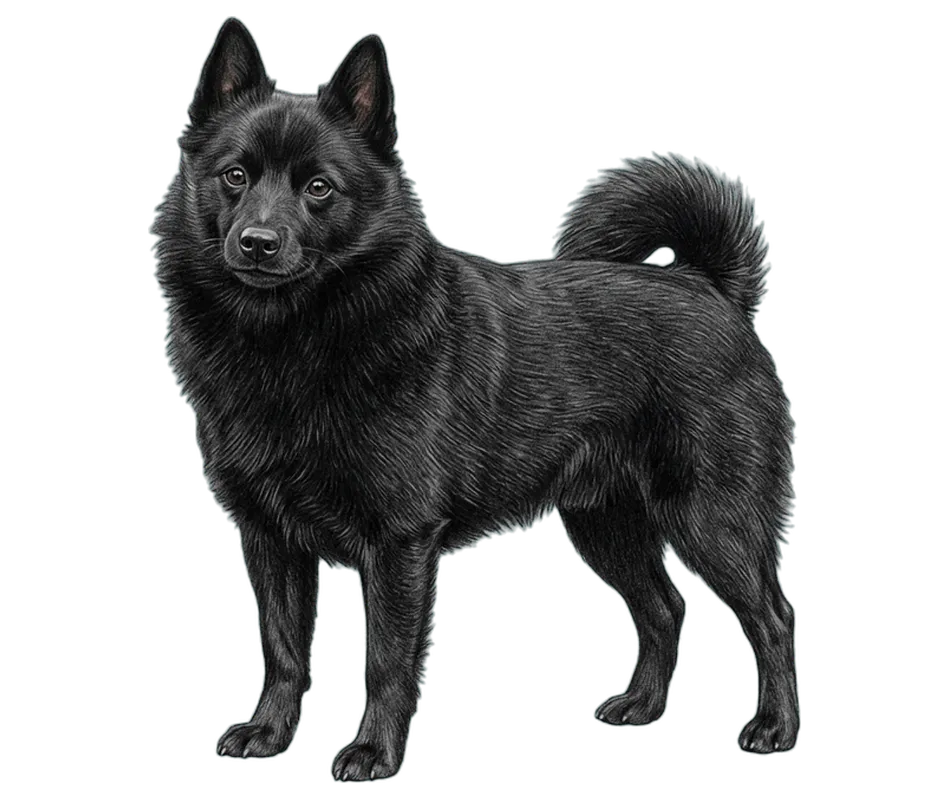
The Schipperke — Belgium's 'little captain' — is a small, fox-faced spitz bred to guard barges and homes and to hunt vermin along the canals of Flanders, and that heritage still shows in a curious, confident, endlessly alert companion. Living well with one means channeling real intelligence and independence into daily enrichment and consistent, reward-based training, brushing a dense double coat through its seasonal blow-outs, and giving an outlet for a strong prey drive and a watchdog's readiness to speak up. Patient guidance and engaged company bring out the loyal, entertaining little dog this breed is meant to be.
Daily-care planners
House-training
Moderate to house-trainHouse-training a Schipperke takes real consistency: this is a smart, independent breed that learns quickly once it sees the point of a routine, but that same independence means it won't just fall in line out of eagerness to please. A predictable schedule — frequent trips outside after meals, naps, and play, calm supervision indoors, and warm praise for every success outside — builds the habit steadily. Crate training and closing off unsupervised access to the house in the early weeks help prevent sneaky accidents that a curious, small, agile puppy is well-equipped to find.
Walks
Moderate exercise needsThe Schipperke's main walking challenge is less about distance and more about impulse control: that strong prey drive means a rustle in the bushes or a fast-moving squirrel can turn a calm walk into an intense pursuit, so a secure harness, a sturdy leash, and early recall and loose-leash training matter more than mileage. Daily walks paired with sniffing time and a bit of training along the way satisfy this breed's need for both exercise and mental engagement — a purely physical walk without any novelty tends to leave a Schipperke understimulated. Because they are naturally alert and vocal, expect some barking at passersby, other dogs, or unfamiliar sounds, and use those moments as calm training opportunities. Their thick coat handles cold well, but keep an eye on warm, humid days and offer water and shade as needed.
Plan walksTemperament
Developed in Belgium to guard canal barges, homes, and shops while keeping them free of rats, the Schipperke is a small dog with an outsized sense of purpose. That working history shaped a breed that is alert, curious, and quick to investigate anything new — there is rarely a dull moment living with one. They bond closely with their families and enjoy being part of daily life, but their watchdog instincts make them naturally reserved and vocal with strangers and unfamiliar sounds, so early, positive socialization helps them settle into confident good manners rather than constant alarm-barking.
Schipperkes are intelligent and independent-minded rather than eager followers, which makes patient, reward-based training essential; harsh corrections tend to make this small dog dig in rather than comply. Daily mental stimulation — training games, puzzle feeders, novel sniffing walks — matters as much as physical exercise, since an under-stimulated Schipperke is prone to mischief: digging, chewing, or working out how to slip past a fence. Their rodent-hunting heritage also gives them a genuinely strong prey drive, so small animals and unfenced spaces call for supervision and secure leashes and boundaries.
With other dogs they tend to be selective, often getting along well with companions they know while needing thoughtful, supervised introductions to new dogs. They are generally good with the children and household routines they grow up with, though their small size means play with young children benefits from supervision so the dog isn't accidentally handled too roughly. Their dense double coat sheds seasonally rather than year-round, and while it tolerates cold well, weekly brushing (more during a seasonal blow-out) keeps it healthy and comfortable.
What life with a Schipperke asks of you
Grooming & coat
- Grooming effort
- Moderate grooming
- Shedding
- Seasonal shedding
- Coat
- Medium coat
Exercise & enrichment
- Daily exercise
- Moderate exercise needs
- Mental stimulation
- High mental stimulation
- Trainability
- Independent thinker
Temperament & sociability
- With people
- Politely friendly
- With dogs
- Selective with other dogs
- With kids
- Good with considerate children (supervise)
- Barking / noise
- Vocal
- Chase instinct
- High prey drive
- Time alone
- Moderate separation-anxiety risk
Home & climate fit
- Hot weather
- Moderate heat tolerance
- Cold weather
- High cold tolerance
- House-training
- Moderate to house-train