Leonberger
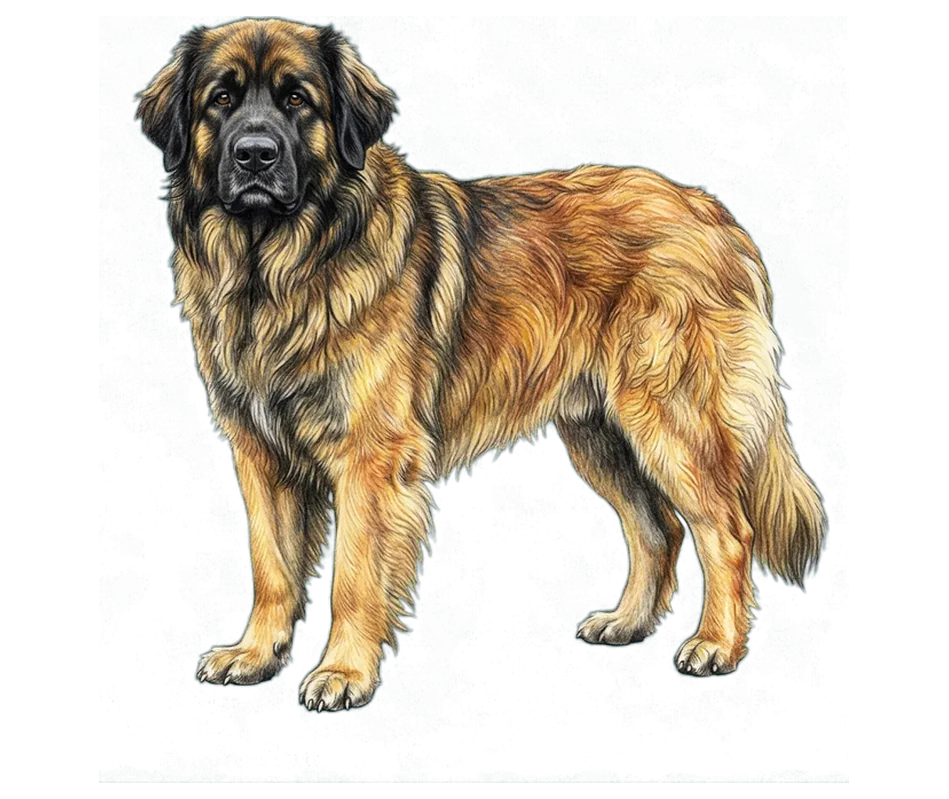
The Leonberger is a giant German breed developed in the 1800s to resemble a lion in tribute to the town of Leonberg, but the temperament behind that dramatic mane is calm, patient, and deeply devoted to family. Bred with input from Newfoundlands and Saint Bernards, Leonbergers carry a working history as farm and water-rescue companions, which shows today in a gentle, self-assured dog that wants to be close to its people rather than off on its own. Living well with one means committing to a heavy, weather-resistant double coat that needs regular brushing, growth-appropriate exercise while a giant frame matures, and the lifelong joint and general health care that come with the territory of a very large, long-lived-for-its-size breed. Early socialization and calm, consistent guidance help this gentle giant grow into the steady, affectionate companion it is bred to be.
Daily-care planners
House-training
Moderate to house-trainHouse-training a Leonberger is usually manageable, since they are eager to please and respond well to a calm, predictable routine. As with other giant breeds, physical maturity comes slowly, so patience matters more than correction: frequent, calm trips outside after meals, naps, and play, paired with warm praise for every success, build the habit steadily. A consistent schedule and close supervision in the early months carry the process home.
Walks
High exercise needsThe Leonberger's main walking consideration is protecting a large, still-developing frame rather than covering serious distance. Daily exercise keeps this giant breed fit and engaged, but growth plates stay open well into the first two years, so favor multiple shorter, low-impact outings over one long or high-impact session while a puppy is growing. Their heavy coat handles cool weather well, but heat calls for exercising in the cooler parts of the day and watching for heavy panting as a cue to rest and offer water. Many Leonbergers also enjoy swimming, a nod to their water-rescue heritage and a joint-friendly way to build stamina. Comfortable harness use and early leash manners are well worth the investment, since a calm, well-mannered walk is far easier to establish with a growing puppy than with a fully grown adult that can weigh well over 100 pounds.
Plan walksTemperament
The Leonberger was created in the German town of Leonberg in the mid-1800s, bred with Newfoundland, Saint Bernard, and other large mountain-dog lines to produce an imposing but even-tempered companion. That working ancestry shows today in a dog that is self-assured without being pushy, and affectionate without being demanding — a Leonberger is happiest in the middle of family life, often following its people from room to room, content simply to be near them.
Leonbergers are generally friendly and welcoming toward people and other dogs, a trait that reflects generations of careful breeding for stability and sociability rather than suspicion. They are intelligent and eager to please, which makes them responsive to reward-based training, though their size makes early manners especially important — a well-mannered adult Leonberger is a joy to live with, while an untrained one can be genuinely difficult to manage simply due to sheer size and strength. Patient, consistent guidance from puppyhood pays off for the whole household.
Despite their working drive, Leonbergers are not high-strung; they settle well indoors once their exercise needs are met and tend to be low vocalizers, reserving barking for something that actually warrants attention. Their heavy double coat sheds substantially and needs regular brushing to stay comfortable and mat-free, and while it makes them well suited to cool and cold weather, it also means warm, humid conditions call for extra care and access to shade and water. They are typically gentle and watchful with the children they are raised with, though their size alone means play with small children benefits from supervision so no one is accidentally bowled over.
What life with a Leonberger asks of you
Grooming & coat
- Grooming effort
- High grooming
- Shedding
- Heavy shedding
- Coat
- Long coat
Exercise & enrichment
- Daily exercise
- High exercise needs
- Mental stimulation
- Moderate mental stimulation
- Trainability
- Eager to please
Temperament & sociability
- With people
- Enthusiastically friendly
- With dogs
- Sociable with other dogs
- With kids
- Gentle with children (always supervise)
- Barking / noise
- Quiet
- Chase instinct
- Low prey drive
- Time alone
- Moderate separation-anxiety risk
Home & climate fit
- Hot weather
- Low heat tolerance
- Cold weather
- High cold tolerance
- House-training
- Moderate to house-train