Puppy teething and the chewing phase — timeline and safe chew choices
Last reviewed: 2026-07-11 · General information only.
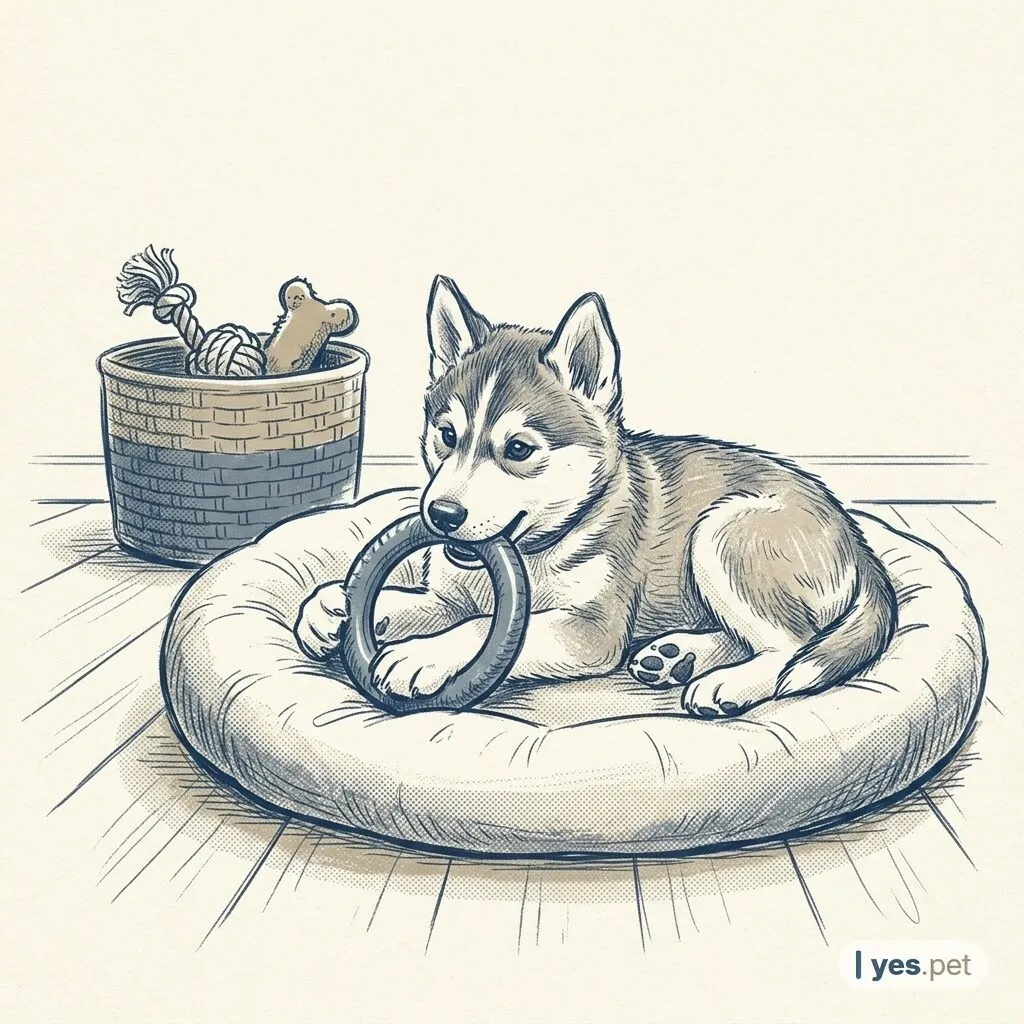
Most puppies finish teething by about six months of age, when their baby teeth have fallen out and their adult teeth have come in. Teething starts at around three weeks and comes with sore gums and a strong urge to chew — which is completely normal. The job is not to stop the chewing but to redirect it to safe outlets. This is general orientation only; your veterinarian knows your puppy best.
When do puppies stop teething?
Teething runs from about three weeks to roughly six months of age, moving from a set of baby teeth to a full set of adult teeth.
Dogs have 28 deciduous teeth and up to 42 permanent teeth. [src]
Puppies begin teething at around three weeks, and by approximately six weeks, all their deciduous teeth will have erupted. [src]
At around 12 weeks, the deciduous teeth begin to fall out, and the permanent teeth begin to erupt. [src]
Normally, by six months of age, all permanent teeth have erupted, and all deciduous teeth have fallen out. [src]
Why is my puppy chewing everything?
Chewing during this stage is normal and needed, not naughtiness — it soothes sore gums and is part of how a puppy explores the world.
Chewing also seems to alleviate what is assumed to be discomfort associated with the teething process. [src]
The aim is to channel that urge rather than punish it. Give plenty of appropriate outlets and puppy-proof the things you would rather keep intact.
Puppies are naturally energetic and curious, so try to redirect that energy elsewhere by including lots of exercise and training. [src]
Excessive chewing behavior seems to subside around 18 months of age but will continue to some degree. [src]
Which chews are safe — and which should I avoid?
A good teething chew has a little give and is sized so your puppy cannot swallow it — and every chew session is supervised.
When it comes to good, safe chew toys, you generally want to avoid anything extremely hard, such as nylon, bones or antlers. [src]
Instead, you want to choose chew toys that have a little bend or that you can indent with a fingernail. [src]
Make sure your puppy is supervised while chewing on toys. [src]
Any item your puppy chews could become dangerous if they bite off parts of it and swallow it. [src]
When should I talk to a vet?
This is general information, not a dental exam. The main thing to watch for is a baby tooth that has not made way for the adult tooth.
A deciduous tooth that is still present when the permanent tooth erupts is referred to as a persistent tooth. [src]
If you notice a persistent tooth in your puppy's mouth, schedule an appointment with your veterinarian as soon as possible. [src]
It is more common in some dogs than others, so smaller and flat-faced breeds are worth an extra check.
Persistent teeth are also more common in small breed dogs and in brachycephalic breeds (dogs with short noses or flat faces). [src]
Rough puppy teething timeline (general orientation — every puppy differs)
| Age | What is happening |
|---|---|
| ~3–6 weeks | 28 baby (deciduous) teeth come in |
| ~12 weeks | Baby teeth start to fall out; adult teeth begin to erupt |
| ~6 months | Around 42 adult teeth are in; baby teeth have gone |
| ~18 months | The heaviest chewing urge eases (but never fully stops) |
Key takeaway
Teething runs from about three weeks to roughly six months, as 28 baby teeth give way to about 42 adult teeth; the chewing that comes with it is a normal need, so redirect it to safe, slightly bendable chews plus exercise and training rather than punishing it — and see your veterinarian for a baby tooth that has not fallen out.
Turn this advice into a schedule →
Related guides
Frequently asked questions
When do puppies stop teething?
Most puppies finish teething by about six months of age, when all the adult teeth (around 42) have come in and the baby teeth have fallen out. Teething starts at around three weeks. The strongest urge to chew tends to ease around 18 months but never fully disappears, so keep offering safe chews.
How do I stop my puppy chewing everything?
You cannot — and should not — stop chewing entirely, because it is a normal need that also soothes sore gums during teething. Redirect it instead: offer plenty of safe chew toys, add exercise and training to burn energy, and puppy-proof your home. Choose chews with a little give, avoid rock-hard ones, and supervise.
Is this a substitute for veterinary advice?
No. yes.pet provides general information only and is not a substitute for professional veterinary advice, diagnosis or treatment. Always consult your veterinarian.
Sources
- Teeth, Teething and Chewing in Puppies (opens in a new tab) — VCA Animal Hospitals
- Dos and Don'ts of Puppy Teething Toys (opens in a new tab) — VCA Animal Hospitals
- Persistent Deciduous Teeth (Baby Teeth) in Dogs (opens in a new tab) — VCA Animal Hospitals