How to keep a dog in an apartment: happy without a yard
Last reviewed: 2026-07-09 · General information only.
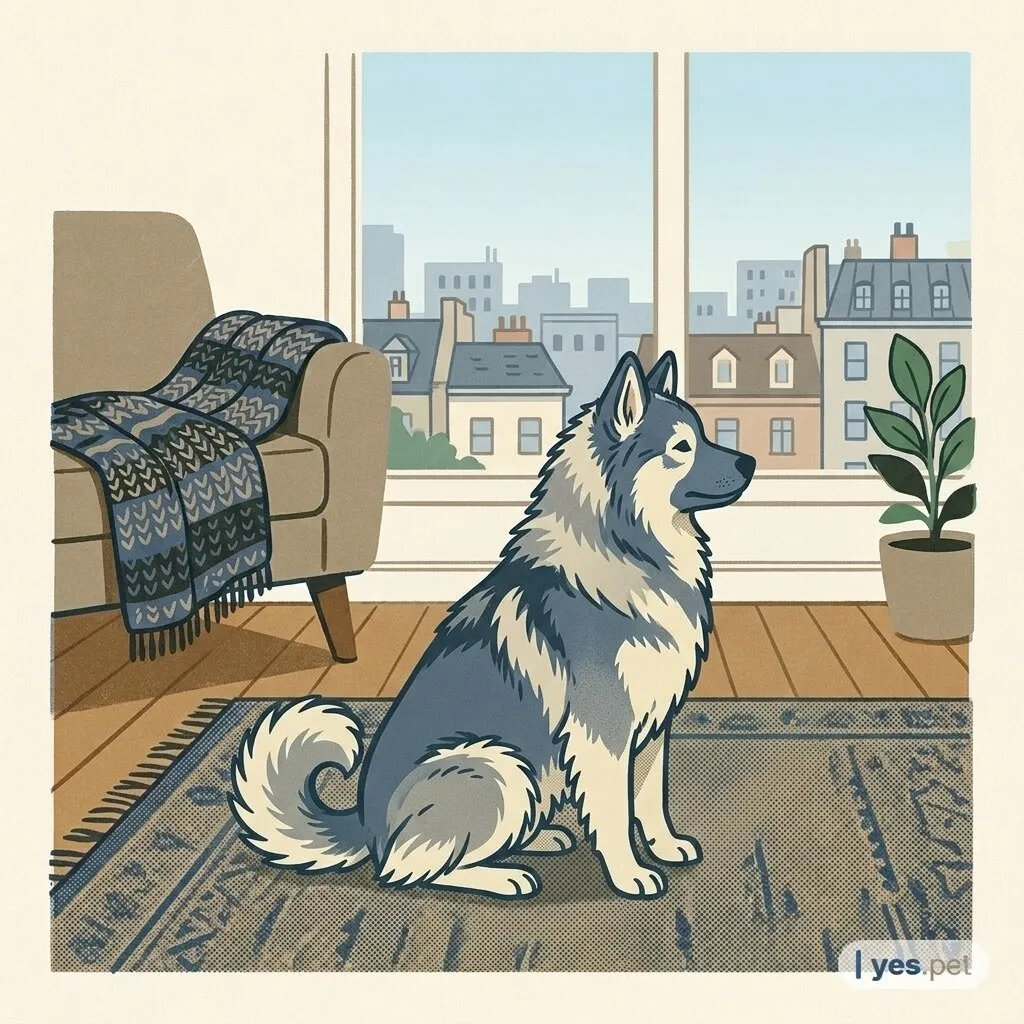
Dogs can absolutely thrive in an apartment. The three things that matter most are a consistent potty routine, enough daily exercise topped up with indoor mental enrichment, and helping your dog settle calmly around noise and neighbours. Space matters far less than your dog's energy level and your daily routine. This is general orientation only — your veterinarian or a qualified trainer knows your dog best.
Can a dog be happy living in an apartment?
Yes — plenty of dogs are perfectly content in apartments. What matters most is a dog's energy level and a predictable routine, not the number of square metres. Some large but low-energy breeds settle into apartment life happily, while a small, high-drive dog may need a lot more planned activity.
The American Kennel Club notes that smaller breeds "adapt well in confined spaces, and they don't need a tremendous amount of exercise to keep them happy and healthy," and adds that "there are many dog breeds that make good choices for apartments, some of which you may not expect." [src]
So the real question isn't "is my place big enough?" but "can I meet this dog's exercise and enrichment needs from here?" For most dogs, with a steady routine, the answer is yes.
How do I potty train a dog without a yard?
Without a door to the garden, consistency does the heavy lifting. Take your dog out at the same regular times — first thing in the morning, after meals, after naps and play, and last thing at night — and reward them the moment they go in the right place outside.
Build in time for the journey down: if you're on a high floor, start heading for the lift or stairs a little early so you're outside before your dog can't hold it. An indoor pad or a designated potty spot can be a temporary bridge for very young puppies or emergencies, but the goal is outside on a schedule.
One safety note for young puppies: communal apartment grounds and shared lawns can carry infections such as parvovirus, so puppies who haven't finished their vaccination course should use an indoor pad until your veterinarian confirms it's safe to toilet in shared outdoor areas.
A written, repeatable timetable is the single biggest help — the free puppy potty schedule can build one around your dog's age and breed so the whole household follows the same routine.
How do I keep an apartment dog exercised and entertained?
Living in an apartment does not lower a dog's need for daily exercise — it just means you plan the walks rather than open a back door. Keep the daily walks going (the free walk calculator gives a length for your dog's age and breed), and top them up with indoor mental enrichment, especially on short or rainy days.
The ASPCA suggests that "making mealtime fun, challenging and interactive is a great way to satisfy your dog's innate instincts and curiosities" — food puzzles and slow feeders are an easy way to turn a meal into a brain workout. [src]
The ASPCA also notes that "keeping the inside of your home stimulating and fun will help decrease boredom and decrease potential behavioral issues." [src]
Good indoor options include scent or "find it" games, food puzzles, short training sessions, gentle tug, hide-and-seek, and indoor fetch with a soft toy. A short session of sniffing or problem-solving can be surprisingly tiring — a great supplement to the daily walk, though not a replacement for the physical exercise a walk provides.
How do I stop barking and settle an apartment dog left alone?
Apartments come with close neighbours and thin walls, so a calm dog is a happy neighbour. Give your dog a cosy, defined safe space — a crate or a bed in a quiet corner — where they can settle, and build up alone-time gradually so short absences feel normal.
Leaving a stuffed food toy as you head out gives your dog something good to focus on, and a little background sound can soften sudden hallway or street noises. Keep departures and arrivals low-key rather than dramatic.
If your dog barks persistently when alone, seems genuinely distressed by being left, or panics at everyday building noises, that's worth help rather than more management on your own — see the note below.
When should I get help from a vet or trainer?
This is general information, not a behaviour diagnosis. Reach out to your veterinarian or a qualified, reward-based trainer or behaviourist if your dog shows signs of real distress when left alone, barks or howls persistently, isn't making progress with house-training, or if any sudden change in toileting or behaviour appears.
Early help is easier than undoing an established habit, and your vet can rule out a medical cause before it's treated as a behaviour problem.
Sample daily schedule for an apartment dog (general orientation — adjust to your dog)
| Time of day | What it covers |
|---|---|
| Morning | Potty trip first, then a proper walk |
| Midday | Short potty break + a food-puzzle meal |
| Afternoon | A training or sniff game indoors |
| Evening | Second walk, then a calm settle in the safe space |
Key takeaway
Apartments suit plenty of dogs: keep a steady potty routine, protect the daily walks, add indoor enrichment on short days, and give a calm safe space — match it all to your dog's energy, and ask a vet or trainer if barking or house-training isn't improving.
Turn this advice into a schedule →
Related guides
Frequently asked questions
Can dogs live happily in apartments?
Yes, many do. What matters most is your dog's energy level and a consistent routine, more than the size of your home. Some larger, calmer dogs settle into apartment life well, while high-energy dogs need more planned exercise and enrichment.
How do I potty train a dog in an apartment?
Keep a consistent schedule, head outside at regular times — and start early to allow for the lift or stairs — then reward going in the right spot outside. Use indoor pads only as a temporary bridge. A predictable routine is the biggest help.
Do apartment dogs need less exercise?
No. Living in an apartment doesn't lower a dog's need for daily walks and activity; it just means you plan them. On short or rainy days, top up with indoor mental enrichment like food puzzles and sniff games.
Is this a substitute for veterinary advice?
No. yes.pet provides general information only and is not a substitute for professional veterinary advice, diagnosis or treatment. Always consult your veterinarian.
Sources
- Best Dogs For Apartments (opens in a new tab) — American Kennel Club (AKC)
- Canine DIY Enrichment (opens in a new tab) — ASPCA