Wirehaired Pointing Griffon
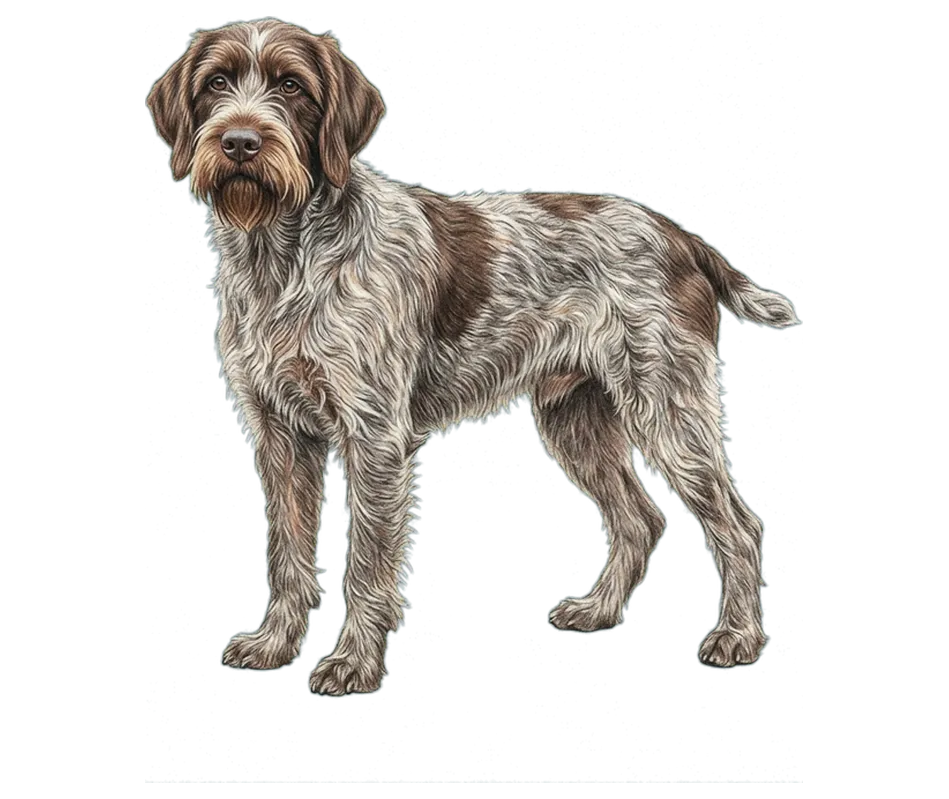
The Wirehaired Pointing Griffon — often simply called the Griffon — was developed in the marshes of the Netherlands and France by Eduard Korthals to be a versatile, all-weather hunting companion, and that heritage still shows in a dog that is eager, quick-witted, and deeply devoted to its people. The breed's harsh, low-shedding double coat protects it through cold water and heavy cover, but the same coat needs regular hand-stripping to stay healthy, and its working drive means a Griffon is happiest with a real daily job — hunting, scent work, or simply a long, purposeful outing — alongside close family life indoors. With patient training, a consistent routine, and attention to joint and eye health as it ages, the Griffon settles into the calm, affectionate companion the breed is known for.
Daily-care planners
House-training
Moderate to house-trainHouse-training a Wirehaired Pointing Griffon is usually manageable, since the breed's eagerness to please and sharp memory make routines click quickly. A predictable schedule — frequent trips outside after meals, naps, and play, paired with calm praise for every success — builds the habit faster than any correction, and crate training helps in the early months while bladder control matures. Consistency matters more than intensity: a Griffon that is set up to succeed rarely has many accidents to correct.
Walks
High exercise needsGriffon walks need to satisfy both body and mind: a leisurely stroll rarely burns off this breed's working energy, so plan for brisk, varied outings — or better yet, activities like scent work, retrieving games, or actual field work — alongside the daily walk. Their strong nose and prey drive mean a solid recall and a secure leash or long-line are worthwhile around wildlife and small animals, since a scent trail can override even a well-trained dog's attention. Because the breed was built for stamina rather than speed, consistent daily activity matters more than any single long outing, and a tired, mentally engaged Griffon is a calm, content one at home.
Plan walksTemperament
The Wirehaired Pointing Griffon was developed in the late nineteenth century by Eduard Korthals, who wanted a single all-purpose gundog that could point, retrieve, and work happily from icy water to dense briar in any weather — a heritage that produced a dog of remarkable versatility and grit. That working history shows up at home as a bright, alert companion that stays engaged with its people and rarely seems to run out of curiosity.
Griffons are typically eager to please and take well to reward-based training, though their intelligence means repetitive drilling bores them quickly; short, varied sessions that feel like a game keep a Griffon motivated. Early, consistent guidance channels their sharp mind and strong retrieving instincts into good household manners rather than into chewed furniture or overzealous chasing.
This is a genuinely active, high-drive breed — daily aerobic exercise plus a job for the brain, such as scent games, retrieving, agility, or actual hunting, keeps a Griffon content; without it, boredom tends to show up as barking, digging, or restlessness. Their harsh, wiry double coat sheds relatively little but needs regular brushing and periodic hand-stripping to stay clean and functional, and the same coat that protects them in cold water also means grooming is not optional.
Griffons are warm and affectionate with their family and generally patient with children raised alongside them, though supervision with very young children is still wise given their exuberance. Their strong hunting heritage gives them real prey drive toward small, fast-moving animals, so introductions to cats and small pets benefit from careful, gradual management; with other dogs they are usually sociable when properly socialized.
What life with a Wirehaired Pointing Griffon asks of you
Grooming & coat
- Grooming effort
- High grooming
- Shedding
- Minimal shedding
- Coat
- Medium coat
Exercise & enrichment
- Daily exercise
- High exercise needs
- Mental stimulation
- High mental stimulation
- Trainability
- Eager to please
Temperament & sociability
- With people
- Enthusiastically friendly
- With dogs
- Tolerant of other dogs
- With kids
- Gentle with children (always supervise)
- Barking / noise
- Quiet
- Chase instinct
- High prey drive
- Time alone
- Moderate separation-anxiety risk
Home & climate fit
- Hot weather
- Moderate heat tolerance
- Cold weather
- High cold tolerance
- House-training
- Moderate to house-train