Wire Fox Terrier
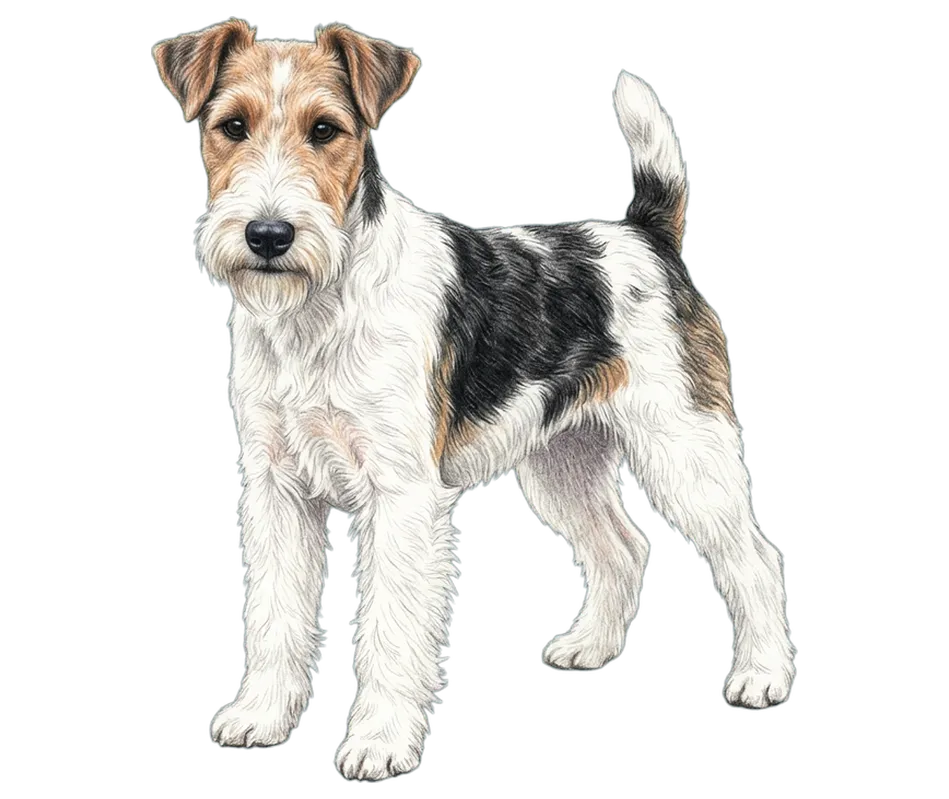
The Wire Fox Terrier is a small, wiry-coated working terrier bred in England to bolt foxes from their dens — a job that shaped a dog that is confident, alert, and endlessly game, packed into a compact, athletic frame. Living well with one means embracing a high-energy, quick-thinking companion that needs real daily exercise and mental work, a wiry coat that benefits from regular brushing and occasional hand-stripping, and structured introductions to other animals given its strong prey drive. Consistent, reward-based training and an outlet for that famous terrier curiosity bring out the cheerful, devoted companion this breed is meant to be.
Daily-care planners
House-training
Moderate to house-trainHouse-training a Wire Fox Terrier generally goes smoothly once a predictable routine is in place, since this intelligent breed picks up patterns quickly when the payoff is clear. Frequent, calm trips outside after meals, naps, and play, paired with warm praise for every success, work far better than corrections with a dog this independent-minded — scolding can just make a clever terrier sneakier about hiding accidents rather than more reliable. Consistency and close supervision during the early weeks make the difference.
Walks
High exercise needsThe Wire Fox Terrier's walking challenge is less about distance and more about focus: a strong prey drive means small movements — squirrels, birds, other small animals — can trigger sudden pulling, so a secure harness and solid leash manners started early are well worth the investment. This breed needs real daily exercise, ideally with a mix of brisk walks, play, and mentally engaging activities like scent work or short training games, since a bored, under-exercised terrier tends to find its own entertainment around the house or yard. At home, secure fencing matters too, as this breed's talent for digging and squeezing through gaps was bred in on purpose. A predictable daily routine that covers both body and mind keeps a Wire Fox Terrier content and easy to live with.
Plan walksTemperament
The Wire Fox Terrier was developed in England to work alongside foxhunts, bolting foxes from underground dens with speed, nerve, and independent judgment — a heritage that shaped a dog built to think for itself in the moment rather than wait for instruction. At home this shows up as a lively, self-assured companion that is affectionate and often quite funny, but who also expects engagement rather than passive company.
That independent, decision-making streak means training rewards patience and consistency more than repetition alone: short, motivating, reward-based sessions play to this breed's intelligence and quick problem-solving far better than corrections do. Early, positive socialization matters, since a strong prey drive and terrier scrappiness can make some individuals selective with other dogs and quick to chase small animals, so structured introductions and secure, supervised outdoor space are part of responsible ownership. They are generally friendly and enthusiastic with people, and can do well with children they are raised alongside, though their small size and high activity level mean play with very young children benefits from supervision on both sides.
Wire Fox Terriers carry real working energy — they were built for a full day of physical and mental effort, not a sedentary lifestyle. Daily exercise, puzzle toys, and training or scent games keep both body and mind satisfied; without that outlet, boredom tends to surface as barking or digging. Their wiry double coat sheds only lightly but benefits from regular brushing, and owners keeping the classic terrier look will want periodic hand-stripping from a groomer.
What life with a Wire Fox Terrier asks of you
Grooming & coat
- Grooming effort
- Moderate grooming
- Shedding
- Minimal shedding
- Coat
- Medium coat
Exercise & enrichment
- Daily exercise
- High exercise needs
- Mental stimulation
- High mental stimulation
- Trainability
- Independent thinker
Temperament & sociability
- With people
- Enthusiastically friendly
- With dogs
- Selective with other dogs
- With kids
- Good with considerate children (supervise)
- Barking / noise
- Vocal
- Chase instinct
- High prey drive
- Time alone
- Moderate separation-anxiety risk
Home & climate fit
- Hot weather
- Moderate heat tolerance
- Cold weather
- Moderate cold tolerance
- House-training
- Moderate to house-train