Whippet
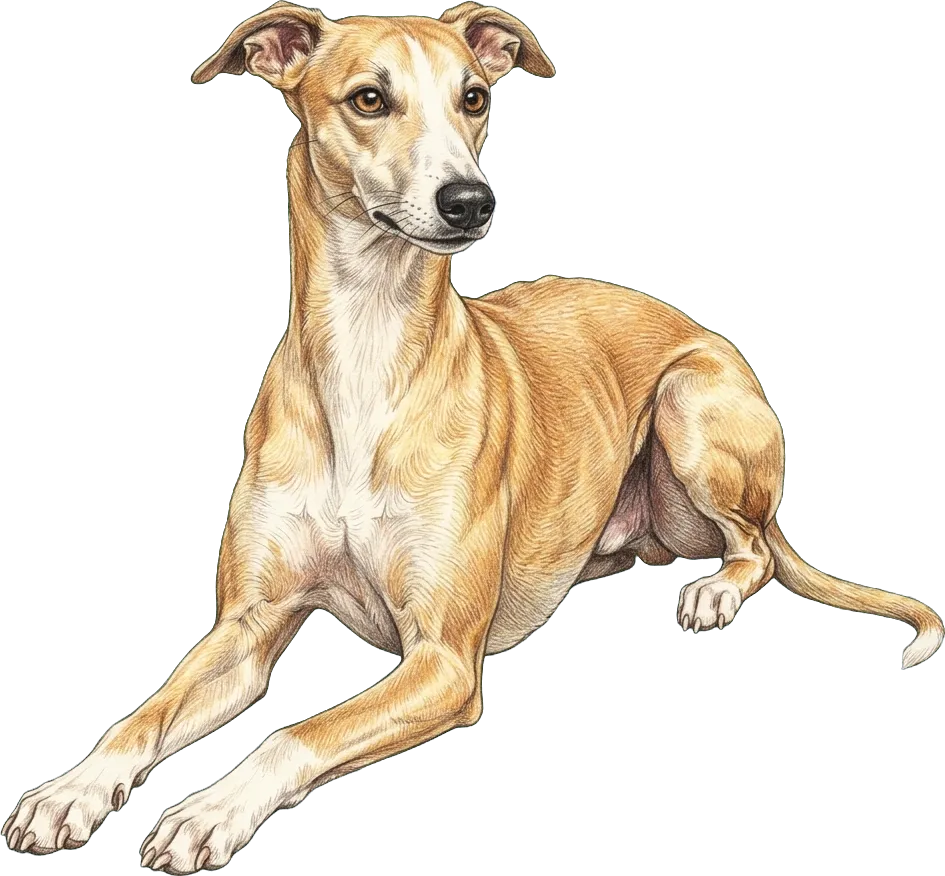
Living with a whippet means sharing your home with a gentle, affectionate, and quiet companion who loves nothing more than curling up in a soft, warm spot. Often called the '45 mph couch potato,' they are calm and undemanding indoors as long as they get their daily chance for a fast, full-out sprint. Because of their ultra-lean build and very thin single coat, they are genuinely sensitive to the cold and will rely on you to provide warm layers for chilly walks and cozy blankets for resting.
Daily-care planners
House-training
Moderate to house-trainHouse-training a whippet requires a bit of patience, largely because these sensitive dogs strongly dislike going outside in cold, wet, or windy weather. You may need to create a sheltered, clear spot in the yard and offer high-value rewards to encourage them to brave the elements, keeping outings brief and positive so they learn that going outside is worth the temporary chill.
Walks
High exercise needsWalking a whippet is a joy, provided you account for their intense natural prey drive and their need for a secure space to safely sprint. Because they are hardwired to chase small, fast-moving animals, they should generally be kept on a leash unless they are in a fully fenced, safe area where they can unleash their impressive speed. When the temperature drops, it is vital to remember their low cold tolerance—a fitted winter coat is not a fashion statement, but a necessity to keep your sleek companion warm, comfortable, and happy on their daily walks.
Plan walksTemperament
At home, the whippet is a remarkably quiet and undemanding companion, rarely vocalizing and generally preferring to snuggle under blankets near their favorite people. They bond very closely with their families and thrive on companionship, meaning they do best with gradual, patient practice when learning to be left alone so they do not experience separation distress. With children, they are sweet and gentle, though their fine-boned, slender build means that playtime should remain calm to avoid any accidental injuries to the dog. They are also highly sociable with other dogs, often relishing the company of fellow sighthounds.
As an independent thinker, the whippet is highly sensitive and responds beautifully to gentle, reward-based training; harsh methods will only break their trust and cause them to shut down. They have a natural, hardwired coursing instinct, which means their prey drive is exceptionally high. They will readily chase fast-moving or fleeing objects, making a secure yard and a patiently built, reliable recall essential for their safety.
Their physical makeup—featuring a deep chest, fine bones, and a short, single-layered coat—results in very low grooming needs but a profound sensitivity to cold climates. A whippet seeking out the warmest spot in the house or shivering on a brisk morning is not being difficult; they genuinely require your help to stay comfortable. Providing soft bedding and outfitting them in a warm coat for winter outings are essential acts of care for this lovely breed.
What life with a Whippet asks of you
Grooming & coat
- Grooming effort
- Low grooming
- Shedding
- Minimal shedding
- Coat
- Short coat
Exercise & enrichment
- Daily exercise
- High exercise needs
- Mental stimulation
- Moderate mental stimulation
- Trainability
- Balanced
Temperament & sociability
- With people
- Politely friendly
- With dogs
- Sociable with other dogs
- With kids
- Gentle with children (always supervise)
- Barking / noise
- Quiet
- Chase instinct
- High prey drive
- Time alone
- Moderate separation-anxiety risk
Home & climate fit
- Hot weather
- Moderate heat tolerance
- Cold weather
- Low cold tolerance
- House-training
- Moderate to house-train