Welsh Terrier
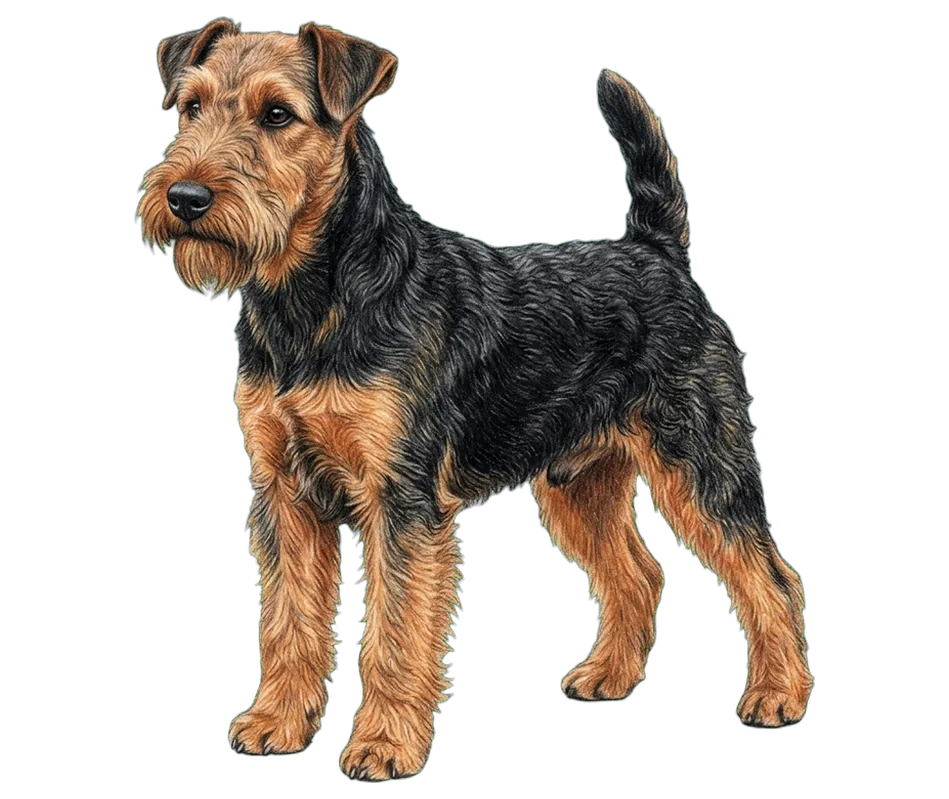
The Welsh Terrier is a sturdy, square-built terrier developed in Wales to hunt fox, otter, and badger — work that shaped a dog that is spirited, tenacious, and endlessly curious, yet more even-tempered and good-humored at home than many of its terrier cousins. Living well with one means embracing a busy, people-oriented dog that needs daily exercise and mental engagement, a low-shedding wiry coat that calls for regular hand-stripping or trimming, and thoughtful management of a genuine prey drive around smaller animals. Early socialization, consistent reward-based training, and real outlets for that working-terrier drive bring out the loyal, good-natured companion this breed is known for.
Daily-care planners
House-training
Moderate to house-trainHouse-training a Welsh Terrier is usually manageable once you work with their independent streak rather than against it: short, upbeat sessions, warm praise for every success outside, and a predictable schedule around meals, naps, and play get the message across faster than repetition or scolding, which this breed tends to tune out. A consistent routine and close supervision during the early weeks — including a watchful eye during off-leash yard time, since a nose-driven terrier can get distracted mid-task — carry most of the process.
Walks
High exercise needsThe Welsh Terrier's main walking challenge is focus, not stamina: a nose-driven dog with real prey drive can lock onto a scent or a squirrel and tune out a recall in an instant, so a secure harness, a sturdy leash, and never relying on off-leash reliability near unfenced areas are the foundation of safe walks. Daily brisk walks plus some off-leash play in a securely fenced space meet their real exercise needs and keep mental energy in check. Their wiry coat handles moderate weather well, but hot midday sun still calls for shade and water breaks. Early, positive leash training pays off for life, since a determined adult terrier is much harder to redirect mid-pursuit than a puppy still learning the rules.
Plan walksTemperament
The Welsh Terrier's ancestors worked the hills of Wales flushing fox, otter, and badger from dense cover, a job that demanded grit, independence, and quick decision-making without a handler nearby. That heritage is still visible today in a dog that is alert, tenacious, and endlessly curious about the world, but Welsh Terriers are also known within the terrier group for a notably steady, good-humored temperament that makes them easier to live with day-to-day than some of their scrappier relatives.
At home this combination shows up as a devoted, playful companion that genuinely enjoys people and thrives on being included in family life rather than kept apart. Their working-terrier independence means they think for themselves and can be selectively deaf to a recall when a scent or small movement catches their attention, so secure fencing, a long line during training, and patient, reward-based methods work far better than repetition or correction alone. With other dogs they tend to be selective — often fine with familiar housemates but capable of tension with unfamiliar dogs, especially of the same sex — so thoughtful introductions matter. Their strong prey drive also means small pets and unleashed encounters with wildlife need real supervision; this is instinct, not misbehavior, and it responds well to structured management rather than punishment.
Welsh Terriers carry real energy and need daily exercise plus mental work — puzzle feeders, scentwork, or training games — to stay settled and out of mischief; an under-exercised terrier tends to find its own, less welcome projects. They are generally excellent with the children they are raised alongside, sturdy and playful, though as with any terrier, supervising rough play in both directions keeps things fun for everyone.
What life with a Welsh Terrier asks of you
Grooming & coat
- Grooming effort
- High grooming
- Shedding
- Minimal shedding
- Coat
- Medium coat
Exercise & enrichment
- Daily exercise
- High exercise needs
- Mental stimulation
- High mental stimulation
- Trainability
- Independent thinker
Temperament & sociability
- With people
- Enthusiastically friendly
- With dogs
- Selective with other dogs
- With kids
- Gentle with children (always supervise)
- Barking / noise
- Moderately vocal
- Chase instinct
- High prey drive
- Time alone
- Moderate separation-anxiety risk
Home & climate fit
- Hot weather
- Moderate heat tolerance
- Cold weather
- Moderate cold tolerance
- House-training
- Moderate to house-train