Standard Schnauzer
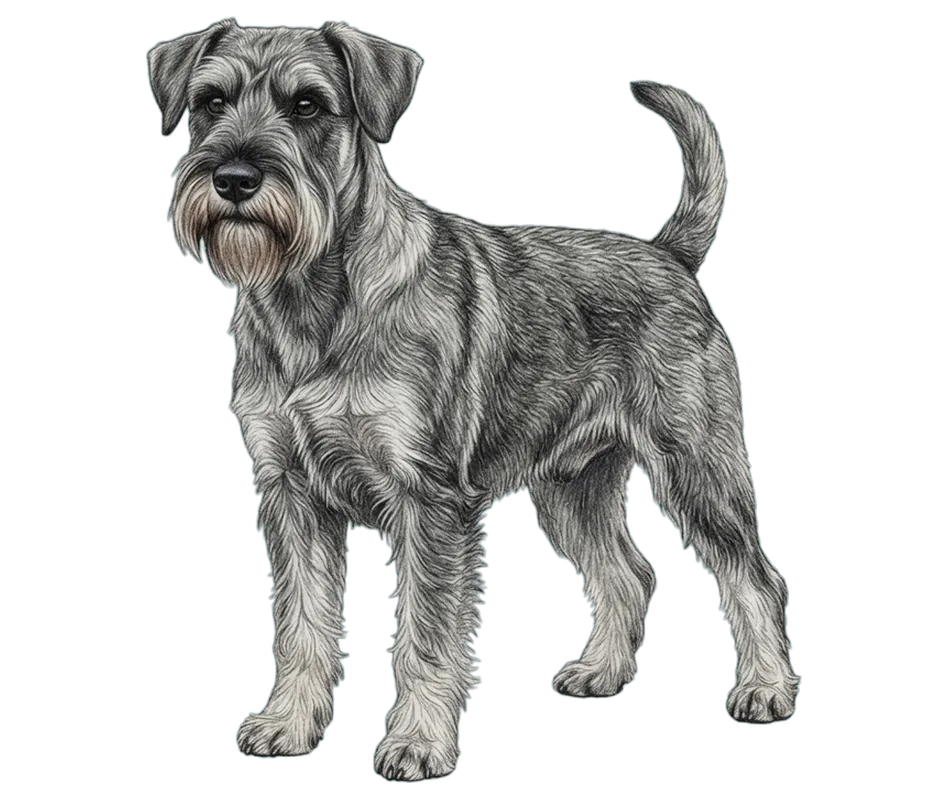
The Standard Schnauzer is a medium-sized, wire-coated working breed from Germany, originally an all-purpose farm dog that guarded property, hunted vermin, and kept close company with its family — the breed from which the smaller Miniature and larger Giant Schnauzer were later developed. Living well with one means embracing a smart, energetic companion that wants real exercise and mental work, alongside a distinctive wiry coat that needs regular grooming, and the lifelong joint, eye, and metabolic care this sturdy, long-lived breed benefits from. Consistent, reward-based training and early socialization bring out the steady, devoted companion this breed is meant to be.
Daily-care planners
House-training
Easy to house-trainHouse-training a Standard Schnauzer is usually manageable, since the breed is intelligent and responsive to a clear, consistent routine. Frequent, predictable trips outside after meals, naps, and play, paired with calm praise for every success, build the habit efficiently — this is a breed that learns quickly when the pattern stays consistent. Their independent streak means occasional testing of the rules is normal, so patience and steady supervision in the early weeks pay off.
Walks
High exercise needsStandard Schnauzers are athletic working dogs that need more than a short stroll to feel satisfied. Aim for vigorous daily exercise — brisk walks, jogging, fetch, or structured training — combined with mental challenges like scent games or obedience work, since this breed's mind needs almost as much exercise as its body. Their hardy double coat handles cool and cold weather well, but they only have moderate heat tolerance, so shift active exercise to cooler parts of the day in warm weather. Early leash training pays off, since a strong-willed adolescent is easier to guide with skills built as a puppy, and a Standard Schnauzer that gets both physical and mental outlets each day tends to be a calm, focused companion the rest of the time.
Plan walksTemperament
The Standard Schnauzer originated in Germany, where it served as an all-around farm and stable dog: guarding property, driving small livestock, and keeping barns clear of vermin. That versatile working heritage shaped a dog that is quick-thinking, sturdy, and eager to be useful, with a natural watchfulness balanced by real warmth toward its own family. At home, most Standard Schnauzers are playful and affectionate, often staying close to their people and tuned in to the household's routine.
Their guarding instincts make them naturally alert and somewhat reserved with unfamiliar people, so early, ongoing socialization and consistent, reward-based training help a puppy grow into a confident, well-mannered adult rather than an overly suspicious one. They are smart and quick to learn, but that intelligence comes with an independent streak, so patient, positive handling works far better than repetition or harsh correction. With other dogs they can be selective, particularly with dogs they don't know, so thoughtful introductions matter.
This is an energetic breed that needs a genuine outlet — daily exercise and mental work keep a Standard Schnauzer settled and out of mischief, while a bored one is prone to inventing its own entertainment. Their distinctive wiry double coat is low-shedding but not low-maintenance, calling for regular brushing and periodic hand-stripping or clipping to prevent matting and skin irritation. They are generally good with the children they're raised alongside, though their energy and sturdy build mean play with young kids is best supervised so nobody gets bowled over.
What life with a Standard Schnauzer asks of you
Grooming & coat
- Grooming effort
- High grooming
- Shedding
- Minimal shedding
- Coat
- Medium coat
Exercise & enrichment
- Daily exercise
- High exercise needs
- Mental stimulation
- High mental stimulation
- Trainability
- Balanced
Temperament & sociability
- With people
- Politely friendly
- With dogs
- Selective with other dogs
- With kids
- Good with considerate children (supervise)
- Barking / noise
- Moderately vocal
- Chase instinct
- Moderate prey drive
- Time alone
- Moderate separation-anxiety risk
Home & climate fit
- Hot weather
- Moderate heat tolerance
- Cold weather
- High cold tolerance
- House-training
- Easy to house-train