Spinone Italiano
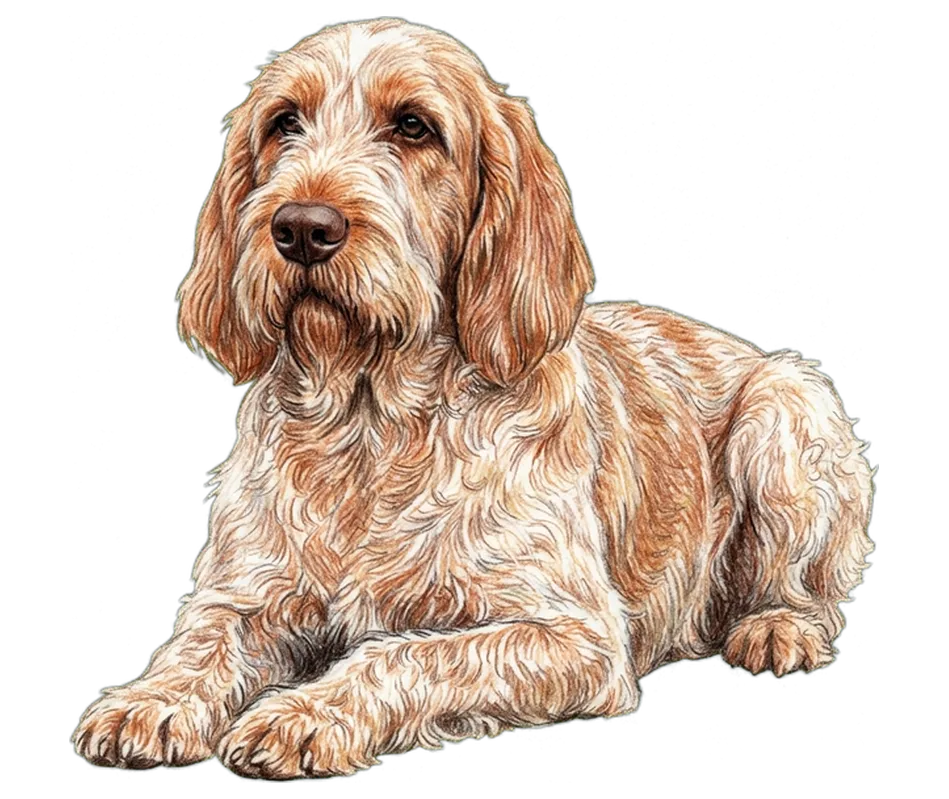
The Spinone Italiano is a rugged, versatile Italian gun dog built for long days pointing and retrieving over rough terrain and cold water, and that working heritage shows up at home as a patient, affectionate, and famously gentle companion. Living well with one means embracing a large, wiry-coated dog that wants a job and daily exercise for its body and mind, alongside occasional hand-stripping, beard clean-up after meals, and the joint, thyroid, and eye care that a big, active breed deserves. Calm, reward-based training and plenty of family time bring out the soft-natured, biddable dog this breed is known for.
Daily-care planners
House-training
Moderate to house-trainHouse-training a Spinone Italiano is usually manageable, since the breed is eager to please and responds well to calm, consistent routines. Because it is a large breed with a working dog's independent streak, a puppy benefits from frequent, predictable trips outside after meals, naps, and play, plus warm praise for every success rather than correction for accidents. A crate or confined space between outings, paired with close supervision in the first weeks, builds the habit steadily.
Walks
High exercise needsThe Spinone's walking needs are shaped by its gun-dog stamina — this is a breed built to cover ground all day, so daily walks alone may not fully satisfy it, and adding scent games, retrieving, or off-leash time in a safe area rounds things out. Its dense, wiry coat handles cool, damp weather well, but warm days call for shade, water breaks, and exercise scheduled for cooler hours. Leash manners are worth teaching early and gently, since a large, enthusiastic adolescent Spinone following an interesting scent can be a handful; reward-based training channels that natural focus into a pleasant walking partner rather than fighting it.
Plan walksTemperament
Developed over centuries in the Piedmont region of Italy as an all-purpose hunting companion, the Spinone Italiano was bred to point, retrieve on land and from water, and work steadily through brush and briar all day without complaint. That working history produced a dog that is calm, cooperative, and remarkably soft in temperament — Spinoni are known among gun-dog breeds for being unusually gentle and sensitive, thriving on encouragement and wilting under harsh handling.
At home this translates into an affectionate, people-oriented companion that genuinely enjoys close contact with its family and is famously patient and gentle with the children it is raised with — though, as with any large and energetic dog, time with young children is best supervised. They are generally sociable with other dogs, a trait that likely reflects their history of working alongside other hunting dogs, though as with any breed, thoughtful introductions help new relationships start well. Spinoni are also notably quiet by breed reputation, rarely barking without reason.
As a working gun dog, the Spinone has real exercise and mental engagement needs — daily activity, scent work, or training games keep this intelligent, willing breed content, and an under-exercised Spinone can become restless. They are eager to please and food-motivated, which makes them responsive to reward-based training, though their independent hunting instincts mean patience and consistency pay off more than repetition alone. Their wiry, weather-resistant coat suits cool and wet conditions well, and the breed's substantial size and enthusiasm mean supervision matters during boisterous play, even though the intent is always gentle.
What life with a Spinone Italiano asks of you
Grooming & coat
- Grooming effort
- Moderate grooming
- Shedding
- Seasonal shedding
- Coat
- Medium coat
Exercise & enrichment
- Daily exercise
- High exercise needs
- Mental stimulation
- High mental stimulation
- Trainability
- Eager to please
Temperament & sociability
- With people
- Enthusiastically friendly
- With dogs
- Sociable with other dogs
- With kids
- Gentle with children (always supervise)
- Barking / noise
- Quiet
- Chase instinct
- Moderate prey drive
- Time alone
- Moderate separation-anxiety risk
Home & climate fit
- Hot weather
- Moderate heat tolerance
- Cold weather
- High cold tolerance
- House-training
- Moderate to house-train