Soft Coated Wheaten Terrier
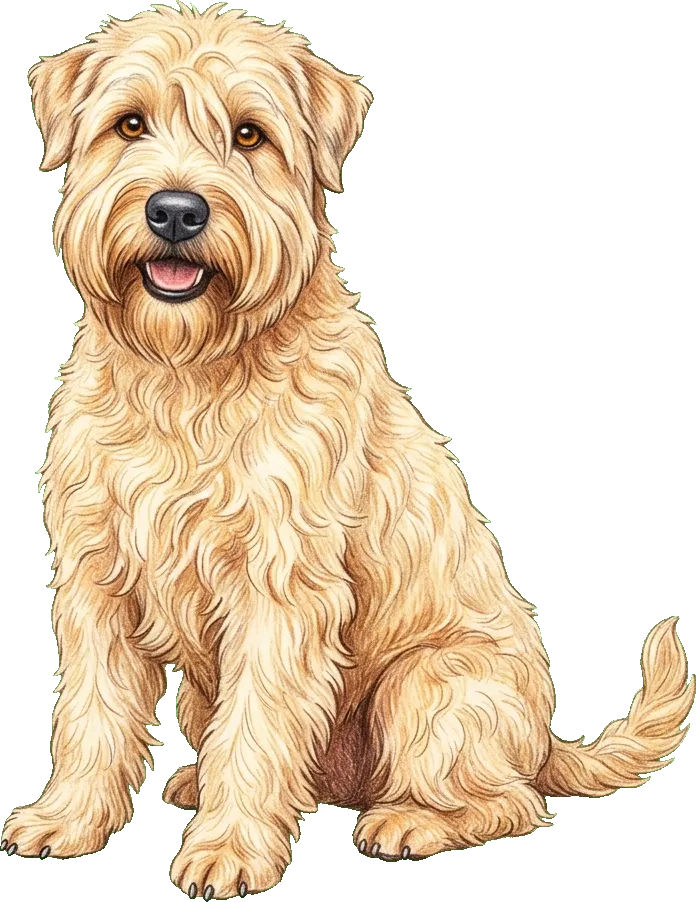
The Soft Coated Wheaten Terrier is a spirited, affectionate terrier famous for its warm, single silky coat and its exuberant 'Wheaten greetin'' — a happy, whole-body hello for the people it loves. Living well with one means enjoying an upbeat, people-oriented companion that wants to be part of family life, while committing to the frequent brushing its low-shedding coat needs to stay mat-free. Steady, positive training helps channel a lively terrier spirit into a confident, well-mannered friend.
Daily-care planners
House-training
Moderate to house-trainHouse-training a Wheaten takes patience and a steady routine more than anything else. Because these bright, sensitive dogs thrive on encouragement, frequent calm trips outside — after meals, naps, and play — paired with warm praise for every success build the habit far faster than any correction. Keeping a young puppy on a predictable schedule and learning its "need to go" signals helps prevent accidents while its bladder is still maturing.
Walks
Moderate exercise needsWalking a Wheaten is generally a pleasure: it is energetic without being tireless, so a good daily walk or two plus some play and sniffing time keeps this terrier happily fit. Because a moderate prey drive is part of the package, keep the leash secure around cats, wildlife, and small dogs until a dependable recall is in place, and reserve off-leash freedom for safely enclosed spaces. Mixing in games and light training along the way satisfies a curious mind as much as the legs. A consistent daily rhythm keeps a Wheaten balanced, content, and easy company.
Plan walksTemperament
The Wheaten is an upbeat, affectionate terrier that pairs a lively spirit with a softer, more people-focused nature than many of its terrier cousins. It bonds closely with its family and genuinely wants to be involved in daily life, which is part of the charm — and the reason it does best with company rather than long hours alone. Gradual, patient practice at being left is worthwhile so a home-loving dog learns to settle comfortably on its own.
As an intelligent, sometimes independent thinker, the Wheaten responds beautifully to reward-based training and consistency; it can lose interest in dull repetition, so short, encouraging, varied sessions work best. Early socialization helps that famous friendliness shine while teaching calm greetings — the enthusiastic "Wheaten greetin'" is endearing but easier on guests and small children when a dog has learned to keep four feet on the floor.
Wheatens are typically playful and gentle with children and generally sociable with other dogs, though calm, gradual introductions always help. They carry a moderate terrier prey drive, so a secure yard and a reliably practised recall keep chasing instincts in check around wildlife. Their single, soft, silky coat sheds very little, but it mats easily and needs frequent brushing plus regular trimming to keep the skin underneath healthy and the dog comfortable.
What life with a Soft Coated Wheaten Terrier asks of you
Grooming & coat
- Grooming effort
- High grooming
- Shedding
- Minimal shedding
- Coat
- Long coat
Exercise & enrichment
- Daily exercise
- Moderate exercise needs
- Mental stimulation
- Moderate mental stimulation
- Trainability
- Balanced
Temperament & sociability
- With people
- Enthusiastically friendly
- With dogs
- Tolerant of other dogs
- With kids
- Gentle with children (always supervise)
- Barking / noise
- Moderately vocal
- Chase instinct
- Moderate prey drive
- Time alone
- Moderate separation-anxiety risk
Home & climate fit
- Hot weather
- Moderate heat tolerance
- Cold weather
- Moderate cold tolerance
- House-training
- Moderate to house-train