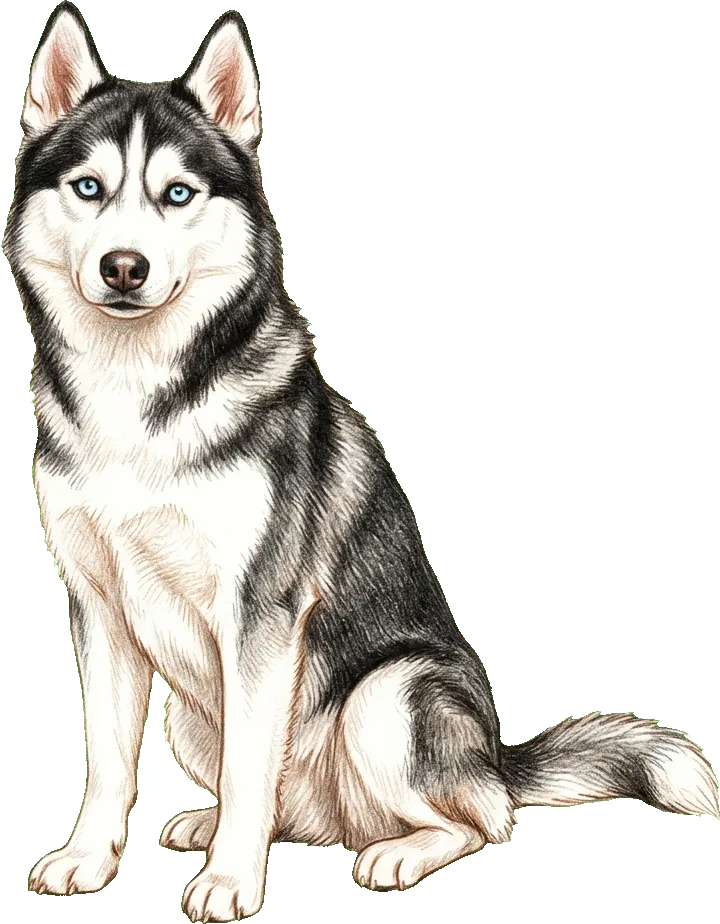
Siberian Husky
The Siberian Husky is an enthusiastic, fiercely independent endurance athlete built for extreme cold and serious mileage. Living well with a Husky requires a strong commitment to massive amounts of daily exercise, securing your yard against a talented escape artist, and managing heavy shedding. This guide covers what to expect from their famously vocal temperament, walk requirements, and essential house-training tips.
Daily-care planners
House-training
Challenging to house-trainHuskies are independent and easily distracted, and generally take longer to housetrain than breeds with a stronger people-pleasing drive. Consistency and managing expectations are key.
Walks
Very high exercise needsBred to run long distances in cold conditions — Huskies have extraordinary endurance and very low heat tolerance. In summer, walk only during the coolest hours; in cool or cold weather they can handle significant mileage. Secure leashes and fenced areas are essential — they're skilled escape artists with strong chase drive. Under-exercised Huskies are notoriously destructive.
Plan walksTemperament
Huskies are enthusiastic and deeply independent dogs bred to run, known for being notoriously vocal and exceptionally athletic. They are not eager-to-please, requiring patient and consistent owners who appreciate their spirited, free-thinking nature.
Because of their very high need for exercise and mental stimulation, these dogs typically struggle in apartments and thrive in homes with large, highly secure yards. An under-exercised Husky will quickly become destructive, so daily intense activity is an absolute requirement to keep them settled indoors.
They are generally highly social and enthusiastic with people, making them poor guard dogs but joyful companions. With moderate tendencies toward being good with children, interactions should always be supervised, and their strong-willed nature means they can be quite demanding for first-time owners or seniors.
Bred to work in teams, Huskies are typically very social and thrive in the company of other dogs. However, their high prey drive means they can pose a serious risk to cats and other small pets, requiring careful management and secure containment.
Developed by the Chukchi people of northeastern Siberia as endurance sled dogs to haul light loads over vast distances in extreme cold, this heritage defines their modern needs. Today, they excel in cool climates and winter activities, but require extreme caution and severely limited outdoor activity during hot summer months due to their very low heat tolerance.
What life with a Siberian Husky asks of you
Grooming & coat
- Grooming effort
- Moderate grooming
- Shedding
- Heavy shedding
- Coat
- Medium coat
Exercise & enrichment
- Daily exercise
- Very high exercise needs
- Mental stimulation
- High mental stimulation
- Trainability
- Independent thinker
Temperament & sociability
- With people
- Enthusiastically friendly
- With dogs
- Sociable with other dogs
- With kids
- Good with considerate children (supervise)
- Barking / noise
- Vocal
- Chase instinct
- High prey drive
- Time alone
- Moderate separation-anxiety risk
Home & climate fit
- Hot weather
- Low heat tolerance
- Cold weather
- High cold tolerance
- House-training
- Challenging to house-train