Shih Tzu
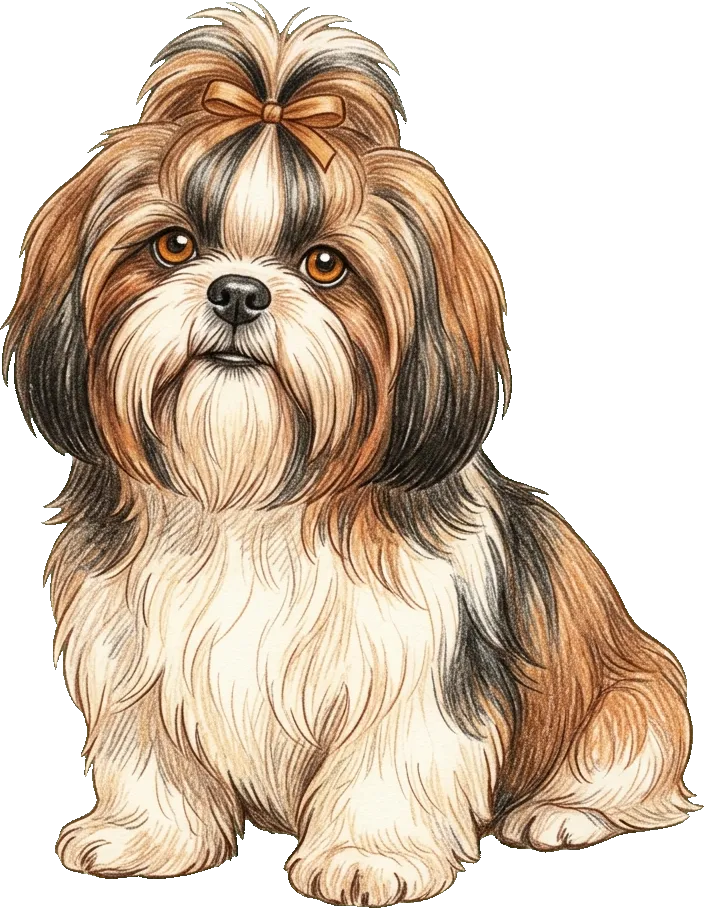
The Shih Tzu is an affectionate, easygoing lap dog that thrives on human companionship, making them a devoted addition to the home. Because they are flat-faced and quickly sensitive to heat or cold, their daily routine relies on short, shaded walks and a dedicated grooming schedule to maintain their long, silky coat.
Daily-care planners
House-training
Challenging to house-trainSmall bladder combined with an independent temperament and aversion to wet or cold conditions make Shih Tzus a challenging housetrain. A strict, frequent schedule is essential.
Walks
Low exercise needsFlat-faced breed that overheats quickly and dislikes cold or wet weather. Short, shaded walks during mild temperatures are safest — a coat or sweater is often needed in cooler months. A harness is generally preferred over a neck collar. Indoor play can supplement on days when weather makes outdoor trips difficult.
Plan walksTemperament
Shih Tzus are easygoing lap dogs who enthusiastically seek out human companionship. Their small size and moderate energy make them adaptable, content to share quiet moments and short, frequent breaks throughout the day.
Because their exercise and mental stimulation needs are relatively low, they fit seamlessly into both apartments and houses with yards. Their flat-faced structure means they overheat easily, so indoor play and wearing a harness rather than a collar are better choices than long walks during warm or poor weather.
They can be a wonderful match for seniors, first-time owners, and families, provided interactions are gentle. Since they have a moderate tolerance for children and a small, somewhat fragile stature, any time spent with kids should be calmly supervised to ensure the dog feels secure.
With a generally social nature toward other dogs and a very low prey drive, they usually live quite peacefully alongside other pets. Gentle introductions are still key, but they are inclined to make friends rather than chase.
Originating as a treasured "lion dog" companion in the imperial courts of China and Tibet, the breed was created exclusively to be close to people. In varied climates across English-speaking regions, this heritage translates to a dog that expects to be indoors with the family, demanding a very strict schedule for housetraining, especially since their independent streak makes them dislike stepping out into wet or cold weather.
What life with a Shih Tzu asks of you
Grooming & coat
- Grooming effort
- High grooming
- Shedding
- Minimal shedding
- Coat
- Long coat
Exercise & enrichment
- Daily exercise
- Low exercise needs
- Mental stimulation
- Low mental stimulation
- Trainability
- Balanced
Temperament & sociability
- With people
- Enthusiastically friendly
- With dogs
- Sociable with other dogs
- With kids
- Good with considerate children (supervise)
- Barking / noise
- Moderately vocal
- Chase instinct
- Low prey drive
- Time alone
- High separation-anxiety risk
Home & climate fit
- Hot weather
- Low heat tolerance
- Cold weather
- Low cold tolerance
- House-training
- Challenging to house-train