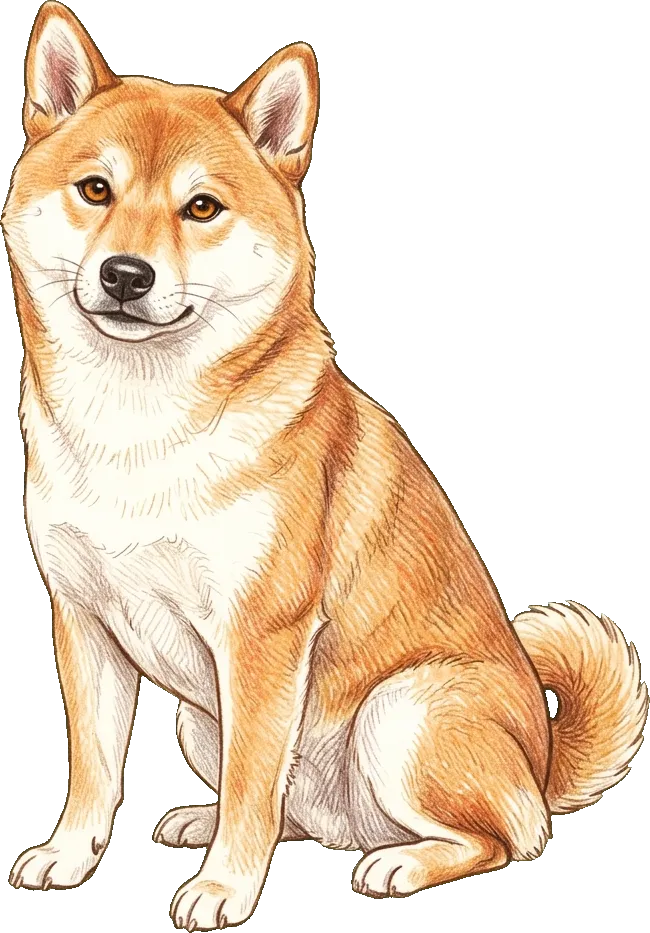
Shiba Inu
The Shiba Inu is the fastidious, independent companion known for its cat-like cleanliness — and living well with one is mostly about respecting their boundaries and keeping them safely leashed. This guide sticks to daily life: their famously easy house-training, leash walking challenges, the temperament to expect, and the health checks worth knowing.
Daily-care planners
House-training
Easy to house-trainShibas are famously clean dogs that dislike soiling their living space. Housetraining is usually very fast, though they can be picky about finding the 'perfect' spot outside.
Walks
Moderate exercise needsIndependent and spirited. They have a high prey drive and should rarely be off-leash outside fenced areas. They enjoy moderate walks but will plant their feet if they don't want to go a certain direction.
Plan walksTemperament
Shibas are spirited, deeply loyal to their people, yet often reserved around strangers. They have an independent streak that means they do things on their own terms, making them less eager to please than a typical sporting breed.
They adapt very well to apartment living as long as their moderate exercise needs are met with daily walks and engaging mental stimulation. Because of their thick double coat, they have low heat tolerance, so walks are best planned for the cooler parts of the day.
Their independent nature makes them an interesting choice for first-time owners who are willing to invest in patient, consistent training. While they can live comfortably with children if supervised and socialized early, they generally prefer a calm household that respects their space, and they are quite content being left alone for reasonable periods without developing separation anxiety.
A high prey drive means they should rarely be off-leash outside of fenced areas, and caution is needed around cats or small pets. They are often selective about their dog friends, so careful, slow introductions are the best approach when meeting new dogs.
Originally bred to flush birds and small game in the dense undergrowth of Japan's mountainous regions, the Shiba Inu is an ancient, agile breed. Across the US and UK, their moderate size and quiet nature indoors make them a popular choice for a wide variety of housing setups, provided owners are prepared for their heavy seasonal shedding.
What life with a Shiba Inu asks of you
Grooming & coat
- Grooming effort
- Moderate grooming
- Shedding
- Heavy shedding
- Coat
- Short coat
Exercise & enrichment
- Daily exercise
- Moderate exercise needs
- Mental stimulation
- Moderate mental stimulation
- Trainability
- Independent thinker
Temperament & sociability
- With people
- Reserved with strangers
- With dogs
- Selective with other dogs
- With kids
- Good with considerate children (supervise)
- Barking / noise
- Moderately vocal
- Chase instinct
- High prey drive
- Time alone
- Low separation-anxiety risk
Home & climate fit
- Hot weather
- Low heat tolerance
- Cold weather
- High cold tolerance
- House-training
- Easy to house-train