Scottish Terrier
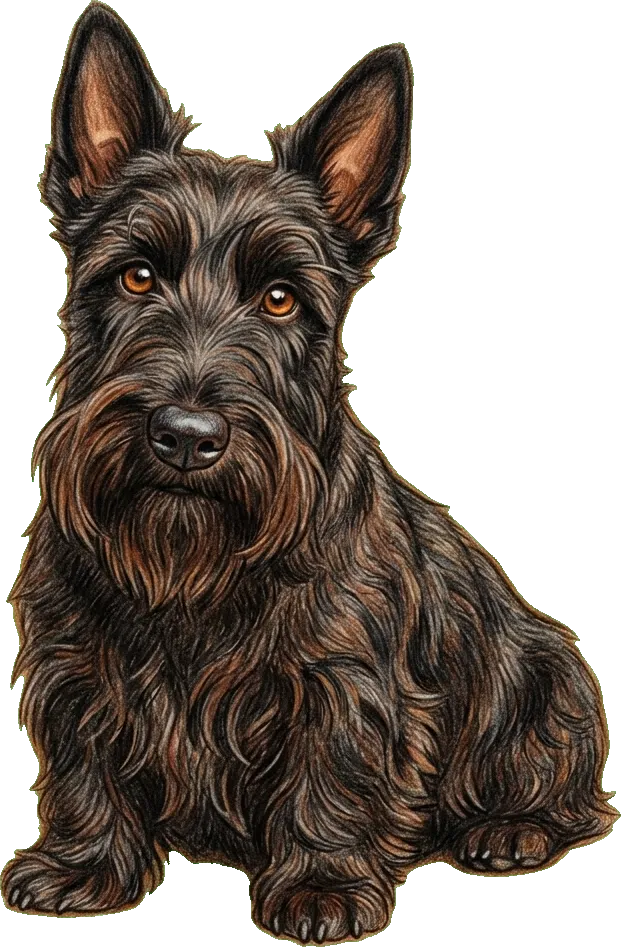
The Scottish Terrier is a compact, sturdy earthdog with a big, dignified personality — bold, alert, and quietly devoted to the people it trusts, while politely reserved with strangers. Living well with one means respecting an independent thinker bred to hunt with self-reliance: engaging, positive training, secure fencing for a genuine chasing instinct, and a distinctive wiry coat that needs regular hand-stripping or clipping. In return you get a loyal, spirited companion with a wonderful sense of self and a deep bond to its family.
Daily-care planners
House-training
Moderate to house-trainHouse-training a Scottish Terrier goes smoothly when you lean into their intelligence and independent streak with a calm, predictable routine. Frequent trips outside after meals, naps, and play — paired with genuine praise and a reward for every success — teach the habit faster than any correction. Their weather-hardy coat means chilly or damp trips outdoors rarely bother them, which works in your favor.
Walks
Moderate exercise needsWalking a Scottish Terrier is a pleasure once you plan around their prey drive and love of the chase. Because they are hardwired to pursue small, fast-moving animals and to follow interesting scents, they are safest on a leash unless they are inside a fully fenced area. Sturdy and weather-resistant, they handle cool and damp conditions well, so daily walks plus a little sniffing and exploring keep this spirited companion happily engaged and comfortably exercised.
Plan walksTemperament
The Scottish Terrier carries a large personality in a compact frame. Bred as a self-reliant earthdog, the Scottie is an independent thinker who thrives on engaging, reward-based training delivered in short, upbeat sessions; patient consistency earns far more cooperation than pressure ever could. They are alert and watchful, quick to notice what is happening around them, which makes them attentive companions who enjoy having a job to focus their bright minds.
With their families, Scotties are affectionate and deeply loyal, often bonding closely while remaining dignified and reserved with strangers until trust is earned. Calm, positive introductions help them feel at ease with new people and situations. They can be selective about canine company, so unhurried, well-managed meetings and early socialization set them up to share space comfortably with other dogs.
True to their heritage, Scottish Terriers have a spirited prey drive and love to dig, explore, and investigate scents. A securely fenced yard and a leash on walks keep that natural chasing instinct safe, while puzzle games and short training challenges satisfy the busy, self-reliant mind behind those bright eyes. Their weather-resistant double coat is low-shedding but high-maintenance, needing regular hand-stripping or clipping to stay healthy and comfortable.
What life with a Scottish Terrier asks of you
Grooming & coat
- Grooming effort
- High grooming
- Shedding
- Minimal shedding
- Coat
- Medium coat
Exercise & enrichment
- Daily exercise
- Moderate exercise needs
- Mental stimulation
- Moderate mental stimulation
- Trainability
- Independent thinker
Temperament & sociability
- With people
- Reserved with strangers
- With dogs
- Selective with other dogs
- With kids
- Good with considerate children (supervise)
- Barking / noise
- Moderately vocal
- Chase instinct
- High prey drive
- Time alone
- Low separation-anxiety risk
Home & climate fit
- Hot weather
- Moderate heat tolerance
- Cold weather
- High cold tolerance
- House-training
- Moderate to house-train