Samoyed
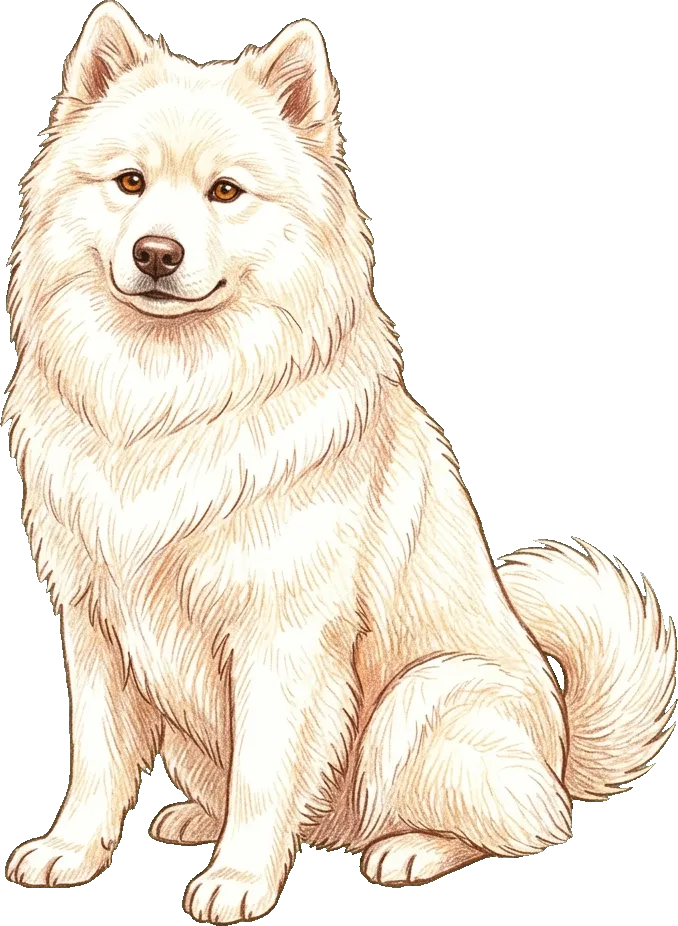
The Samoyed is a large, exuberant, cold-loving working spitz instantly recognizable by its thick white coat and friendly, talkative nature. Living well with this breed means committing to serious daily exercise, rigorous grooming, and plenty of companionship, as they famously hate being left alone.
Daily-care planners
House-training
Moderate to house-trainThey are intelligent but independent. A consistent schedule works well, but they may refuse to come back inside if the weather is cold and snowy.
Walks
High exercise needsBorn to pull. Leash training can be a significant challenge. They have excellent stamina in cold weather but can easily overheat in the summer. They enjoy long, brisk walks or jogging.
Plan walksTemperament
The Samoyed is a friendly, fluffy sled dog with an intelligent but independent streak, known for being enthusiastic, deeply bonded to its people, and wonderfully talkative.
Born to pull and run, this breed requires rigorous daily exercise and mental stimulation, making a house with a securely fenced yard ideal. They need long, brisk walks or jogs to burn off energy, and their strong pulling instinct means loose-leash walking requires patient, consistent training.
They thrive in active households that can provide constant company, as their intense bond with humans means they struggle significantly if left alone for long hours. While they are famously affectionate and generally good with children, they are large and bouncy, so interactions with small children should always be supervised. They are a demanding choice for first-time owners due to their high exercise, grooming, and companionship needs.
Thanks to their social nature, they typically enjoy the company of other dogs and do well in multi-dog households. Their prey drive is moderate, so while they can often learn to live peacefully with dog-savvy cats, introductions should be careful and supervised.
Originally bred by the Samoyedic peoples of Siberia to herd reindeer, haul sleds, and hunt in the Arctic, these working dogs were also brought into the family tents to sleep for warmth. This heritage explains both their extraordinary cold tolerance and their intense need to be close to their human family today. While they will happily stay outside in the snow, their heavy double coat means they overheat easily in warm weather, so summer exercise must be carefully managed to keep them cool.
What life with a Samoyed asks of you
Grooming & coat
- Grooming effort
- High grooming
- Shedding
- Heavy shedding
- Coat
- Long coat
Exercise & enrichment
- Daily exercise
- High exercise needs
- Mental stimulation
- High mental stimulation
- Trainability
- Balanced
Temperament & sociability
- With people
- Enthusiastically friendly
- With dogs
- Sociable with other dogs
- With kids
- Good with considerate children (supervise)
- Barking / noise
- Vocal
- Chase instinct
- Moderate prey drive
- Time alone
- High separation-anxiety risk
Home & climate fit
- Hot weather
- Low heat tolerance
- Cold weather
- High cold tolerance
- House-training
- Moderate to house-train