Rat Terrier
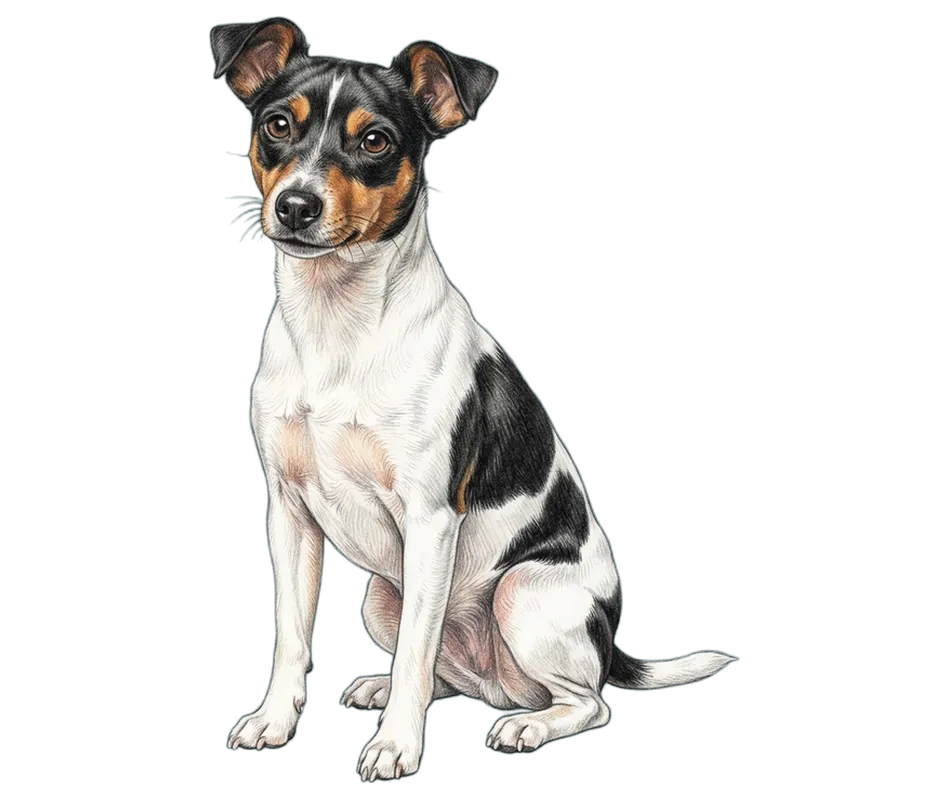
The Rat Terrier is a compact, all-American farm dog bred to hunt vermin alongside families rather than to guard livestock or hunt big game — a working past that shaped a small, sturdy companion with a big personality. Living well with one means channeling real energy and a sharp mind into daily exercise, puzzle-style enrichment, and a securely fenced yard, alongside a low-maintenance short coat that still calls for a warm layer on cold walks. Early socialization and consistent, reward-based routines bring out the affectionate, adaptable family dog this breed can be.
Daily-care planners
House-training
Moderate to house-trainHouse-training a Rat Terrier is usually straightforward, since they are quick learners who respond well to a predictable schedule and consistent rewards. Small breeds do have less bladder capacity than large dogs relative to their size, so frequent, calm trips outside after meals, naps, and play — paired with warm praise for every success — help the routine click faster than any correction would. A consistent schedule and close supervision indoors during the early weeks make the biggest difference.
Walks
High exercise needsThe Rat Terrier's walking challenge is less about distance and more about focus: a nose-to-the-ground hunting instinct means interesting smells and small movements can pull attention away from loose-leash manners, so leash training benefits from starting early and practicing in low-distraction settings before working up to a busy park. This is a genuinely high-energy breed, and a brisk walk alone often isn't enough — pairing daily exercise with a game of fetch, a scent-based puzzle, or focused training reps satisfies both body and mind. Because of their strong prey drive, a secure leash or fenced area matters more than for many breeds, and their short coat means a cold-weather layer is worth carrying along on chilly outings.
Plan walksTemperament
Developed on American farms to control rats and other vermin, the Rat Terrier is a small dog with a working dog's drive: alert, quick, and endlessly curious about movement in the grass. That heritage means a strong prey drive is part of the package, so small pets in the household and off-leash time in unfenced areas call for thoughtful management rather than assumption. At home, though, the same dog is affectionate and often described as a "velcro" companion, happiest curled up near its people after a good outing.
Rat Terriers are intelligent and generally eager to work for food or praise, but their independent streak means training goes best with short, upbeat, consistent sessions rather than repetition for its own sake. They tend to be selective with unfamiliar dogs, so introductions benefit from a calm, gradual approach, and early socialization with a variety of people, sounds, and situations helps a naturally alert dog grow into a confident rather than reactive adult.
This is a high-energy breed that needs both physical exercise and mental stimulation daily — a bored Rat Terrier is more likely to become vocal or find its own projects, like digging. Their short, smooth coat sheds only lightly and needs little upkeep, but it also offers little insulation, so cold or damp weather is a good cue for a coat or sweater. With children they are typically playful and devoted when raised together, though their small size and quick movements mean young kids and dogs both do best with supervision.
What life with a Rat Terrier asks of you
Grooming & coat
- Grooming effort
- Low grooming
- Shedding
- Minimal shedding
- Coat
- Short coat
Exercise & enrichment
- Daily exercise
- High exercise needs
- Mental stimulation
- High mental stimulation
- Trainability
- Balanced
Temperament & sociability
- With people
- Enthusiastically friendly
- With dogs
- Selective with other dogs
- With kids
- Good with considerate children (supervise)
- Barking / noise
- Moderately vocal
- Chase instinct
- High prey drive
- Time alone
- Moderate separation-anxiety risk
Home & climate fit
- Hot weather
- Moderate heat tolerance
- Cold weather
- Low cold tolerance
- House-training
- Moderate to house-train