Pug
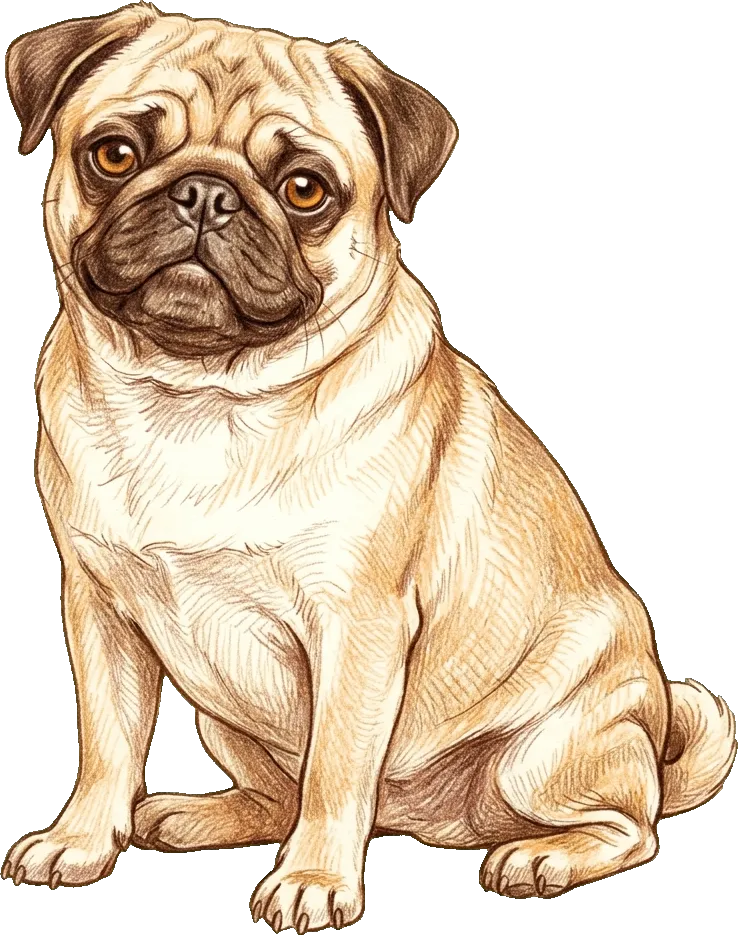
The Pug is an immensely affectionate, charmingly stubborn companion whose main goal is to be right by your side. Living well with one is a balance of enjoying their outgoing nature while carefully managing their extreme sensitivity to heat and their need for gentle, structured routines.
Daily-care planners
House-training
Challenging to house-trainPugs are loving but famously stubborn, and they strongly dislike cold or wet weather — a combination that slows housetraining. A consistent schedule, a sheltered potty spot, and immediate rewards work far better than corrections.
Walks
Moderate exercise needsA flat-faced breed that overheats very easily — keep walks short, shaded, and to the cool parts of the day, and treat heavy panting as a cue to stop. A harness is gentler on the airway than a collar. In mild weather Pugs enjoy a relaxed amble, but they are not built for distance or heat.
Plan walksTemperament
Pugs are immensely sociable, charming companions who bond deeply with their owners and thrive on human affection.
Their small size makes them highly adaptable to apartment living, provided their physical needs are met with a few short, gentle daily walks. Because they overheat very easily, it is crucial to avoid strenuous activity and keep their environment comfortably cool, focusing more on relaxed indoor companionship than intense physical or mental workouts.
They are enthusiastic housemates who generally do very well with respectful children, making them a nice fit for first-time owners and families alike. While they can have a stubborn streak during training, especially with housetraining, patience and positive rewards work best. They do have a moderate risk of separation anxiety, so they do best in homes where someone is around for part of the day.
With a very low prey drive and a naturally social disposition toward other dogs, Pugs typically coexist peacefully with cats and other pets when introduced properly.
Originally bred as companions for Chinese emperors, the Pug has a long history as a devoted lap dog. Today, their adaptability makes them popular across diverse environments in North America and the UK, though owners must remain vigilant during hot, humid summers, always opting for air-conditioned spaces and early morning walks to keep them safe and comfortable.
What life with a Pug asks of you
Grooming & coat
- Grooming effort
- Moderate grooming
- Shedding
- Heavy shedding
- Coat
- Short coat
Exercise & enrichment
- Daily exercise
- Moderate exercise needs
- Mental stimulation
- Low mental stimulation
- Trainability
- Balanced
Temperament & sociability
- With people
- Enthusiastically friendly
- With dogs
- Sociable with other dogs
- With kids
- Gentle with children (always supervise)
- Barking / noise
- Moderately vocal
- Chase instinct
- Low prey drive
- Time alone
- Moderate separation-anxiety risk
Home & climate fit
- Hot weather
- Low heat tolerance
- Cold weather
- Low cold tolerance
- House-training
- Challenging to house-train