Portuguese Water Dog
Sharing your home with a Portuguese Water Dog means welcoming a deeply affectionate, highly active companion who thrives on being included in every aspect of family life. These bright, biddable athletes require a dedicated owner ready to provide ample physical exercise, engaging mental challenges, and routine grooming.
Daily-care planners
House-training
Moderate to house-trainEstablishing proper elimination habits is reasonably straightforward with the Portuguese Water Dog, thanks to their bright, biddable nature and strong desire to please their owners. Success relies on implementing a consistent routine, offering frequent supervised outdoor access, and providing enthusiastic positive reinforcement when they succeed. By setting clear expectations and maintaining a predictable schedule, caring owners can smoothly guide their puppies through the house-training process.
Walks
High exercise needsMeeting the high exercise requirements of a Portuguese Water Dog involves much more than a casual stroll around the block; they need vigorous daily activities that challenge both their bodies and their minds. These athletic working dogs excel in robust activities like hiking, interactive play, and, true to their heritage, structured swimming or water work, though owners should always practice safe temperature management during warmer weather. Incorporating training games, scent work, or agility exercises into their daily outings provides the essential mental stimulation they crave, ensuring this lively breed remains a contented and well-adjusted member of the household.
Plan walksTemperament
Historically bred along the rugged coastline of Portugal, the Portuguese Water Dog served as an indispensable all-around helper for local fishermen. Their duties included herding fish into nets, diving to retrieve gear and lost tackle, and even swimming to carry messages between boats and the shore. This working heritage shines through today in their athletic build—males typically weighing 19 to 27 kilograms and females 16 to 23 kilograms—and their enduring love for swimming. They possess moderate tolerance for both heat and cold, allowing them to enjoy outdoor adventures in a variety of climates alongside their human companions.
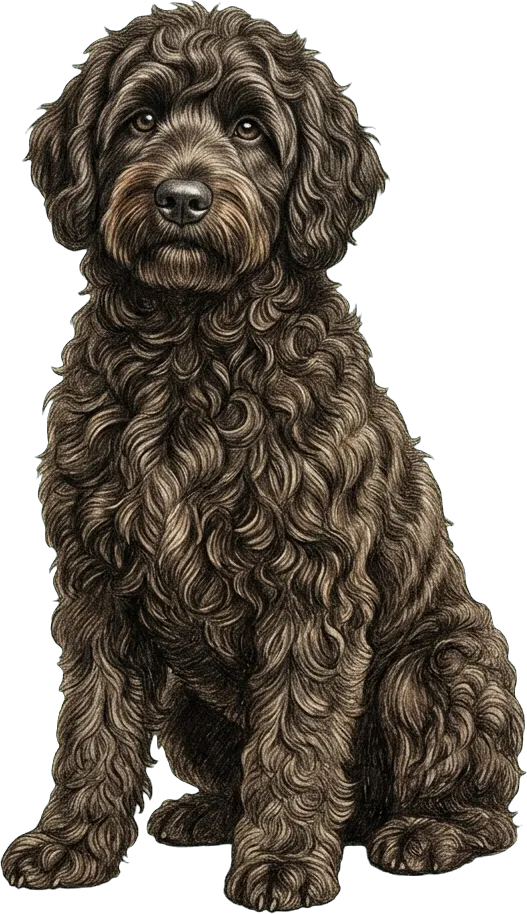
A hallmark of the breed is its single, profuse coat of tight curls or gentle waves, which produces minimal shedding but demands significant upkeep. A caring owner must commit to a high-maintenance grooming routine, incorporating frequent, thorough brushing and regular professional clipping to ensure the coat remains free of mats and comfortable for the dog. Mentally, these dogs are exceptionally bright and biddable, thriving when given a job or engaging activities that channel their high energy. Their alert nature makes them watchful of their surroundings with moderate vocalization to announce visitors, while their moderate prey drive means they can generally be well-socialized with other dogs.
Because they bond so closely with their families, they can experience moderate separation anxiety if left alone for extended periods; they truly are enthusiastic "velcro" companions who appreciate the company of their humans. By integrating them deeply into family activities and meeting their high needs for both physical exertion and mental enrichment, owners will be rewarded with a joyful, loving companion for their typical 11 to 13 years of life.
What life with a Portuguese Water Dog asks of you
Grooming & coat
- Grooming effort
- High grooming
- Shedding
- Minimal shedding
- Coat
- Long coat
Exercise & enrichment
- Daily exercise
- High exercise needs
- Mental stimulation
- High mental stimulation
- Trainability
- Eager to please
Temperament & sociability
- With people
- Enthusiastically friendly
- With dogs
- Sociable with other dogs
- With kids
- Gentle with children (always supervise)
- Barking / noise
- Moderately vocal
- Chase instinct
- Moderate prey drive
- Time alone
- Moderate separation-anxiety risk
Home & climate fit
- Hot weather
- Moderate heat tolerance
- Cold weather
- Moderate cold tolerance
- House-training
- Moderate to house-train