Pointer
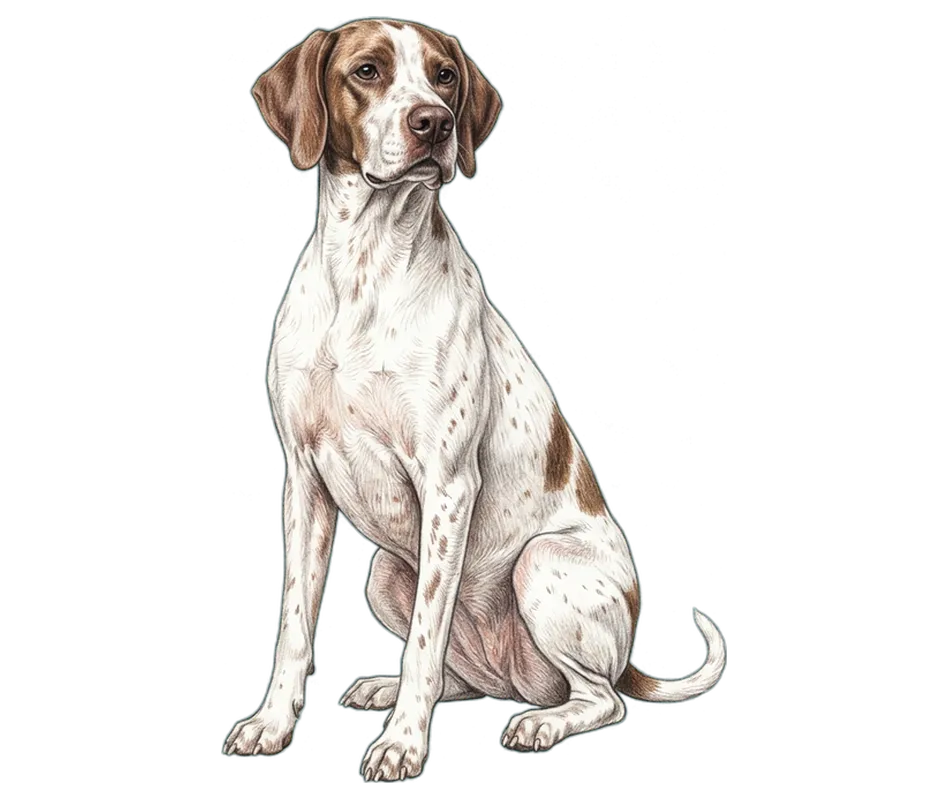
The Pointer is a lean, elegant sporting breed developed in England to range wide across open country, locate game birds by scent, and freeze into a steady, nose-forward point — a job that shaped a dog built for tireless movement, a keen nose, and close teamwork with a handler. Living well with one means committing to serious daily exercise and mental engagement, a warm place indoors since their short coat offers little insulation from cold, and the joint, thyroid, and skin care that support a long, active life. Given that outlet and companionship, the Pointer tends to repay it with an affectionate, eager-to-please temperament that thrives on partnership rather than solitude.
Daily-care planners
House-training
Moderate to house-trainHouse-training a Pointer usually goes smoothly, since the breed's eagerness to please and food motivation make routine-based training effective. A predictable schedule — frequent trips outside after meals, naps, and play, paired with calm, consistent praise — builds the habit efficiently; supervision and a regular routine matter more than any correction. Their intelligence means they pick up the pattern quickly once it is consistent.
Walks
Very high exercise needsThe Pointer's main walking challenge is volume, not manners: this breed needs vigorous, sustained daily exercise — brisk runs, hikes, or structured play — well beyond a casual stroll, and a Pointer that is under-exercised often channels that energy into unwanted behavior at home. Because their scenting and prey drive are strong, off-leash time is safest in a securely fenced area, and reliable recall should be well established before relying on it near wildlife or traffic. Their thin coat and low body fat make them sensitive to cold, so consider a coat for walks in chilly or wet weather and avoid long outdoor stretches in freezing conditions. Keep exercise low-impact while a young Pointer's joints are still developing, building up to their full adult activity level gradually.
Plan walksTemperament
The Pointer's history as an English gundog shaped a breed built to cover ground efficiently, use its nose to locate birds at a distance, and hold a steady point until a handler arrives — work that calls for stamina, focus, and a close working bond with people. That heritage shows up at home as a dog that is genuinely affectionate and eager to please, often described as gentle and sensitive, and one that generally prefers being near its family to being left to its own devices.
Well-socialized Pointers tend to be friendly and outgoing with people and sociable with other dogs, a trait that traces back to working in pairs or packs during a day's hunt. Their strong nose and prey drive mean small running animals can trigger an intense chase instinct, so a securely fenced area and reliable recall training matter more than they might for a lower-drive breed. They are intelligent, biddable, and respond well to reward-based training, though harsh corrections can make a sensitive Pointer shut down rather than engage.
This is a genuinely high-energy breed: Pointers were built for hours of purposeful movement, and without a substantial daily outlet that energy can turn into restlessness or destructive habits. Their short, smooth coat is easy to maintain but offers little protection from cold, so a Pointer left outside in chilly weather or without a coat on a cold walk can become genuinely uncomfortable. With patient socialization and enough exercise and mental engagement, Pointers are typically gentle and playful with children, making them rewarding family companions for households ready to keep up with them.
What life with a Pointer asks of you
Grooming & coat
- Grooming effort
- Low grooming
- Shedding
- Seasonal shedding
- Coat
- Short coat
Exercise & enrichment
- Daily exercise
- Very high exercise needs
- Mental stimulation
- High mental stimulation
- Trainability
- Eager to please
Temperament & sociability
- With people
- Enthusiastically friendly
- With dogs
- Sociable with other dogs
- With kids
- Gentle with children (always supervise)
- Barking / noise
- Quiet
- Chase instinct
- High prey drive
- Time alone
- Moderate separation-anxiety risk
Home & climate fit
- Hot weather
- High heat tolerance
- Cold weather
- Low cold tolerance
- House-training
- Moderate to house-train