Old English Sheepdog
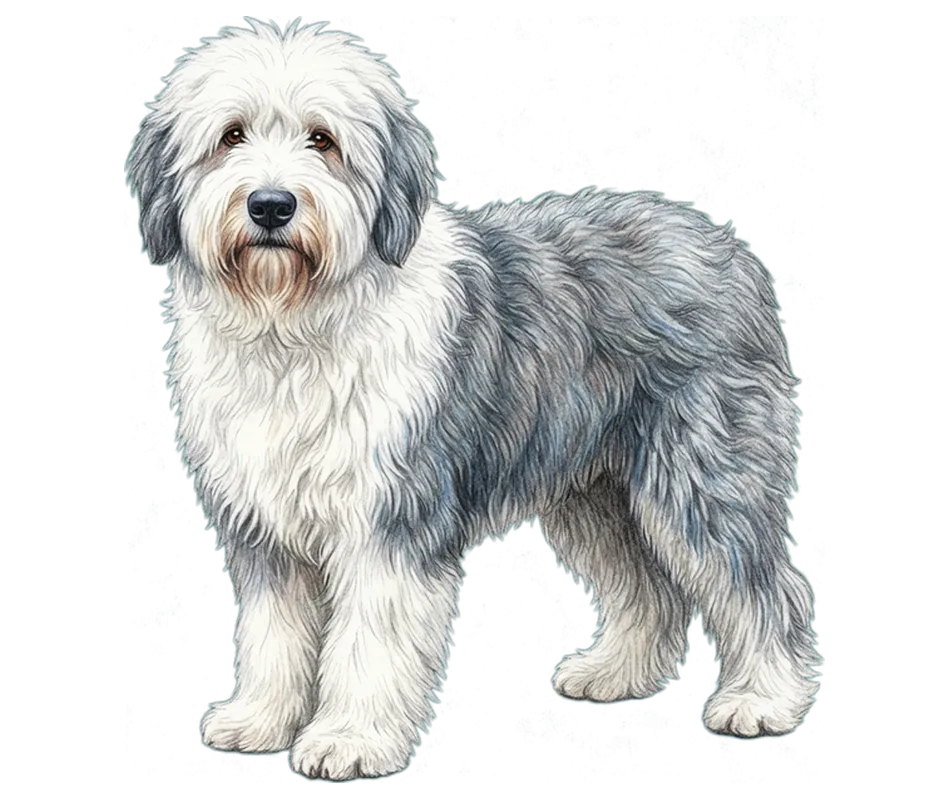
The Old English Sheepdog is a large, shaggy herding breed developed in the West Country of England to drive cattle and sheep to market — a heritage that shaped a dog that is intelligent, adaptable, and deeply devoted to its family. Living well with one means embracing a big, bear-like companion who wants to be included in daily life, alongside a profuse double coat that needs real, regular grooming, moderate but genuine daily exercise, and lifelong joint, thyroid, and eye care suited to a large working breed. Consistent grooming habits, positive training, and good climate-awareness on hot days bring out the playful, good-natured companion this breed is known for.
Daily-care planners
House-training
Moderate to house-trainHouse-training an Old English Sheepdog usually goes smoothly, since this is an intelligent breed that picks up routines quickly when guidance is consistent and reward-based. A predictable schedule of trips outside after meals, naps, and play — paired with calm praise for success — helps a puppy connect the pattern fast. The main practical wrinkle is coat management: keeping the area around the tail and hindquarters trimmed and clean makes cleanup easier and helps a puppy stay comfortable during the learning process.
Walks
Moderate exercise needsOld English Sheepdogs do well with steady, moderate daily walks and playtime rather than marathon exertion — enough to satisfy an intelligent herding mind without overtaxing a large-breed puppy's developing joints. Heat is the bigger consideration than distance: the dense double coat that keeps this breed comfortable in cool weather makes hot or humid conditions genuinely taxing, so favor the cool parts of the day, bring water, and watch for heavy panting or slowing as a cue to head home. A well-fitted harness and early leash manners make walks pleasant on both ends of the lead, and a herding dog's instinct to gather or circle is easiest to redirect with calm, consistent handling started young.
Plan walksTemperament
Bred in the English countryside to drive livestock to market, the Old English Sheepdog developed into a versatile, hardy worker with sound judgment and a notably good-natured temperament. That working intelligence carries straight into family life: this is a breed that thinks for itself, reads a household's rhythm quickly, and often takes on a self-appointed job of keeping everyone gently gathered together, sometimes including a nudge or lean to herd family members from room to room.
Affectionate and playful, Old English Sheepdogs bond closely with their people and are frequently described as natural clowns, happiest when included in daily activity rather than left on the sidelines. They tend to warm up more gradually to unfamiliar people and animals, so early, positive socialization helps a puppy grow into a confident, well-adjusted adult who takes new faces and situations in stride. Reward-based training suits their intelligence well; this is a thinking breed that responds better to engagement and consistency than to repetition alone.
Their famous coat is both a defining trait and a real daily responsibility: the dense double coat requires several thorough brushing sessions a week to prevent painful matting, and the extra insulation combined with a stocky, well-muscled build means this breed tolerates cold conditions far more comfortably than heat. Old English Sheepdogs have a long-standing reputation as gentle, watchful companions for children, though their size and enthusiasm mean play with small kids is best supervised so no one is knocked over by an exuberant greeting.
What life with a Old English Sheepdog asks of you
Grooming & coat
- Grooming effort
- High grooming
- Shedding
- Seasonal shedding
- Coat
- Long coat
Exercise & enrichment
- Daily exercise
- Moderate exercise needs
- Mental stimulation
- Moderate mental stimulation
- Trainability
- Balanced
Temperament & sociability
- With people
- Politely friendly
- With dogs
- Selective with other dogs
- With kids
- Gentle with children (always supervise)
- Barking / noise
- Moderately vocal
- Chase instinct
- Moderate prey drive
- Time alone
- Moderate separation-anxiety risk
Home & climate fit
- Hot weather
- Low heat tolerance
- Cold weather
- High cold tolerance
- House-training
- Moderate to house-train