Nova Scotia Duck Tolling Retriever
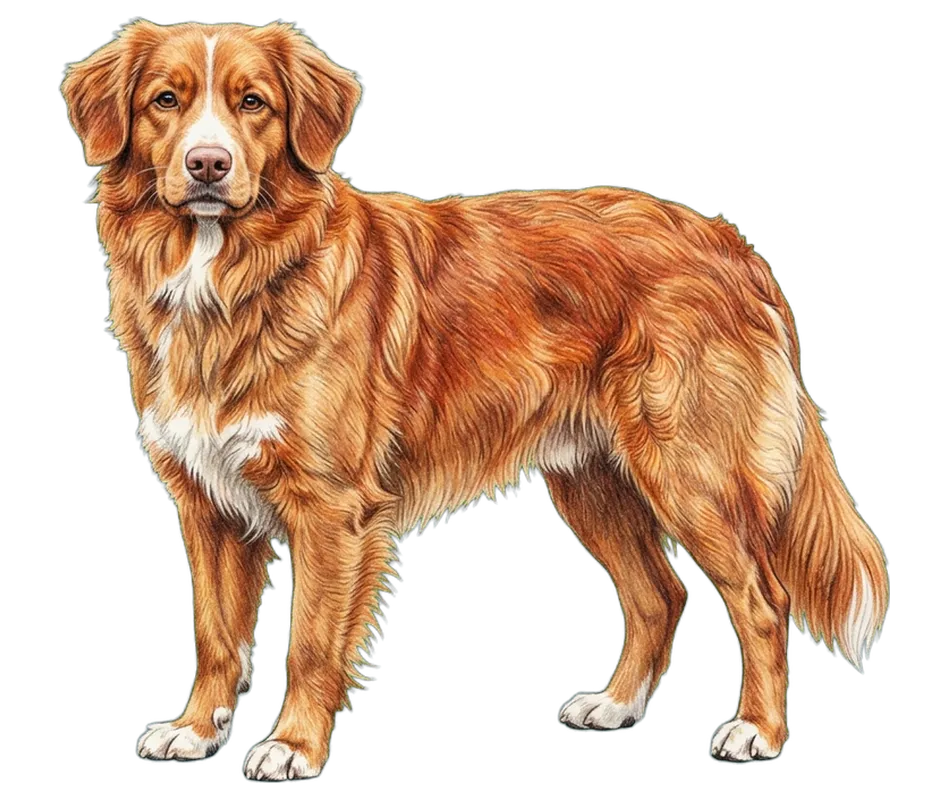
The Nova Scotia Duck Tolling Retriever, or Toller, is the smallest of the retriever breeds — developed on Canada's Atlantic coast to play and dance along the shoreline, luring curious ducks within gun range before switching roles to retrieve from icy water. That dual heritage shaped a dog that is playful, driven, and endlessly energetic outdoors, yet affectionate and often reserved or watchful with strangers until it warms up. Living well with a Toller means committing to substantial daily exercise and mental work, a weather-ready double coat that needs regular brushing, and close involvement in family life, since this is a breed that bonds tightly and does not thrive left to its own devices.
Daily-care planners
House-training
Easy to house-trainHouse-training a Toller is usually straightforward, since this eager-to-please, food-motivated breed picks up a consistent routine quickly. Frequent trips outside after meals, naps, and play, paired with warm praise or a small treat for success, build the habit efficiently; their intelligence means they generalize the routine fast once it is clear. The main pitfall is inconsistency — skipping trips during a busy day slows progress more than almost anything else.
Walks
Very high exercise needsThe Toller's walking challenge is less about distance and more about intensity: this breed thrives on vigorous, varied activity rather than a single sedate stroll, and a walk alone often will not meet its needs. Aim for substantial daily exercise that combines leash walks with real outlets for its retrieving drive — fetch, swimming, or structured play — and expect a young Toller to pull toward birds, squirrels, or moving objects, so early loose-leash training and a well-fitted harness pay off. Keep an eye out for water whenever you walk near it, since most Tollers will happily dive in given the chance, and always offer a rinse and ear check afterward. Meeting both the body's and the mind's need for work is what keeps a Toller settled at home.
Plan walksTemperament
The Toller's history is unusual among retrievers: rather than simply retrieving downed birds, it was bred to "toll," playing and tossing objects along the shoreline to draw the attention of curious waterfowl within range, then retrieving from cold water once the hunt began. That legacy produced a dog that is intensely playful, physically tireless, and highly food- and toy-motivated, alongside a genuine love of water and a soft, sensitive temperament that responds best to encouraging, reward-based handling rather than pressure.
Tollers are famously devoted to their households, often shadowing a favorite person from room to room, and this closeness means they can struggle with being left alone for long stretches without a gradual, positive introduction to solo time. With strangers they are commonly watchful or a little reserved rather than instantly outgoing — a normal, breed-typical trait that early, calm socialization helps them carry with confidence instead of anxiety. With other dogs they tend to be tolerant and sociable once introduced properly, particularly when they can share in play or water time together.
Bred to work for hours retrieving in cold coastal water, Tollers carry real athletic stamina and a strong prey drive toward birds, squirrels, and fast-moving toys, so a securely fenced area or a leash near wildlife matters. Their exercise needs run high even by retriever standards, and a Toller without an outlet for that energy and intelligence — swimming, fetch, scent games, dog sports — often turns to digging, chewing, or vocalizing to self-entertain. They are gentle, playful companions for children who are taught to play respectfully, and their enthusiasm is best matched with kids who can join in active games.
What life with a Nova Scotia Duck Tolling Retriever asks of you
Grooming & coat
- Grooming effort
- Moderate grooming
- Shedding
- Seasonal shedding
- Coat
- Medium coat
Exercise & enrichment
- Daily exercise
- Very high exercise needs
- Mental stimulation
- High mental stimulation
- Trainability
- Eager to please
Temperament & sociability
- With people
- Politely friendly
- With dogs
- Tolerant of other dogs
- With kids
- Gentle with children (always supervise)
- Barking / noise
- Moderately vocal
- Chase instinct
- High prey drive
- Time alone
- High separation-anxiety risk
Home & climate fit
- Hot weather
- Moderate heat tolerance
- Cold weather
- High cold tolerance
- House-training
- Easy to house-train