Norwich Terrier
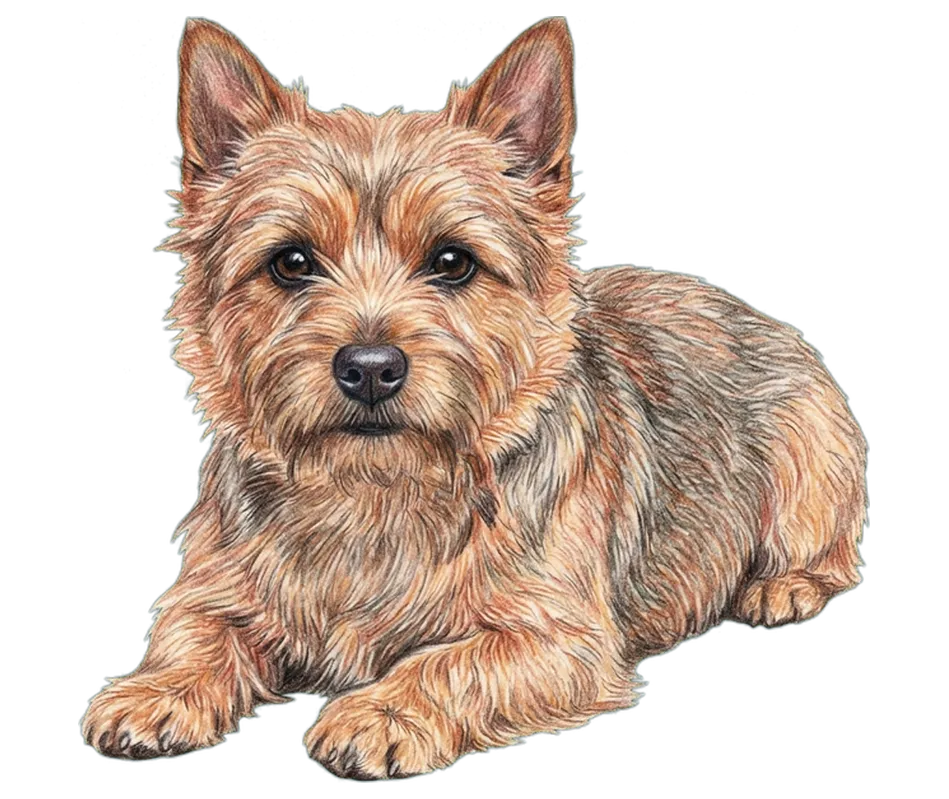
The Norwich Terrier is one of the smallest working terriers, bred in England to bolt rats and foxes from their dens alongside foxhound packs — a heritage that produced a sturdy, fearless little dog with an outsized personality. Living well with one means embracing a busy, people-loving companion who thrives on daily activity, mental engagement, and close family contact, alongside a low-shedding wire coat that needs regular brushing and periodic hand-stripping, plus the lifelong joint, airway, and dental care that attentive owners and responsible breeders support together. Early socialization and consistent, reward-based guidance bring out the affectionate, good-natured companion this breed is known for.
Daily-care planners
House-training
Moderate to house-trainHouse-training a Norwich Terrier calls for the patience typical of a small, independent-minded breed: a compact bladder and a clever, sometimes stubborn streak can make the early weeks feel slower than expected. A predictable schedule — frequent trips outside after meals, naps, and play, paired with warm praise for every success — builds the habit far faster than any correction, and close supervision or crate management in the early weeks prevents missed opportunities from becoming habits.
Walks
Moderate exercise needsWalking a Norwich Terrier is a lively, engaging routine once you plan around its earthdog instincts. A strong prey drive and a natural urge to dig or chase mean a secure harness and leash are wise in open or unfenced areas, with off-leash time saved for safely enclosed spaces where this little hunter can sniff and explore freely. Their harsh double coat handles cool and damp weather well, but keep an eye on warmer days and let panting or slowing set the pace, since some individuals are sensitive to heat and heavy exertion. Daily walks combined with sniffing time, short training games, and supervised digging or puzzle outlets keep this busy, people-oriented terrier fit, settled, and content.
Plan walksTemperament
The Norwich Terrier was developed in and around the English county of Norfolk to bolt rats from stable yards and go to ground after foxes alongside foxhound packs, a heritage shared with its close cousin the Norfolk Terrier until the two were recognized as separate breeds in 1964. That working background shaped a dog that is compact and hardy but never small in spirit: bold, curious, and always ready to investigate whatever catches its attention.
Unlike some terriers bred for solitary work, the Norwich has a reputation as one of the most sociable and good-natured members of its group, typically warm toward familiar people and comfortable in a busy household. Early, positive socialization still matters, and their independent, problem-solving mind means patient, reward-based training works far better than repetition or correction. They are intelligent and quick to learn what benefits them, which calls for consistency and engagement rather than harsh handling.
Their earthdog instincts remain close to the surface: a strong prey drive toward small, fast-moving animals and a natural urge to dig, so supervision and secure boundaries matter around cats, rodents, and garden beds alike. They tend to get along reasonably well with other dogs when raised together, though thoughtful introductions help since terrier confidence can turn into spirited disagreement over resources. Norwich Terriers are generally excellent with children they are raised alongside, sturdy enough for family life, though their small size still calls for supervision with very young children so play stays gentle on both sides.
What life with a Norwich Terrier asks of you
Grooming & coat
- Grooming effort
- Moderate grooming
- Shedding
- Minimal shedding
- Coat
- Medium coat
Exercise & enrichment
- Daily exercise
- Moderate exercise needs
- Mental stimulation
- Moderate mental stimulation
- Trainability
- Independent thinker
Temperament & sociability
- With people
- Enthusiastically friendly
- With dogs
- Selective with other dogs
- With kids
- Gentle with children (always supervise)
- Barking / noise
- Vocal
- Chase instinct
- High prey drive
- Time alone
- Moderate separation-anxiety risk
Home & climate fit
- Hot weather
- Moderate heat tolerance
- Cold weather
- High cold tolerance
- House-training
- Moderate to house-train