Newfoundland
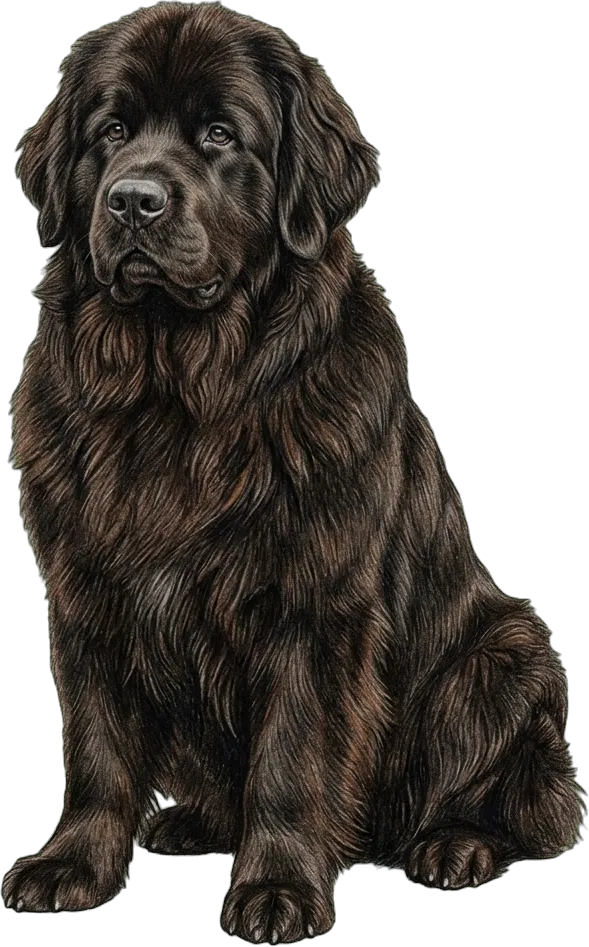
The Newfoundland is a giant working breed with a famously sweet, steady temperament — the original gentle giant, bred for cold-water rescue and hauling. Living well with one means embracing a heavy double coat, real drool, and a dog that overheats easily, while giving this deeply people-oriented companion the daily low-impact exercise and indoor family life it thrives on.
Daily-care planners
House-training
Moderate to house-trainHouse-training a Newfoundland is usually straightforward given how eager to please they are, but a giant-breed puppy's bladder and slower physical maturity reward patience and a consistent schedule. Frequent, calm trips outside after meals, naps, and play — paired with warm praise for every success — build the habit faster than any correction. In cold or wet weather they are generally happy to head out, which works in your favor.
Walks
Moderate exercise needsThe Newfoundland's main walking constraint is heat, not distance. Their thick, water-resistant double coat is superb insulation for cold and swimming but makes warm-weather outings risky, so aim for the cool of early morning or evening and treat heavy panting or slowing as cues to head home and offer water. Keep sessions moderate and low-impact while a puppy's joints are still developing, and let swimming carry some of the load — it is the ideal exercise for this water-loving breed. A steady daily routine keeps a giant dog fit, lean, and comfortable.
Plan walksTemperament
The Newfoundland pairs immense size with a notably gentle, cooperative temperament. They are eager to please and respond beautifully to patient, reward-based training — which matters, because a dog this large needs reliable manners and steady early socialization to move comfortably through a human world. Their heritage as water-rescue and hauling dogs shows up as a willing partner rather than an independent decision-maker.
Despite the calm reputation, Newfies are moderately active and need daily, low-impact exercise: relaxed walks, swimming, and gentle play keep joints healthy and weight in check. They are deeply people-oriented and do best living indoors as part of the household; long stretches of isolation suit them poorly. With their dense double coat they are built for cold and water, but they tire and overheat quickly once the weather turns warm.
They are typically friendly toward other dogs and gentle with children, the traits behind their "nanny dog" nickname — though their sheer size means play with small children should be supervised, so a well-meaning lean or wag doesn't knock anyone over. Expect heavy shedding and genuine drool; brushing several times a week manages the coat and keeps the skin underneath healthy.
What life with a Newfoundland asks of you
Grooming & coat
- Grooming effort
- High grooming
- Shedding
- Heavy shedding
- Coat
- Long coat
Exercise & enrichment
- Daily exercise
- Moderate exercise needs
- Mental stimulation
- Moderate mental stimulation
- Trainability
- Eager to please
Temperament & sociability
- With people
- Enthusiastically friendly
- With dogs
- Sociable with other dogs
- With kids
- Gentle with children (always supervise)
- Barking / noise
- Quiet
- Chase instinct
- Low prey drive
- Time alone
- Moderate separation-anxiety risk
Home & climate fit
- Hot weather
- Low heat tolerance
- Cold weather
- High cold tolerance
- House-training
- Moderate to house-train