Neapolitan Mastiff
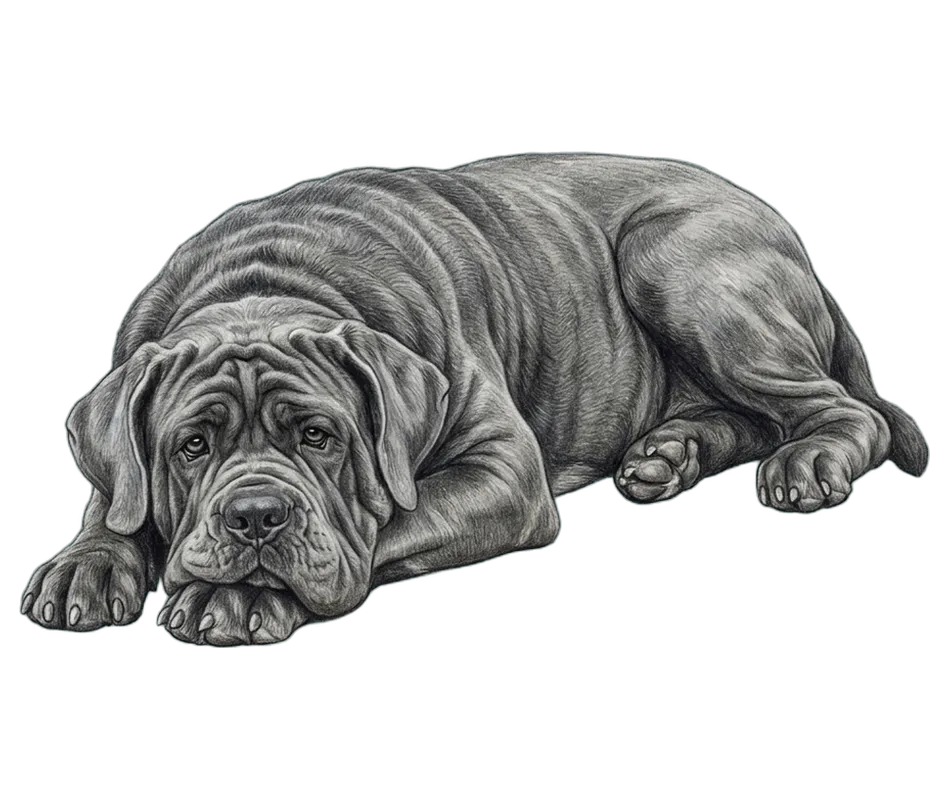
The Neapolitan Mastiff is an ancient Italian guardian breed, descended from Roman war and property dogs, built to hold ground through sheer presence rather than speed or aggression. Living well with one means embracing a giant, deeply loyal homebody who is calm and dignified indoors but naturally wary of strangers, alongside real commitments: routine cleaning of the loose facial skin and drooping jowls, drool management, heat-conscious exercise for a heavy frame, and the joint and heart care a giant breed deserves throughout life. Early, patient socialization channels that watchful instinct into a steady, trustworthy companion rather than reactive suspicion.
Daily-care planners
House-training
Challenging to house-trainHouse-training a Neapolitan Mastiff calls for extra patience: this is a giant breed that matures slowly in body, and its independent, think-for-itself temperament means it won't always rush to comply just to please. A calm, predictable schedule — frequent trips outside after meals, naps, and play, with warm, low-key praise for every success — builds the habit more reliably than repetition or correction. Consistency from everyone in the household, kept up over several months, is what carries it through.
Walks
Low exercise needsFor a Neapolitan Mastiff, walks are less about distance and more about steady, low-impact movement and heat management. Their heavy build, short coat, and low exercise need mean brief, calm outings in the cool of the morning or evening suit them best, with water breaks and a watchful eye for heavy panting as a cue to head home. Because a puppy of this breed will become a very large adult, gentle leash manners and a comfortable harness are worth establishing early, while joints are still developing and while the dog is still easy to guide by hand. A predictable, unhurried routine matches this breed's naturally low-key energy.
Plan walksTemperament
The Neapolitan Mastiff descends from ancient Roman molosser-type dogs used to guard property and livestock, and centuries of that work shaped a breed that relies on quiet, weighty presence rather than noise or quick movement. At home this translates into a calm, deliberate companion that bonds intensely with its own family and prefers to observe from a comfortable spot nearby rather than seek out constant activity.
That guardian heritage also means a Neapolitan Mastiff is naturally reserved and watchful around unfamiliar people, so early, positive socialization is essential to raise a dog that is confident rather than suspicious. They are independent thinkers who were bred to make their own judgment calls, so training rewards patience and consistency over repetition-heavy drilling; harsh methods tend to make an already wary dog more guarded, not more obedient. With other dogs they can be selective, and thoughtful, supervised introductions help keep interactions calm.
Exercise needs are modest — short, unhurried walks and time to simply be near their people suit this breed far better than sustained activity, and their bulk and short coat make heat genuinely risky, so warm-weather outings belong in the cooler parts of the day. The loose skin, jowls, and drool that define the breed's look also mean a standing routine of face and fold cleaning. They are typically patient and steady with the children they're raised alongside, though supervision matters simply because of their size and weight around small kids.
What life with a Neapolitan Mastiff asks of you
Grooming & coat
- Grooming effort
- Moderate grooming
- Shedding
- Seasonal shedding
- Coat
- Short coat
Exercise & enrichment
- Daily exercise
- Low exercise needs
- Mental stimulation
- Low mental stimulation
- Trainability
- Independent thinker
Temperament & sociability
- With people
- Reserved with strangers
- With dogs
- Selective with other dogs
- With kids
- Good with considerate children (supervise)
- Barking / noise
- Quiet
- Chase instinct
- Low prey drive
- Time alone
- Moderate separation-anxiety risk
Home & climate fit
- Hot weather
- Low heat tolerance
- Cold weather
- Low cold tolerance
- House-training
- Challenging to house-train