Miniature Pinscher
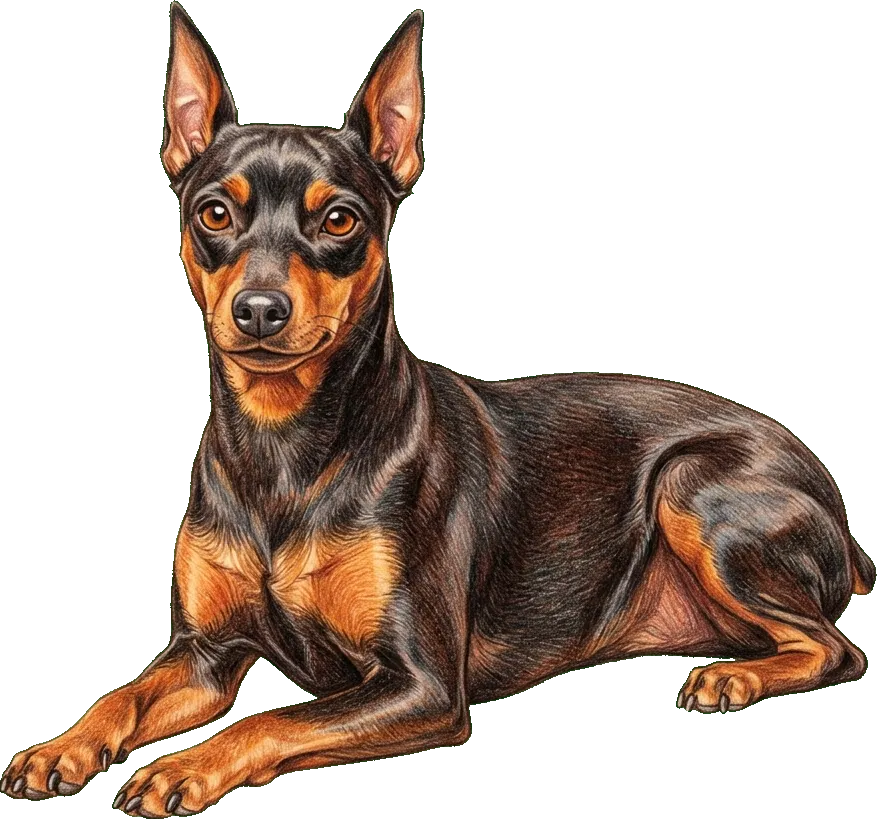
The Miniature Pinscher is a small, spirited German breed developed to hunt vermin — self-assured, curious, and famously animated, with a high-stepping 'hackney' gait. Nicknamed the 'King of Toys,' a Min Pin lives best with an owner who enjoys its bold personality and provides daily exercise, mental engagement, positive training, and secure fencing for a dog with a strong chase instinct. Its short coat is easy to care for, but its small size and thin coat mean it feels the cold and needs warmth in winter.
Daily-care planners
House-training
Challenging to house-trainHouse-training a Miniature Pinscher takes patience and consistency. Like many small breeds, they have a small bladder and a low tolerance for cold or wet weather, which can make outdoor trips less appealing to them. A steady schedule, a sheltered outdoor spot, and high-value rewards for every success — kept brief and upbeat — teach a young dog that going outside is worth braving the chill. Supervising closely indoors and rewarding good choices work far better than any correction.
Walks
Moderate exercise needsWalking a Miniature Pinscher is a pleasure once you plan around two things: their chase instinct and their sensitivity to cold. Because they are hardwired to notice and pursue small, fast-moving animals, keep them on a secure leash or within fully fenced space so a sudden dash stays safe. When temperatures drop, their thin coat and small body lose heat quickly, so a well-fitted winter coat is a comfort essential, not a fashion choice. Their exercise needs are moderate and easily met with brisk daily walks and some active play — enough to keep a bright, energetic little dog happy and settled at home.
Plan walksTemperament
Despite standing barely a foot tall, the Miniature Pinscher carries an outsized, confident personality. Bred to hunt rats and other vermin, they are alert, quick, and self-assured, and they approach the world with obvious curiosity and drive. As an independent thinker, a Min Pin does best with patient, consistent, reward-based training that keeps sessions short and engaging; harsh handling only undermines the trust that brings out their cooperative side. They are clever and easily bored, so mental engagement matters as much as physical activity.
They bond closely with their families and are affectionate at home, while typically being reserved and watchful toward strangers — a natural alertness that makes them attentive little watchdogs. That same trait means they are often vocal, so early, positive socialization and teaching a reliable "quiet" cue help channel their alarm-barking into something manageable. With children they generally do best in calm households with older, considerate kids, since their small, fine-boned frame can be injured by rough or unpredictable play.
A strong prey drive comes with the ratting heritage: Min Pins are quick to notice and chase small, fast-moving things, so secure fencing and a patiently built recall keep a curious, speedy dog safe. They are energetic and enjoy daily walks and play, but their exercise needs are moderate and easily met, which suits many living situations.
Their smooth, short coat is very low-maintenance and sheds little, needing only occasional brushing. Because they are small and thinly coated, though, they feel the cold keenly — a fitted coat for chilly walks and cozy indoor bedding are genuine comforts rather than luxuries.
What life with a Miniature Pinscher asks of you
Grooming & coat
- Grooming effort
- Low grooming
- Shedding
- Minimal shedding
- Coat
- Short coat
Exercise & enrichment
- Daily exercise
- Moderate exercise needs
- Mental stimulation
- High mental stimulation
- Trainability
- Independent thinker
Temperament & sociability
- With people
- Reserved with strangers
- With dogs
- Selective with other dogs
- With kids
- Good with considerate children (supervise)
- Barking / noise
- Vocal
- Chase instinct
- High prey drive
- Time alone
- Moderate separation-anxiety risk
Home & climate fit
- Hot weather
- Moderate heat tolerance
- Cold weather
- Low cold tolerance
- House-training
- Challenging to house-train