Miniature Bull Terrier
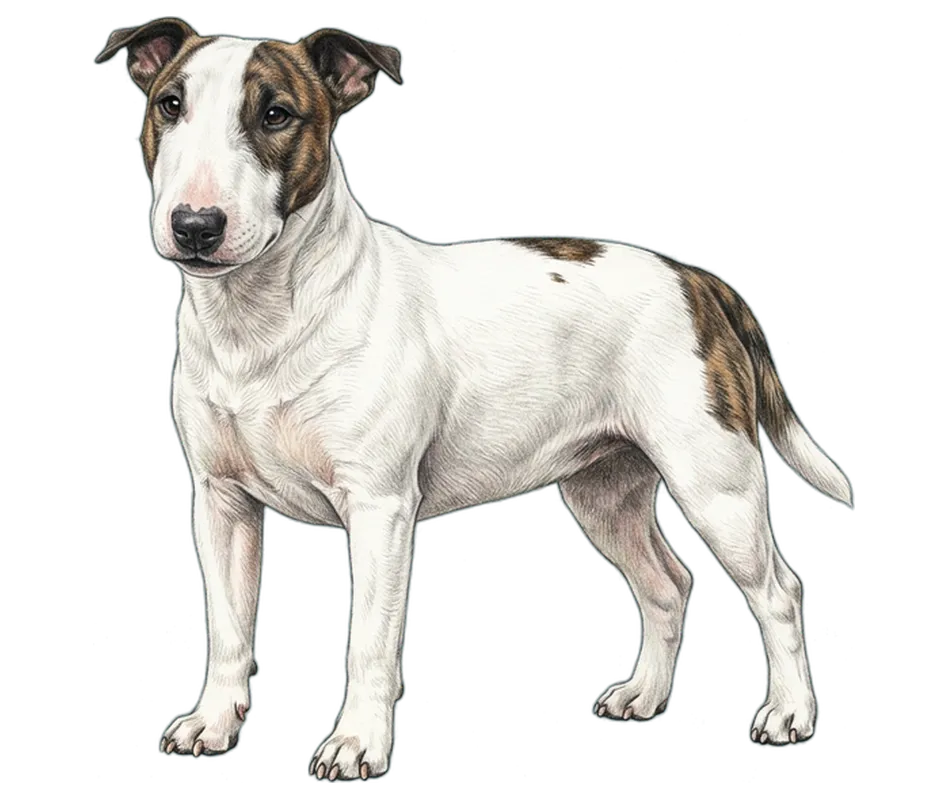
The Miniature Bull Terrier is a compact, muscular terrier with the same egg-shaped head and gladiator confidence as its larger cousin, scaled down into a small-breed body. Underneath the comic, clownish expression is a sturdy, affectionate companion that was bred for close human partnership rather than solitary work, and living well with one means channeling real terrier energy and independence into daily exercise, mental enrichment, and patient, reward-based training. A short easy-care coat and a generally low-cold-tolerance body mean grooming is simple but a sweater helps on chilly walks, while lifelong attention to hearing, vision, joints, and heart health lets this big-personality little dog thrive.
Daily-care planners
House-training
Moderate to house-trainHouse-training a Miniature Bull Terrier is generally manageable but rewards real consistency, since terrier independence can mean a puppy tests the routine before settling into it. Frequent, calm trips outside after meals, naps, and play, paired with enthusiastic praise for every success outdoors, build the habit faster than any correction. A predictable daily schedule and close supervision indoors during the early months carry a puppy through to reliability.
Walks
High exercise needsThe Miniature Bull Terrier's walking needs are shaped by real terrier energy in a small frame: daily exercise plus mental engagement, like short training drills or scent games worked into the route, keeps both body and mind satisfied. Their strong prey drive means a secure leash and harness matter, especially around small animals, and selective sociability with other dogs calls for measured, well-managed introductions rather than free-for-all greetings. A short coat gives little protection from cold, so a sweater or coat is worth carrying on brisk-weather walks, while their compact build tolerates warm weather reasonably well provided water and shade are available. Keeping walks varied and engaging helps prevent the boredom that this clever little terrier is quick to turn into mischief.
Plan walksTemperament
The Miniature Bull Terrier was developed as a scaled-down companion version of the Bull Terrier, keeping the breed's egg-shaped head, muscular build, and clownish sense of humor in a smaller package suited to close family life. At home this shows up as an affectionate, often comically theatrical companion that thrives on being included in everything and forms strong bonds with its people.
That terrier heritage also brings real independence and a stubborn streak, so early, positive socialization and patient, reward-based training matter from puppyhood. Mini Bull Terriers are intelligent and can be quick problem-solvers, which cuts both ways — a bored, understimulated dog often invents its own entertainment, so consistent structure and mental engagement channel that cleverness productively. Their strong prey drive and selective attitude toward other dogs mean thoughtful introductions, supervision, and secure fencing are worth the effort.
Energy runs high for a small dog: daily exercise plus puzzle toys or training sessions keep a Mini Bull Terrier settled and content, and an under-exercised one tends to become mouthy, vocal, or destructive rather than genuinely calm. Their short coat is easy to maintain but offers little insulation, so cold-weather walks often call for a coat or sweater. They can be warm and playful with the children they are raised alongside, though their sturdy, exuberant play style means supervision with small children helps keep interactions gentle on both sides.
What life with a Miniature Bull Terrier asks of you
Grooming & coat
- Grooming effort
- Low grooming
- Shedding
- Seasonal shedding
- Coat
- Short coat
Exercise & enrichment
- Daily exercise
- High exercise needs
- Mental stimulation
- High mental stimulation
- Trainability
- Independent thinker
Temperament & sociability
- With people
- Enthusiastically friendly
- With dogs
- Selective with other dogs
- With kids
- Good with considerate children (supervise)
- Barking / noise
- Moderately vocal
- Chase instinct
- High prey drive
- Time alone
- Moderate separation-anxiety risk
Home & climate fit
- Hot weather
- Moderate heat tolerance
- Cold weather
- Low cold tolerance
- House-training
- Moderate to house-train