Miniature American Shepherd
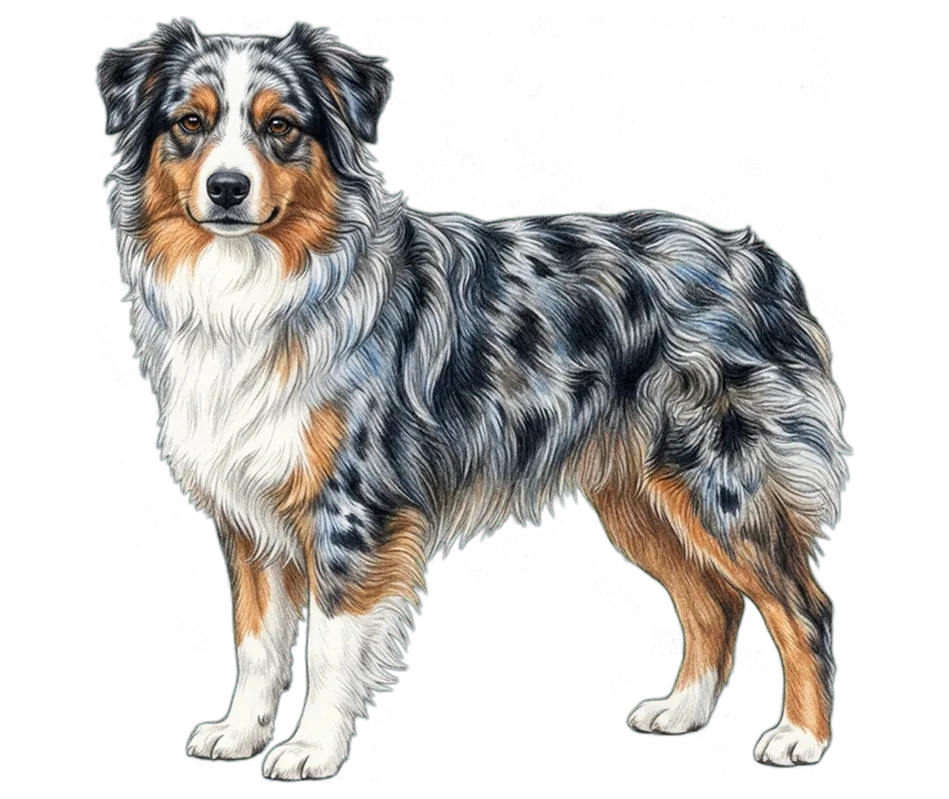
The Miniature American Shepherd was developed on American ranches by breeding down the Australian Shepherd for a smaller, equally capable working and companion dog — the result is a compact herder with a big dog's intelligence, energy, and devotion packed into a smaller frame. Living well with one means honoring real working-breed needs in a small body: daily physical exercise, consistent mental challenges, early socialization, and a weather-resistant double coat that benefits from regular brushing. Thoughtful training and engagement bring out a quick, biddable, deeply loyal companion.
Daily-care planners
House-training
Moderate to house-trainHouse-training a Miniature American Shepherd is usually quick going, since the breed's intelligence and eagerness to work with its people make routines easy to learn. A predictable schedule — frequent trips outside after waking, eating, and play, with calm, generous praise for success — lets a puppy connect the dots fast; consistency and close supervision indoors during the early weeks prevent the accidents that slow progress down.
Walks
High exercise needsThe main walk challenge with this breed is meeting its energy, not managing its size. A single stroll rarely satisfies a dog built for a full working day, so plan for brisk daily walks plus additional structured activity — fetch, agility-style games, or scent work — to use up both body and mind. Because herding instinct can pull attention toward joggers, cyclists, or other dogs, early leash training and loose-leash manners pay off quickly in such a responsive, trainable breed. Rotating routes and adding light mental tasks along the way (a sit-stay at corners, a short trick) keeps walks satisfying rather than merely routine.
Plan walksTemperament
Bred on American ranches from the 1960s onward to give herders and rodeo hands a smaller, equally capable working dog, the Miniature American Shepherd inherited the full Australian Shepherd toolkit — intelligence, biddability, and stamina — scaled down in size but not in substance. At home this shows up as a dog that wants a job: puzzle feeders, trick training, and structured play channel that same working drive that once moved livestock.
The breed is typically devoted and affectionate with its own family, though a degree of reserve with unfamiliar people is normal and expected rather than a flaw; early, positive socialization helps a puppy grow into a confident, well-adjusted adult rather than a wary one. Herding instinct can surface as nipping at heels or circling fast-moving children or other pets, so supervised introductions and redirecting that drive into appropriate games serve everyone well. With other dogs, many are selective rather than universally social, and thoughtful, gradual introductions go further than forced meetings.
This is a genuinely energetic, high-drive dog in a small-to-medium body, and matching that need with daily exercise and mental work is what keeps a Miniature American Shepherd settled and content indoors. Their medium-length double coat is weather-resistant and only moderately demanding, needing regular brushing rather than daily grooming, and they generally adapt reasonably well across seasons with sensible precautions in extreme heat or cold.
What life with a Miniature American Shepherd asks of you
Grooming & coat
- Grooming effort
- Moderate grooming
- Shedding
- Seasonal shedding
- Coat
- Medium coat
Exercise & enrichment
- Daily exercise
- High exercise needs
- Mental stimulation
- High mental stimulation
- Trainability
- Eager to please
Temperament & sociability
- With people
- Politely friendly
- With dogs
- Selective with other dogs
- With kids
- Good with considerate children (supervise)
- Barking / noise
- Moderately vocal
- Chase instinct
- Moderate prey drive
- Time alone
- Moderate separation-anxiety risk
Home & climate fit
- Hot weather
- Moderate heat tolerance
- Cold weather
- Moderate cold tolerance
- House-training
- Moderate to house-train