Lagotto Romagnolo
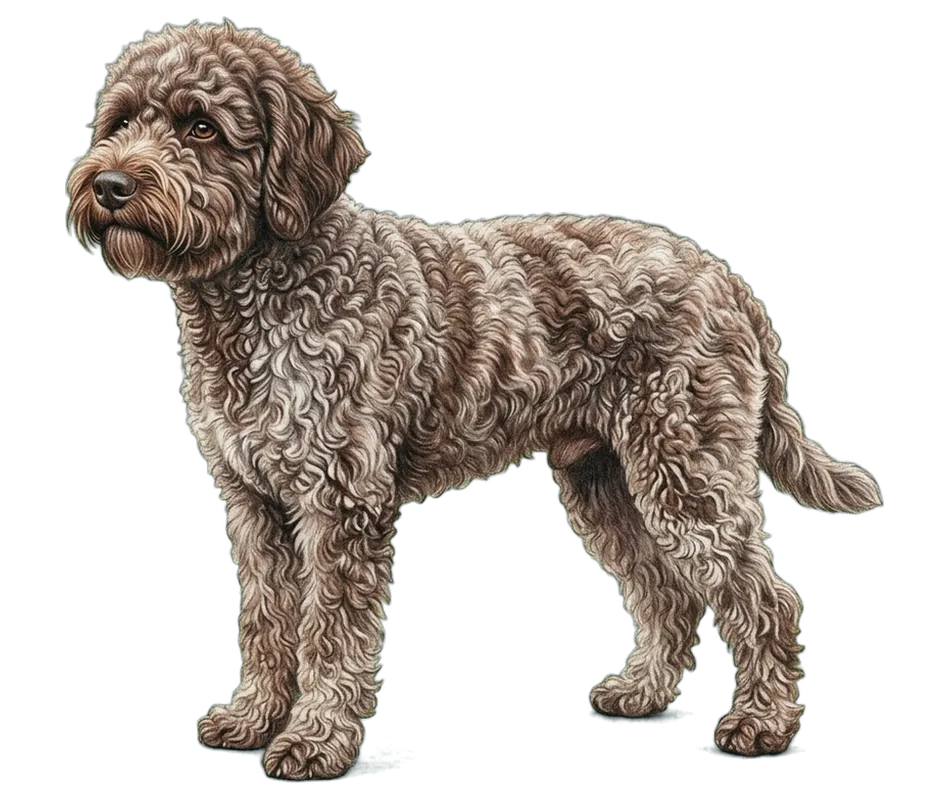
The Lagotto Romagnolo is a curly-coated Italian breed originally developed as a water retriever in the marshes of Romagna before becoming the world's foremost truffle-hunting dog, prized for a keen nose and tireless enthusiasm for scent work. Living well with one means channeling that scenting drive and sharp intelligence into daily nose games, training, and companionship, alongside a dense, low-shedding coat that needs frequent brushing and regular clipping to stay comfortable and mat-free. Affectionate and eager to please, the Lagotto thrives as a close family companion when its need for mental engagement and social connection is met with patience and consistency.
Daily-care planners
House-training
Easy to house-trainHouse-training a Lagotto Romagnolo is usually one of the more straightforward parts of raising the breed, since their eagerness to please and quick problem-solving respond well to a predictable routine. Frequent, calm trips outside after meals, naps, and play, paired with warm praise for every success, build the habit efficiently; because the breed is also a natural chewer and digger when bored, keeping early outings purposeful rather than turning them into play helps the lesson stick. Consistency in the first weeks, more than any single technique, is what carries a puppy through.
Walks
Moderate exercise needsWalking a Lagotto Romagnolo is less about covering distance and more about engaging that nose — this is a breed built for scent work, and a walk that allows time to sniff and investigate tends to satisfy it far more than a brisk, purely physical outing. Daily walks and play meet their moderate exercise needs well, and many Lagottos enjoy add-on activities like nose work games, swimming, or dabbling in scent-based sport, which channel their working heritage safely. Keep early walks low-impact while a puppy's joints are still developing, and introduce leash manners and a comfortable harness early, since a calm walking style is far easier to establish with a young dog than to retrain later. Pairing physical movement with mental engagement is what keeps this breed truly content.
Plan walksTemperament
The Lagotto Romagnolo's ancestors worked the marshlands of Italy's Romagna region as water retrievers long before the wetlands were drained; when that work disappeared, their extraordinary nose and drive found a new calling as the breed most closely associated with hunting truffles. That heritage shaped a dog built around its nose and its brain: Lagottos are quick, curious problem-solvers who are happiest with a job to do, whether that is a structured scent game, a training session, or simply exploring new smells on a walk.
At home this scenting intelligence pairs with a warm, affectionate temperament. Lagottos are attentive and eager to please, which generally makes them responsive to reward-based training, but their intelligence also means understimulation shows up quickly as restlessness, digging, or vocalizing. Early, broad socialization helps this naturally people-focused breed grow into a confident, adaptable adult rather than a clingy or anxious one, since the same devotion that makes them wonderful companions can tip into separation-related stress if alone time is not built up gradually.
Lagottos are active but not high-drive in the way a working retriever or herding breed can be — daily walks, play, and scent work meet their exercise needs well. Their signature curly, water-resistant coat is a defining feature of the breed but not a low-maintenance one: without regular brushing it cords and mats close to the skin, so a consistent grooming routine matters as much for comfort as for appearance. With the children and animals they are raised alongside, Lagottos are typically gentle and sociable, and thoughtful introductions help that friendliness extend to new people and pets throughout life.
What life with a Lagotto Romagnolo asks of you
Grooming & coat
- Grooming effort
- High grooming
- Shedding
- Minimal shedding
- Coat
- Medium coat
Exercise & enrichment
- Daily exercise
- Moderate exercise needs
- Mental stimulation
- High mental stimulation
- Trainability
- Eager to please
Temperament & sociability
- With people
- Enthusiastically friendly
- With dogs
- Tolerant of other dogs
- With kids
- Gentle with children (always supervise)
- Barking / noise
- Moderately vocal
- Chase instinct
- Moderate prey drive
- Time alone
- Moderate separation-anxiety risk
Home & climate fit
- Hot weather
- Moderate heat tolerance
- Cold weather
- High cold tolerance
- House-training
- Easy to house-train