Keeshond
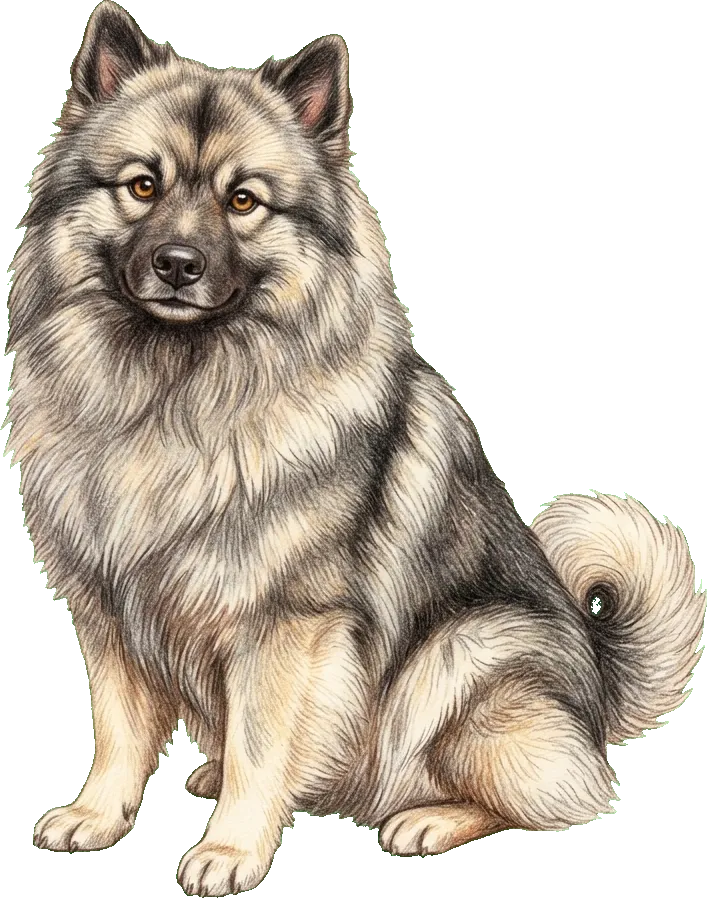
The Keeshond is a medium-sized spitz with a plush silver-and-black coat, a plumed tail curled over the back, and the distinctive 'spectacles' of shading around the eyes. Bred as a companion and watchful barge dog on Dutch canal boats, it is famously friendly and people-centered — happiest at the heart of the household rather than off on its own. Living well with one means embracing an abundant double coat that needs regular brushing, a dog that feels the heat, and a bright, sociable companion that wants to be involved in family life.
Daily-care planners
House-training
Moderate to house-trainHouse-training a Keeshond is usually manageable, helped by how eager these bright dogs are to please and to work with you. A consistent schedule does most of the work: calm trips outside after meals, naps, and play, with warm praise for every success. Their cold-hardy coat means most are happy to head out in chilly weather, so a steady routine builds the habit smoothly.
Walks
Moderate exercise needsA Keeshond needs moderate daily exercise — a couple of good walks plus play and mental engagement keep this clever companion happy and fit. The main thing to plan around is heat: the thick double coat is superb insulation for cold but makes warm-weather outings tiring, so favor early morning or evening and treat heavy panting or slowing as cues to rest in the shade and offer water. Never shave the coat to cool a dog down — it actually protects against both cold and sun; regular brushing keeps it doing its job. With a sociable, low-prey-drive nature, most Keeshonden are relaxed, friendly walking partners.
Plan walksTemperament
The Keeshond is an outgoing, deeply people-oriented companion, often described as the smiling "Dutch barge dog." It bonds closely with its family and thrives on being included in daily life, so it does best in a home where it isn't left alone for long stretches; gradual, patient practice at being on its own helps prevent separation distress. Bright and quick to learn, the Keeshond responds beautifully to gentle, reward-based training and enjoys having a job to do, whether that's a trick session, a puzzle toy, or simply keeping you company.
True to its watchdog heritage, the Keeshond is alert and communicative and will readily announce visitors. This is easy to shape with early, kind training that teaches when to settle, so a naturally expressive dog stays a comfortable housemate. With gentle guidance and plenty of engagement, that same attentiveness makes for a wonderfully responsive companion.
Keeshonden are typically warm and sociable with children, other dogs, and new people, and their low chase instinct makes them easygoing on shared walks. They belong indoors with the family: their dense coat suits cold far better than heat, so warm-weather activity should be kept cool and unhurried.
What life with a Keeshond asks of you
Grooming & coat
- Grooming effort
- High grooming
- Shedding
- Heavy shedding
- Coat
- Long coat
Exercise & enrichment
- Daily exercise
- Moderate exercise needs
- Mental stimulation
- Moderate mental stimulation
- Trainability
- Eager to please
Temperament & sociability
- With people
- Enthusiastically friendly
- With dogs
- Sociable with other dogs
- With kids
- Gentle with children (always supervise)
- Barking / noise
- Vocal
- Chase instinct
- Low prey drive
- Time alone
- Moderate separation-anxiety risk
Home & climate fit
- Hot weather
- Low heat tolerance
- Cold weather
- High cold tolerance
- House-training
- Moderate to house-train