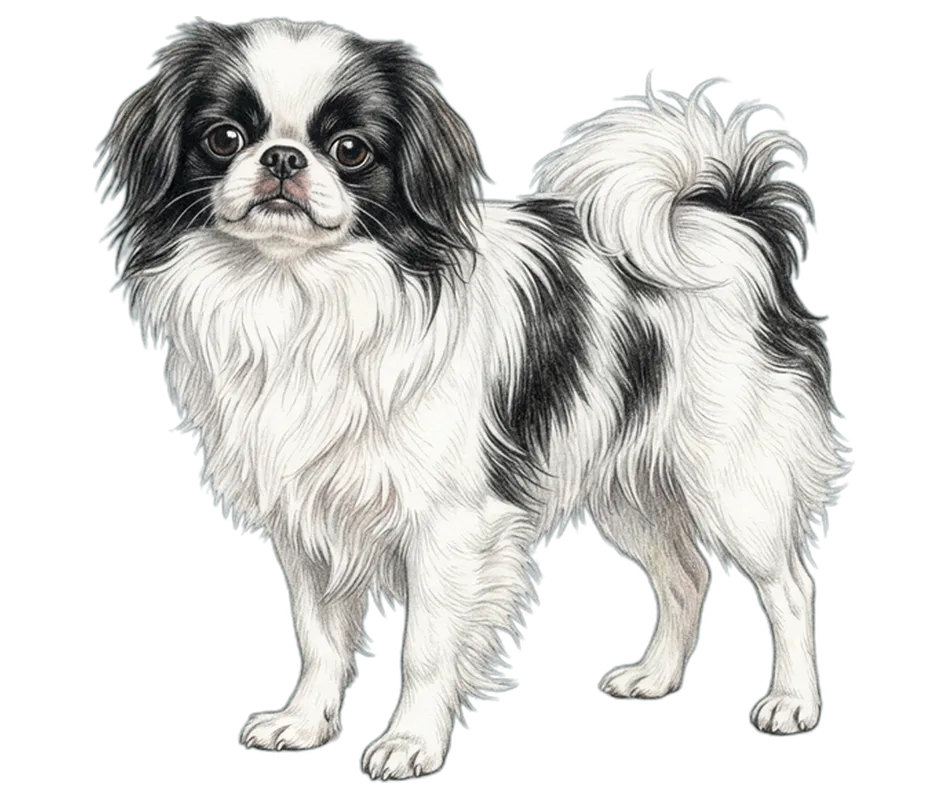
Japanese Chin
The Japanese Chin is an ancient companion breed, treasured for centuries in the imperial courts of Japan for little reason beyond good company — a heritage that shaped a small, elegant dog with a cat-like independence, a playful sense of humor, and deep devotion to its favorite people. Living well with a Chin means embracing an indoor companion whose flat face benefits from cool, calm care, a silky single coat that stays tidy with regular brushing, and gentle handling that respects a small, refined body. Patient socialization and quiet confidence-building bring out the merry, affectionate companion this breed has been shaped to be for well over a thousand years.
Daily-care planners
House-training
Challenging to house-trainHouse-training a Japanese Chin typically takes more patience than many breeds, a trait it shares with most toy dogs — a small bladder means frequent trips outside, and a small size can make early accidents easy to miss indoors. Consistency pays off: a predictable schedule of trips outside after meals, naps, and play, generous praise for every success, and close supervision (or a confinement area) during the learning phase build the habit steadily. Crate training and a fixed potty spot both help a Chin generalize the routine faster.
Walks
Low exercise needsA Japanese Chin's walking needs are modest — short, calm strolls and some indoor play are usually enough to keep this companion breed content and fit. The bigger consideration is the flat face: brachycephalic dogs work harder to breathe and cool themselves, so walks belong in the cool part of the day, humid or hot weather calls for extra caution, and heavy panting or slowing down is a cue to stop and offer water. A lightweight harness protects the neck and airway better than a collar, and short, positive leash sessions early on build good walking manners without overtaxing a small puppy's body.
Plan walksTemperament
The Japanese Chin's entire history is one of companionship: for over a thousand years the breed was kept in the imperial courts and noble households of Japan, prized not for any working task but simply for its charm and presence. That heritage produced a dog that is deeply people-oriented yet carries a distinctive, almost feline independence — Chins are known for grooming themselves like cats, perching on furniture to survey a room, and using their front paws with surprising dexterity. They bond closely with their families and are happiest kept indoors as part of daily life, not left alone for long stretches.
Bright and quick to learn, Chins respond best to gentle, reward-based training and can be sensitive to a harsh tone, so patient, positive handling brings out their natural eagerness to please. They tend to be reserved rather than instantly friendly with strangers, so early, positive socialization helps them grow into confident, well-adjusted adults rather than shy or anxious ones. With other pets they are generally sociable and adaptable, though as with any small dog, introductions to larger or boisterous animals are worth supervising.
Chins are low-energy dogs content with short walks and indoor play rather than vigorous exercise, and their flat face means hot, humid weather and strenuous activity both warrant real caution. Their prominent, expressive eyes are part of the breed's character but also benefit from routine care, and their small, delicate frame means play with young children should always be supervised so the dog is never accidentally dropped or roughly handled.
What life with a Japanese Chin asks of you
Grooming & coat
- Grooming effort
- Moderate grooming
- Shedding
- Seasonal shedding
- Coat
- Long coat
Exercise & enrichment
- Daily exercise
- Low exercise needs
- Mental stimulation
- Moderate mental stimulation
- Trainability
- Eager to please
Temperament & sociability
- With people
- Enthusiastically friendly
- With dogs
- Tolerant of other dogs
- With kids
- Good with considerate children (supervise)
- Barking / noise
- Quiet
- Chase instinct
- Low prey drive
- Time alone
- Moderate separation-anxiety risk
Home & climate fit
- Hot weather
- Low heat tolerance
- Cold weather
- Low cold tolerance
- House-training
- Challenging to house-train