Irish Wolfhound
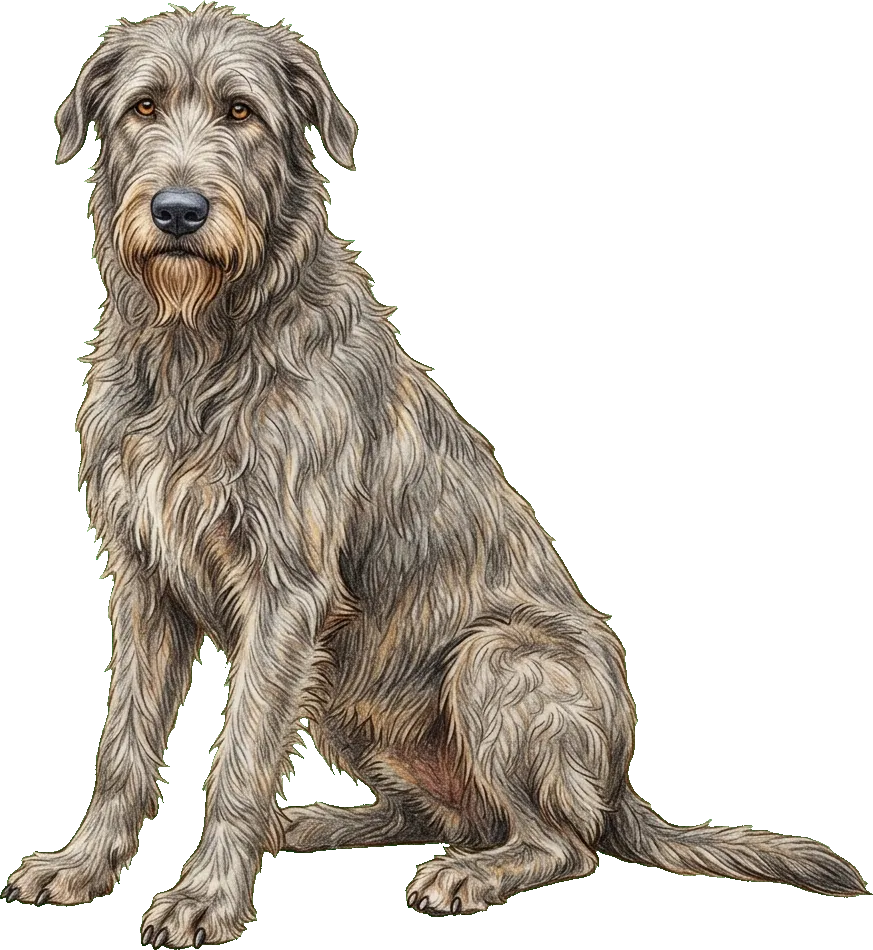
The Irish Wolfhound is the tallest of all breeds — a giant sighthound with a calm, gentle nature that belies its imposing size. Once bred to course wolves and big game, today's wolfhound is a quiet, affectionate housemate who unfolds to enormous length across the floor and asks mainly for company, soft footing, and unhurried daily walks. Sharing your home with one means planning around a short life, a giant-breed appetite for space, and the steady, low-key exercise its growing joints and heart depend on.
Daily-care planners
House-training
Moderate to house-trainHouse-training an Irish Wolfhound is usually straightforward, but a giant-breed puppy's bladder and slower physical maturity reward patience and a steady schedule. Frequent, calm trips outside after meals, naps, and play — paired with warm praise for every success — build the habit faster than any correction. Their weather-hardy coat means most are happy to head out in the cold, which works in your favor through a long puppyhood.
Walks
Moderate exercise needsAn adult Irish Wolfhound needs moderate, steady exercise rather than marathon sessions — daily walks plus room to move keep a giant body fit and lean. The bigger constraints are age and growth: keep a puppy's exercise low-impact and unforced while the joints mature, and let an older hound set a gentler pace. Because the chase instinct is strong, keep walks on lead in open areas and save free running for securely fenced space. In warm weather, favor the cool of morning or evening and treat heavy panting or slowing as cues to rest and offer water.
Plan walksTemperament
The Irish Wolfhound pairs immense size with a famously easygoing, gentle temperament. Indoors they are calm and quiet, content to rest near their people for much of the day, and they rarely bark. As a sighthound they think somewhat for themselves, so training goes best with patient, reward-based guidance and early, positive socialization — a dog that will grow this large benefits enormously from learning gentle manners while still light enough to guide.
Wolfhounds are deeply people-oriented and do best living indoors as part of the family; long stretches of isolation suit them poorly. They are generally polite with other dogs and gentle, patient companions with children, though their sheer size means play with small children should be supervised so an accidental lean or turn doesn't knock anyone over. Their harsh, weather-resistant coat handles cold and damp well, but they still belong inside with the household rather than in a yard.
One trait to plan around is a strong, hardwired chase instinct: bred to pursue fast-moving game, a wolfhound may take off after a running animal. A securely fenced space and a patiently built recall keep this lovely, good-natured hound safe on its own terms.
What life with a Irish Wolfhound asks of you
Grooming & coat
- Grooming effort
- Moderate grooming
- Shedding
- Seasonal shedding
- Coat
- Medium coat
Exercise & enrichment
- Daily exercise
- Moderate exercise needs
- Mental stimulation
- Moderate mental stimulation
- Trainability
- Balanced
Temperament & sociability
- With people
- Politely friendly
- With dogs
- Tolerant of other dogs
- With kids
- Gentle with children (always supervise)
- Barking / noise
- Quiet
- Chase instinct
- High prey drive
- Time alone
- Moderate separation-anxiety risk
Home & climate fit
- Hot weather
- Moderate heat tolerance
- Cold weather
- High cold tolerance
- House-training
- Moderate to house-train