Irish Setter
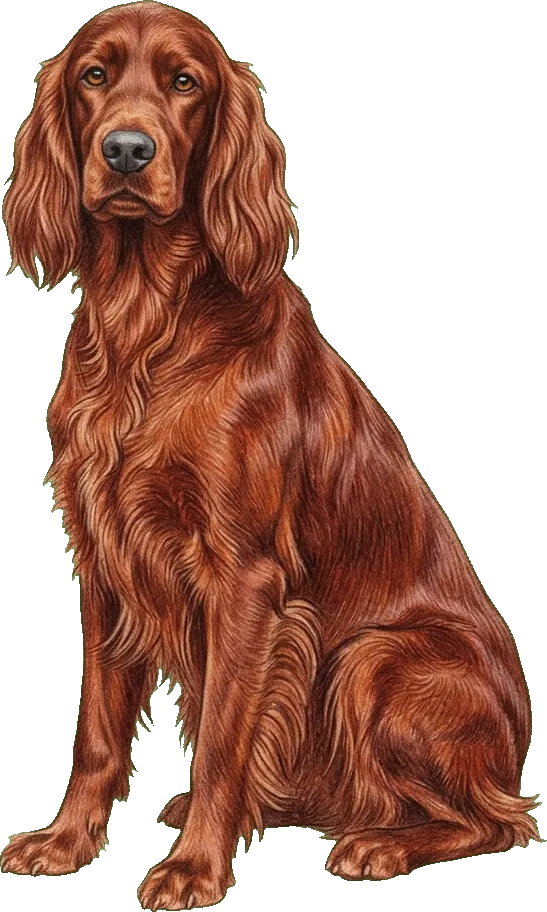
The Irish Setter is a large, elegant gundog famous for a flashy mahogany coat, boundless enthusiasm, and a rollicking, people-loving spirit. Living well with one means meeting the exercise needs of an athletic bird dog, keeping up with the feathered coat, and giving this deeply people-oriented companion the daily activity, training, and family company it needs to channel its energy happily.
Daily-care planners
House-training
Moderate to house-trainHouse-training an Irish Setter is generally manageable, but their exuberance and slow maturity reward patience and a steady schedule over any impatience. Frequent, upbeat trips outside after meals, naps, and play — with enthusiastic praise for every success — turn the routine into a game they want to win, which suits this eager, people-pleasing breed well.
Walks
High exercise needsWalking an Irish Setter means planning for a genuine athlete. A single gentle stroll rarely satisfies them; they do best with longer walks plus a safe chance to stretch into a full gallop, ideally in a securely fenced area, since a bird dog's nose and drive can pull attention away from recall. Build a reliable recall patiently before trusting off-lead freedom, watch for overheating in warm weather, and vary routes to keep that curious mind busy. Consistent daily exercise keeps an Irish Setter fit, focused, and pleasantly tired at home.
Plan walksTemperament
The Irish Setter is high-spirited, affectionate, and endlessly people-oriented. Bred to range far and find birds for the gun, they carry real athletic drive and a playful, sometimes slow-to-mature outlook that can last well into adulthood — part of their charm rather than a flaw. They are sensitive and clever, and respond best to upbeat, reward-based training with plenty of variety to keep that quick mind engaged.
These are companion-hearted dogs that thrive on being part of everything the family does. They are typically enthusiastic with people, sociable with other dogs, and gentle and playful with children, which makes them wonderful family dogs when given structure and outlets. Because they bond so closely, they do best with gradual, patient practice at being left alone, so long and lonely stretches don't become a source of distress.
All that energy needs somewhere to go. An Irish Setter is happiest with generous daily exercise — running in a secure area, brisk walks, fetch, and dog sports all suit them — paired with mental work that rewards their intelligence. Their long, silky, feathered coat sheds seasonally and needs regular brushing to stay free of mats, especially behind the ears and on the legs, and the ears benefit from routine checks to keep them clean and comfortable.
What life with a Irish Setter asks of you
Grooming & coat
- Grooming effort
- High grooming
- Shedding
- Seasonal shedding
- Coat
- Long coat
Exercise & enrichment
- Daily exercise
- High exercise needs
- Mental stimulation
- High mental stimulation
- Trainability
- Balanced
Temperament & sociability
- With people
- Enthusiastically friendly
- With dogs
- Sociable with other dogs
- With kids
- Gentle with children (always supervise)
- Barking / noise
- Moderately vocal
- Chase instinct
- Moderate prey drive
- Time alone
- Moderate separation-anxiety risk
Home & climate fit
- Hot weather
- Moderate heat tolerance
- Cold weather
- Moderate cold tolerance
- House-training
- Moderate to house-train