Greater Swiss Mountain Dog
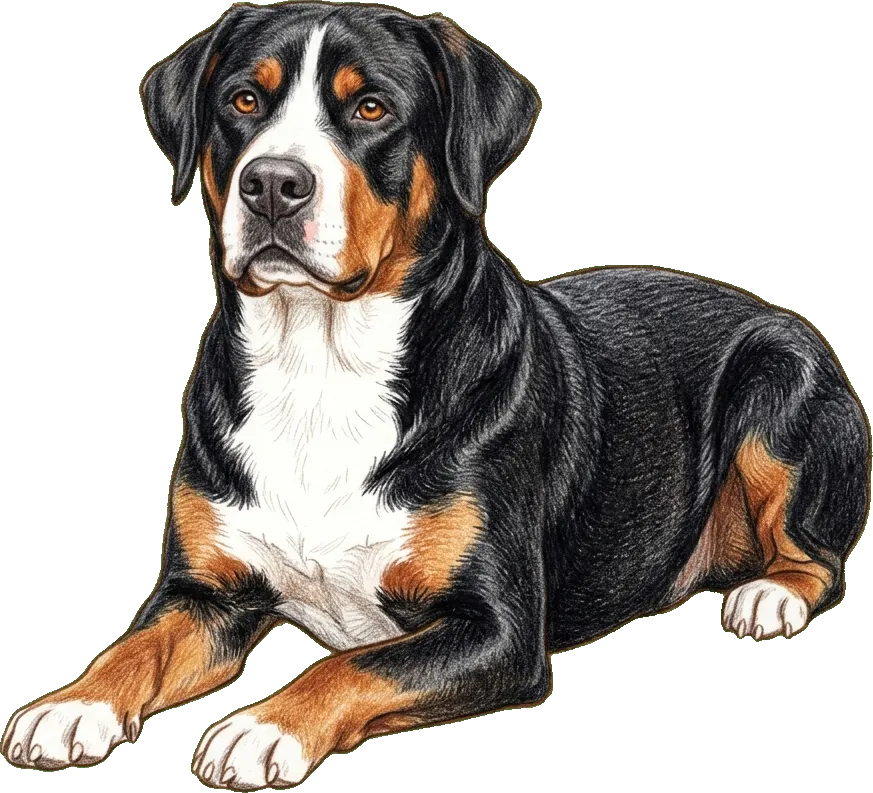
The Greater Swiss Mountain Dog is a large, powerful Swiss draft and farm breed — the biggest and oldest of the Sennenhund types. Steady, devoted, and surprisingly gentle, a 'Swissy' fits best with a family that has room for a giant, people-oriented dog and can offer moderate daily exercise, careful joint-friendly growth in puppyhood, and awareness of the bloat risk common to deep-chested breeds. Their striking black, red, and white coat is short but sheds, and they feel the heat easily.
Daily-care planners
House-training
Moderate to house-trainHouse-training a Greater Swiss Mountain Dog is generally straightforward, as they are willing and people-focused, but a giant-breed puppy matures slowly and a growing bladder rewards patience. Frequent, calm trips outside after meals, naps, and play — paired with warm praise for every success — build the habit faster than any correction. Their cold-hardy coat means chilly or wet weather rarely discourages them from heading out.
Walks
Moderate exercise needsThe Greater Swiss Mountain Dog's main walking consideration is balancing activity with careful growth and heat sensitivity. As a draft breed they thrive on moderate, steady exercise — daily walks and low-impact activity — rather than long, hard runs, and keeping sessions gentle while a puppy's joints develop protects long-term comfort. Their dense coat makes warm-weather outings tiring, so favor the cool of early morning or evening, watch for heavy panting, and offer water freely. In cold weather they are in their element. A steady daily routine keeps a giant dog fit, lean, and content.
Plan walksTemperament
The Greater Swiss Mountain Dog was developed as an all-around farm dog — pulling carts, moving livestock, and watching over the homestead — and that background shows in a calm, dependable temperament. Swissys bond closely with their families and are happiest as full members of the household. They are willing, sensitive dogs that respond best to patient, reward-based training; because they mature slowly both in body and mind, consistency and gentle guidance through a long adolescence matter more than firmness.
With their people they are affectionate and often gentle with children, though their sheer size means play with small children should be supervised so an enthusiastic lean or wag doesn't knock anyone over. They are typically alert and watchful with strangers — a natural guardian trait — which early, positive socialization helps settle into confident, well-mannered behavior around new people, dogs, and places.
As a draft breed, the Swissy needs moderate rather than extreme exercise: daily walks and steady activity keep them fit without overtaxing joints that are still developing in a large, fast-growing puppy. They carry a dense double coat built for cold Alpine work, so they tolerate winter well but tire and overheat quickly in warm weather — plan outings for cooler hours and always offer shade and water.
Their short coat is comparatively easy to care for, needing weekly brushing that increases during seasonal sheds. Because giant, deep-chested breeds carry particular health considerations, learning the signs of bloat and keeping up with recommended joint screening are meaningful parts of caring well for this breed.
What life with a Greater Swiss Mountain Dog asks of you
Grooming & coat
- Grooming effort
- Low grooming
- Shedding
- Seasonal shedding
- Coat
- Short coat
Exercise & enrichment
- Daily exercise
- Moderate exercise needs
- Mental stimulation
- Moderate mental stimulation
- Trainability
- Eager to please
Temperament & sociability
- With people
- Politely friendly
- With dogs
- Tolerant of other dogs
- With kids
- Gentle with children (always supervise)
- Barking / noise
- Moderately vocal
- Chase instinct
- Moderate prey drive
- Time alone
- Moderate separation-anxiety risk
Home & climate fit
- Hot weather
- Low heat tolerance
- Cold weather
- High cold tolerance
- House-training
- Moderate to house-train