Great Pyrenees
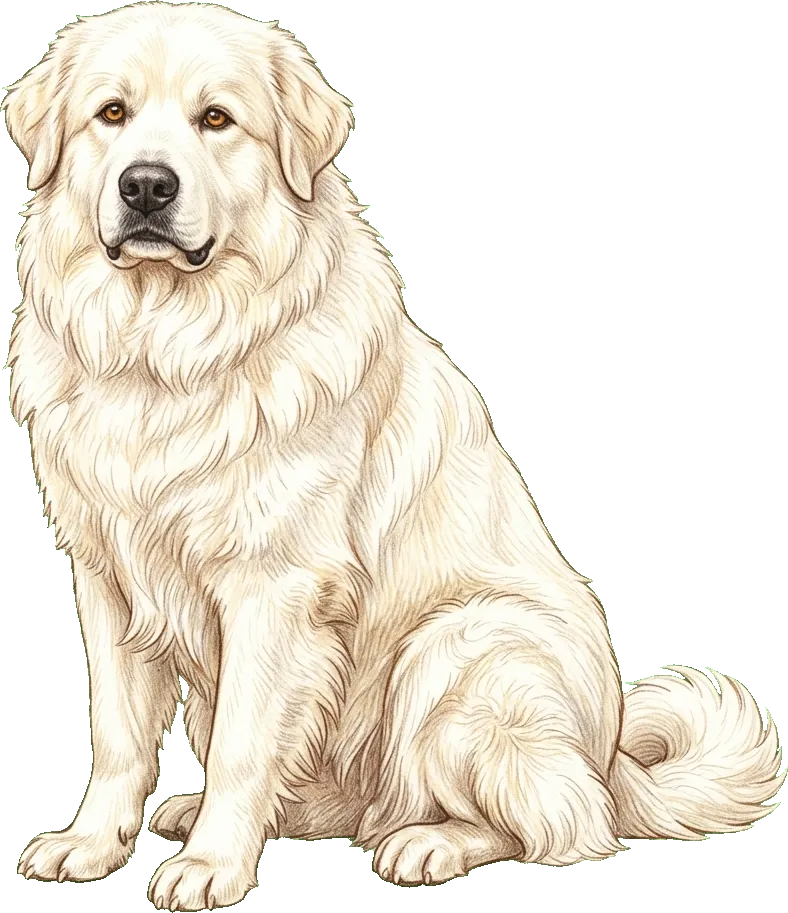
The Great Pyrenees is a giant, weather-hardy guardian breed shaped over centuries to watch flocks alone on cold mountain slopes — calm and affectionate at home, yet quietly self-directed and alert to anything it decides is worth guarding. Sharing life with one means welcoming a heavy white double coat, real seasonal shedding, night-time watchfulness that often includes barking, and a dog that overheats easily but thrives on cool weather, secure space, and being treated as a devoted member of the family.
Daily-care planners
House-training
Moderate to house-trainHouse-training a Great Pyrenees is usually straightforward, though a giant-breed puppy matures slowly and rewards a calm, consistent routine over any correction. Frequent trips outside after meals, naps, and play — with warm praise for every success — build the habit steadily, and their love of cool weather makes outdoor breaks an easy sell for much of the year.
Walks
Moderate exercise needsThe Great Pyrenees is a moderate but steady walker whose main limits are heat and a strong guarding-and-roaming instinct rather than a need for hard exercise. Aim for the cool of early morning or evening, keep a securely fitted harness or lead on in open areas, and treat heavy panting or slowing as a cue to head home and offer water. Low-impact daily activity keeps a giant dog lean and comfortable while protecting the developing joints of a growing puppy, and gives this watchful companion a satisfying outlet for its patient energy.
Plan walksTemperament
The Great Pyrenees pairs immense size with a famously calm, gentle presence. Bred to guard flocks without a shepherd nearby, they are independent thinkers who assess a situation and act on their own judgment — a trait to appreciate and work with rather than train out. Patient, reward-based training and early, generous socialization help this powerful dog move comfortably through a busy human world, and matter all the more because of its strength.
At home they are affectionate and steady, devoted to the people and animals they consider their own. Their guardian heritage shows up as watchfulness: they tend to be reserved with strangers and will often bark, especially at night, to announce anything they judge worth noticing. A securely fenced space is important, as a roaming instinct can run deep. They are not high-energy, but daily walks and gentle activity keep body and mind content and help prevent boredom.
Built for snow and mountain cold, the Great Pyrenees carries a dense double coat that sheds heavily, particularly during seasonal "coat blows." Weekly brushing keeps the coat and the skin beneath it healthy. That same insulation makes warm weather genuinely taxing, so exercise is best saved for the cool of the day with shade and water always on offer. With children and familiar animals they are typically gentle and tolerant, though their sheer size means play with small children is best supervised.
What life with a Great Pyrenees asks of you
Grooming & coat
- Grooming effort
- High grooming
- Shedding
- Heavy shedding
- Coat
- Long coat
Exercise & enrichment
- Daily exercise
- Moderate exercise needs
- Mental stimulation
- Moderate mental stimulation
- Trainability
- Independent thinker
Temperament & sociability
- With people
- Reserved with strangers
- With dogs
- Selective with other dogs
- With kids
- Gentle with children (always supervise)
- Barking / noise
- Vocal
- Chase instinct
- Low prey drive
- Time alone
- Low separation-anxiety risk
Home & climate fit
- Hot weather
- Low heat tolerance
- Cold weather
- High cold tolerance
- House-training
- Moderate to house-train