Gordon Setter
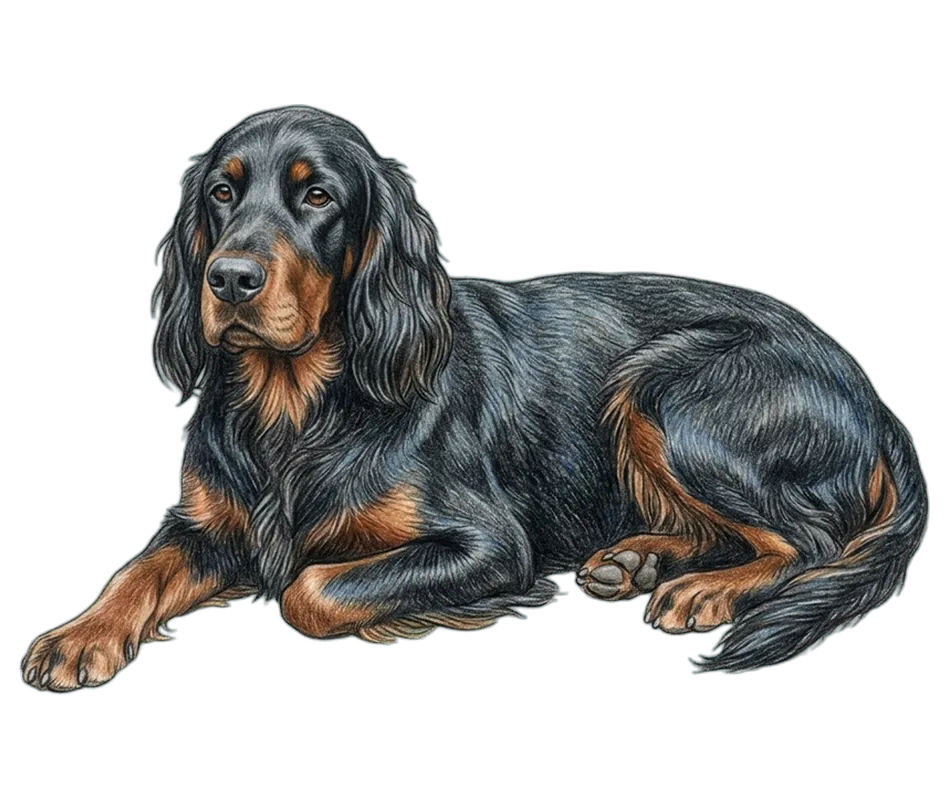
The Gordon Setter is Scotland's sturdy, bold-hearted bird dog — the largest and heaviest-boned of the setters, bred to range for hours over rugged Highland moors and hold steady over game in any weather. That working history shaped a dog that is confident and businesslike afield yet calm, deeply loyal, and quietly devoted at home. Living well with one means matching a hard-working athlete's need for substantial daily exercise and mental engagement with the weekly brushing its flowing, feathered coat deserves, plus the lifelong joint, thyroid, and eye care this breed benefits from. Patient, consistent training and real daily outlets bring out the steady, affectionate companion the Gordon Setter is at its best.
Daily-care planners
House-training
Moderate to house-trainHouse-training a Gordon Setter is usually manageable once a consistent routine is in place, since this is an intelligent breed that responds well to clear structure and positive reinforcement. A predictable schedule of frequent trips outside after meals, naps, and play, paired with calm praise for successes, builds the habit steadily. Because puppies of a large, athletic breed mature at their own pace, patience alongside consistency — rather than frustration — is what carries a household through the early months.
Walks
Very high exercise needsA Gordon Setter's exercise needs go well beyond a casual stroll: this breed was built to cover ground for hours, so daily walks work best paired with real off-leash time in a safe, enclosed area or structured activities like hiking, jogging, or field work. Its strong hunting instincts and prey drive mean a solid recall and a secure leash or long line matter in areas with birds, squirrels, or other tempting distractions. A dark, moderately dense coat also means warm, humid days call for exercising in the cooler parts of the day and offering water breaks. Starting leash manners and loose-leash walking early pays off, since a calm, well-mannered walk is far easier to build with a growing puppy than to retrofit onto a powerful, driven adult.
Plan walksTemperament
The Gordon Setter was developed in Scotland to range widely over demanding, often wet and rugged moorland terrain, working methodically and holding steady over game for hours at a stretch. That heritage produced a dog that is more heavily built and more deliberate than its setter cousins, with a working temperament that is confident, resolute, and unflappable in the field. At home, the same dog settles into a calm, watchful, and deeply devoted companion, often forming an especially close bond with its family.
Gordon Setters are intelligent and think for themselves rather than following commands reflexively, a trait useful in a hunting partner but one that calls for patient, consistent, reward-based training and an owner willing to stay a step ahead. They tend to be more measured with strangers than some other sporting breeds — polite rather than effusive — so early, positive socialization helps them meet new people and situations with confidence instead of wariness. With other dogs they can be selective, particularly with dogs of the same sex, so thoughtful introductions and supervision go a long way.
This is a genuinely athletic breed bred for long working days, and that shows up as a real need for vigorous daily exercise alongside mental engagement such as scent work, training games, or structured field activities; a Gordon Setter left under-exercised tends to become restless or destructive, not because it is a difficult dog but because its needs are going unmet. Its long, silky, feathered coat is elegant but requires weekly brushing to prevent mats, especially behind the ears and legs. Gordon Setters raised with children are typically warm and patient companions, though their size and enthusiasm mean play with small children benefits from supervision.
What life with a Gordon Setter asks of you
Grooming & coat
- Grooming effort
- High grooming
- Shedding
- Seasonal shedding
- Coat
- Long coat
Exercise & enrichment
- Daily exercise
- Very high exercise needs
- Mental stimulation
- High mental stimulation
- Trainability
- Balanced
Temperament & sociability
- With people
- Politely friendly
- With dogs
- Selective with other dogs
- With kids
- Gentle with children (always supervise)
- Barking / noise
- Moderately vocal
- Chase instinct
- High prey drive
- Time alone
- Moderate separation-anxiety risk
Home & climate fit
- Hot weather
- Moderate heat tolerance
- Cold weather
- High cold tolerance
- House-training
- Moderate to house-train