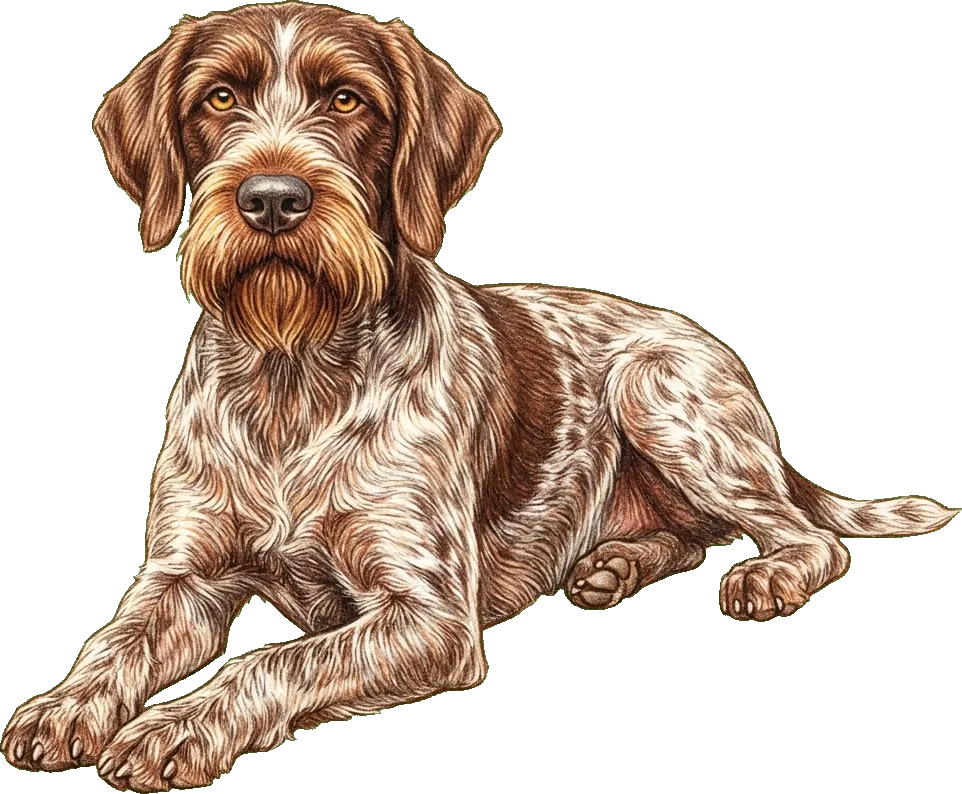
German Wirehaired Pointer
The German Wirehaired Pointer is a versatile, weatherproof gundog bred in Germany to point, track, and retrieve on land and in water. Living well with one means meeting a genuinely high need for daily exercise and a job to do, giving this driven, family-devoted dog enough physical and mental work, and maintaining the harsh wire coat that lets it work in any weather. Reserved with strangers but affectionate at home, it thrives in an active household that enjoys the outdoors.
Daily-care planners
House-training
Moderate to house-trainHouse-training a German Wirehaired Pointer is usually manageable, since they are intelligent and eager to work with their people. A consistent schedule — frequent, calm trips outside after meals, naps, and play, paired with warm praise for every success — builds the habit faster than any correction. Their weatherproof coat means they are generally happy to head outside in cold or wet conditions, which works in your favor while a young dog is still learning.
Walks
Very high exercise needsWalking a German Wirehaired Pointer is about volume and variety more than technique. This is a high-energy working breed that needs substantial daily exercise — long walks, runs, hikes, or swims — plus mental work to feel settled at home. Because their prey drive is strong, keep them on a leash or within a securely fenced area unless recall is genuinely reliable, so a sudden dash after wildlife stays safe. Their wire coat handles cold and water well, so wet or chilly outings rarely bother them; on warm days, choose cooler hours and offer water. A dog whose body and mind are both worked is a calm, contented companion indoors.
Plan walksTemperament
The German Wirehaired Pointer was bred as an all-purpose hunting partner, and that heritage shapes daily life with one: this is a driven, intelligent dog that genuinely needs a job. They form close bonds with their people and are eager to work alongside a handler, responding well to patient, reward-based training that channels their energy and problem-solving into something purposeful. Without enough activity and engagement they can become restless, so a household that enjoys long outdoor days suits them best.
They are typically reserved with strangers — an alert, watchful trait rather than nervousness — while being warm and loyal at home. Early, positive socialization helps that natural reserve settle into confident good manners around new people, dogs, and situations. With their own family they are affectionate and playful, and they generally do well with children who understand how to interact calmly with an active dog.
As a hunting breed, the German Wirehaired Pointer carries a strong prey drive and real stamina. They are happiest with vigorous daily exercise and often relish swimming, thanks to a water-repellent wire coat that also lets them handle cold and rough weather with ease. A securely fenced space and a reliably practiced recall help keep a dog with this much drive safe when something catches their interest.
Their harsh, functional coat is low-fuss compared with a long-haired breed but not maintenance-free: weekly brushing and periodic hand-stripping keep it doing its weatherproofing job and keep the skin underneath healthy.
What life with a German Wirehaired Pointer asks of you
Grooming & coat
- Grooming effort
- Moderate grooming
- Shedding
- Seasonal shedding
- Coat
- Medium coat
Exercise & enrichment
- Daily exercise
- Very high exercise needs
- Mental stimulation
- High mental stimulation
- Trainability
- Eager to please
Temperament & sociability
- With people
- Reserved with strangers
- With dogs
- Selective with other dogs
- With kids
- Gentle with children (always supervise)
- Barking / noise
- Moderately vocal
- Chase instinct
- High prey drive
- Time alone
- Moderate separation-anxiety risk
Home & climate fit
- Hot weather
- Moderate heat tolerance
- Cold weather
- High cold tolerance
- House-training
- Moderate to house-train