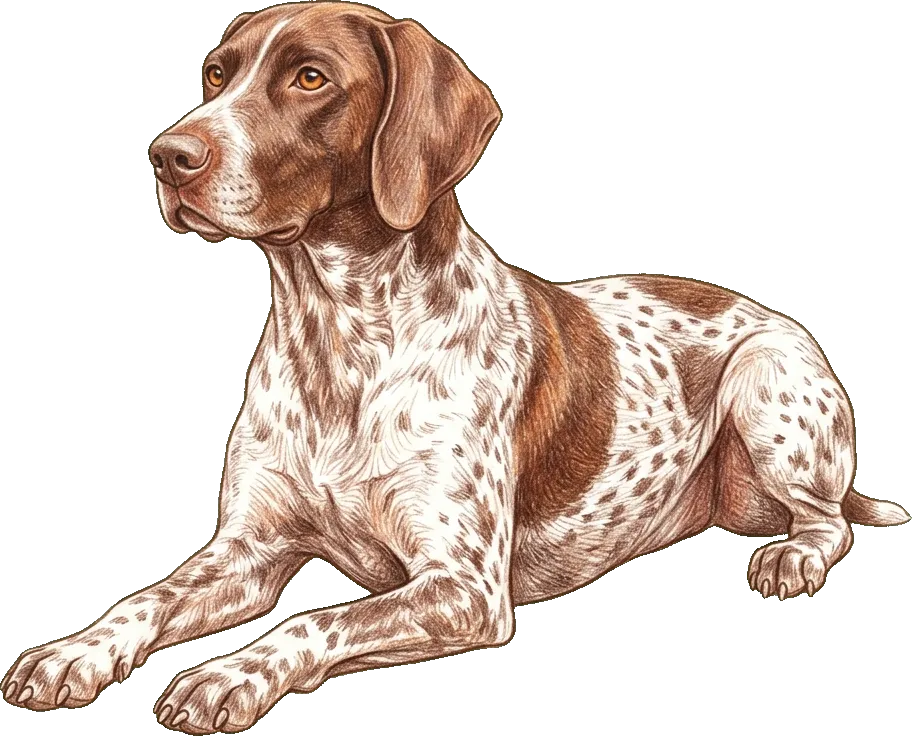
German Shorthaired Pointer
The German Shorthaired Pointer is a tireless, enthusiastic athlete that needs a serious job to do. Living well with a GSP is mostly about meeting their intense need for daily running and mental engagement. This guide sticks to daily life: house-training, managing their energy, the temperament to expect, and the health checks worth knowing.
Daily-care planners
House-training
Moderate to house-trainGSPs' high energy means a full bladder is often the last thing on their mind. Frequent, short outdoor trips — every 1–2 hours for young puppies — keep accidents manageable.
Walks
Very high exercise needsTireless athletes built for field work — GSPs need substantial daily exercise and do well running alongside a cyclist or on long hikes. Mental engagement (tracking games, training on walks) is as important as distance. Without adequate outlet their energy becomes difficult to manage; a well-exercised GSP is a noticeably calmer house dog.
Plan walksTemperament
The German Shorthaired Pointer is a tireless, enthusiastic field dog that is always eager to please. They tend to need plenty of structured outlet for their abundant energy to thrive in a family home.
These athletes are built for serious work, so a home with a large, securely fenced yard is usually the best fit over an apartment. They require substantial daily exercise such as running alongside a cyclist or going on long hikes, combined with intense mental stimulation like tracking games. Without adequate outlets, their energy becomes difficult to manage, but a well-exercised GSP is a noticeably calmer house dog.
While their enthusiastic nature makes them moderate fits for children, interactions should always be supervised, as their boisterous energy could easily knock over a toddler. They form deep bonds with their people and are prone to separation anxiety if left alone for long periods, meaning they are generally better suited to active families rather than first-time owners or sedentary seniors.
GSPs are highly social and enjoy the company of other dogs, often playing vigorously at the park. However, their strong heritage as hunters means they possess a high prey drive and may chase cats or small animals, so careful introductions and ongoing supervision are necessary in multi-pet households.
Developed in 19th-century Germany as a versatile all-round gundog for pointing, tracking, and retrieving on land and in water, the GSP retains a powerful drive to work. Their short, smooth coat is low-maintenance and they have a high tolerance for heat, making them excellent companions for summer hiking. However, because they shed seasonally and demand an extraordinary amount of daily activity, prospective owners must be prepared to integrate rigorous exercise and training into their daily routine year-round.
What life with a German Shorthaired Pointer asks of you
Grooming & coat
- Grooming effort
- Low grooming
- Shedding
- Seasonal shedding
- Coat
- Short coat
Exercise & enrichment
- Daily exercise
- Very high exercise needs
- Mental stimulation
- High mental stimulation
- Trainability
- Eager to please
Temperament & sociability
- With people
- Enthusiastically friendly
- With dogs
- Sociable with other dogs
- With kids
- Good with considerate children (supervise)
- Barking / noise
- Moderately vocal
- Chase instinct
- High prey drive
- Time alone
- High separation-anxiety risk
Home & climate fit
- Hot weather
- High heat tolerance
- Cold weather
- Low cold tolerance
- House-training
- Moderate to house-train