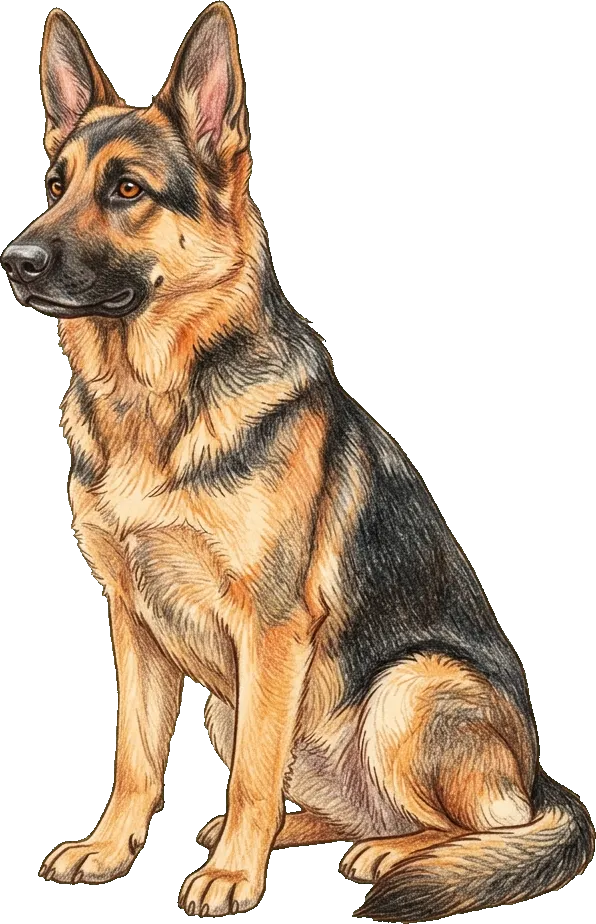
German Shepherd
The German Shepherd is a fiercely loyal, intelligent companion that thrives when given a job to do. Living well with one means dedicating significant time to daily training, vigorous exercise, and managing their heavy shedding. This guide sticks to everyday realities, from navigating their high energy to understanding their natural instincts.
Daily-care planners
House-training
Easy to house-trainShepherds pick up routines quickly. The trickiest window is adolescence (around 4–6 months) when focus temporarily dips — keeping the schedule tight through that phase pays off.
Walks
Very high exercise needsGSDs are built for endurance and excel when walks include mental stimulation — varied routes, sniff breaks, and brief training moments keep them engaged and satisfied. They're excellent jogging and hiking companions as adults. Without enough mental and physical outlet, their energy can quickly become difficult to manage indoors.
Plan walksTemperament
Shepherds are working dogs that thrive on a combination of mental and physical activity. Many owners pair their daily walks with obedience training to satisfy their eager-to-please nature.
Built for endurance, they generally do best in a house with a yard rather than an apartment. Without a dedicated outlet, their high energy becomes difficult to manage indoors.
They can be devoted companions but are best suited for older, considerate children under active supervision. Given their demanding needs, they fit experienced owners better than first-time dog parents; meeting the individual dog is always recommended.
Caution is needed with other pets; they are often selective with unfamiliar dogs and possess a high prey drive that makes living with cats challenging without careful introductions.
Developed in Germany around the turn of the 20th century by Max von Stephanitz as a herding dog, this working heritage remains strong globally. In broad English markets, they thrive in suburban homes with yards, though their thick coat requires a cool, gentle environment during warmer months.
What life with a German Shepherd asks of you
Grooming & coat
- Grooming effort
- Moderate grooming
- Shedding
- Heavy shedding
- Coat
- Medium coat
Exercise & enrichment
- Daily exercise
- Very high exercise needs
- Mental stimulation
- High mental stimulation
- Trainability
- Eager to please
Temperament & sociability
- With people
- Reserved with strangers
- With dogs
- Selective with other dogs
- With kids
- Good with considerate children (supervise)
- Barking / noise
- Moderately vocal
- Chase instinct
- High prey drive
- Time alone
- Moderate separation-anxiety risk
Home & climate fit
- Hot weather
- Moderate heat tolerance
- Cold weather
- High cold tolerance
- House-training
- Easy to house-train