Flat-Coated Retriever
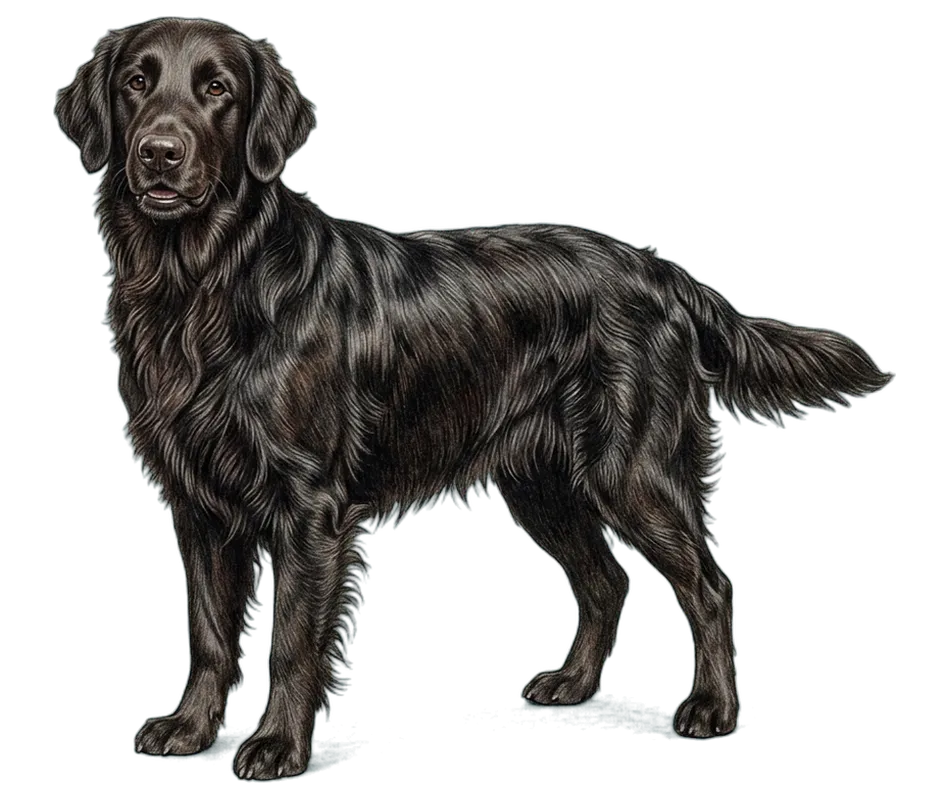
The Flat-Coated Retriever was developed in nineteenth-century England as a versatile gundog, retrieving game from both land and water with a soft mouth and a tireless, willing attitude. Often nicknamed the 'Peter Pan of retrievers' for a joyful, puppyish enthusiasm that lasts well into adulthood, this is a breed that thrives on daily exercise, retrieving games, and close involvement in family life. Living well with one means committing to real physical and mental engagement, a moderate-shedding double coat that benefits from regular brushing, and attentive, lifelong veterinary partnership given the breed's above-average cancer rates. Early training and consistent outlets for that exuberant energy bring out the affectionate, biddable companion the breed is known for.
Daily-care planners
House-training
Moderate to house-trainHouse-training a Flat-Coated Retriever is usually straightforward, since the breed's eagerness to please and quick learning make a consistent routine click fast. Frequent, calm trips outside after meals, naps, and play, paired with warm praise for every success, build the habit efficiently; because the breed can stay a bit puppyish and easily distracted by an interesting scent or sound, keeping early outings short, supervised, and low-stimulation helps the lesson stick.
Walks
High exercise needsExercise, not distance, is the main planning point for a Flat-Coated Retriever: this is a high-energy gundog that needs substantial daily activity plus mental engagement, and a short stroll alone will not be enough to keep an adolescent or young adult settled. Retrieving games, swimming, and varied routes that let the dog use its nose tend to satisfy both body and mind far better than repetitive leash walking. The dense, water-repellent double coat tolerates cool and wet conditions well, so this breed is often happiest on brisk-weather outings, while warmer days call for shade, water breaks, and exercise scheduled for cooler parts of the day. Keep sessions low-impact while a large-breed puppy's joints are still developing, and start leash manners early — a Flat-Coat's enthusiasm is far easier to guide as a growing puppy than as a strong, fully grown adult.
Plan walksTemperament
Bred in Victorian England to retrieve both fur and feather from land and water, the Flat-Coated Retriever combines a soft mouth and a cooperative, willing nature with real stamina in the field. That gundog heritage shows up at home as a dog that genuinely wants a job to do — retrieving, swimming, and structured play all satisfy an instinct that idle hours cannot.
What sets the breed apart from other retrievers is a temperament often described as perpetually youthful: Flat-Coats tend to stay bouncy, curious, and eager well past the puppy years, which owners generally find endearing but which also means consistent, reward-based training and outlets for that energy matter throughout the dog's life, not just in puppyhood. They are quick learners and eager to please, responding best to patient, positive guidance rather than repetition-heavy drilling.
Socially, this is a breed built for togetherness — enthusiastic with people, typically sociable with other dogs, and generally gentle and patient with the children they grow up around, though their size and exuberance mean supervision helps keep boisterous greetings from knocking over a small child. Left under-exercised or under-stimulated, that same enthusiasm can turn into excitable, mouthy, or hard-to-settle behavior, so daily physical exercise paired with mental engagement — retrieving games, scent work, obedience practice — keeps a Flat-Coat calm, confident, and easy to live with.
What life with a Flat-Coated Retriever asks of you
Grooming & coat
- Grooming effort
- Moderate grooming
- Shedding
- Seasonal shedding
- Coat
- Medium coat
Exercise & enrichment
- Daily exercise
- High exercise needs
- Mental stimulation
- High mental stimulation
- Trainability
- Eager to please
Temperament & sociability
- With people
- Enthusiastically friendly
- With dogs
- Sociable with other dogs
- With kids
- Gentle with children (always supervise)
- Barking / noise
- Quiet
- Chase instinct
- Moderate prey drive
- Time alone
- Moderate separation-anxiety risk
Home & climate fit
- Hot weather
- Moderate heat tolerance
- Cold weather
- High cold tolerance
- House-training
- Moderate to house-train