Dogue de Bordeaux
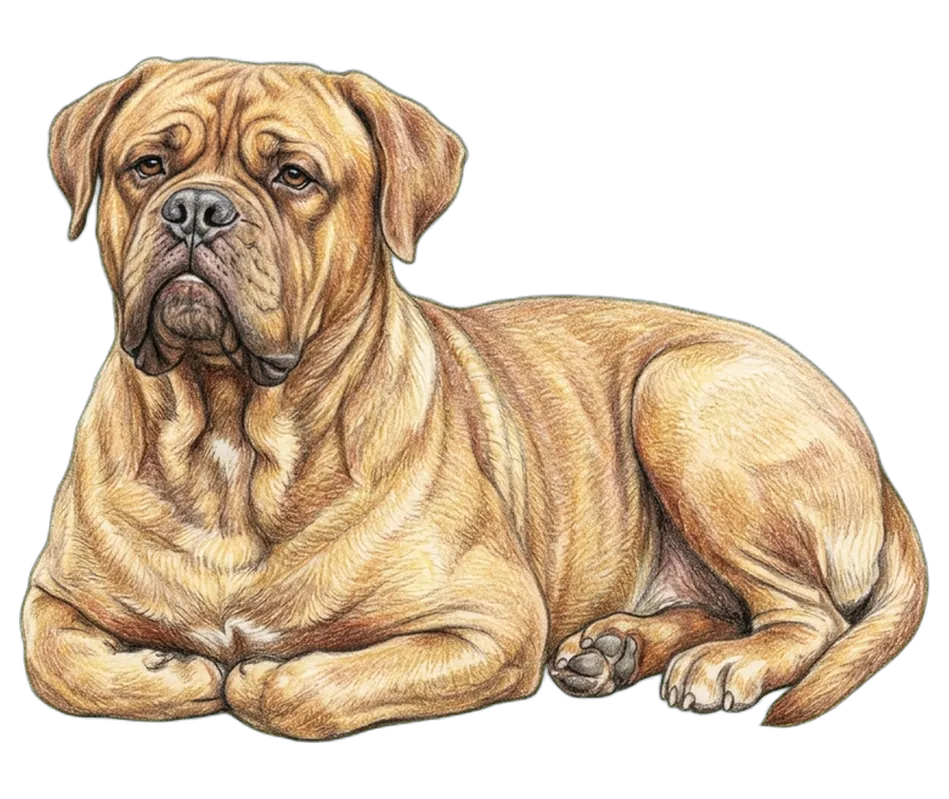
The Dogue de Bordeaux is a massive, muscular French mastiff with an unmistakably wrinkled, wide head and a heart set entirely on its family — a breed developed for guarding property and livestock that has grown into one of the most devoted, affectionate companions among the giant breeds. Living well with one means embracing a dog that wants to be close to its people at all times, alongside careful joint and heart care through its fast growth, real sensitivity to heat, and short, easy-care coat that still needs regular wrinkle cleaning. Patient, early socialization and calm, confident leadership bring out the gentle, steady companion this breed is known to be.
Daily-care planners
House-training
Moderate to house-trainHouse-training a Dogue de Bordeaux is generally manageable, since the breed is eager to please its family, but giant breeds mature more slowly than their size might suggest, so patience matters more than speed here. A steady schedule of frequent trips outside after meals, naps, and play, paired with calm praise for every success, builds the habit reliably; corrections tend to undermine the trust this breed relies on. Because puppies grow so quickly, keeping the routine consistent even as size changes fast helps the habit stick.
Walks
Moderate exercise needsHeat, not distance, is the main constraint on walking a Dogue de Bordeaux. Moderate daily exercise keeps this giant breed fit and lean, which in turn protects its joints and heart, but the broad muzzle and heavy build make overheating a real risk, so favor early morning or evening in warm weather and treat heavy panting as a signal to stop and offer water in the shade. Keep walks low-impact while the joints and growth plates are still developing, and start loose-leash walking and calm greetings early, since a well-mannered walk is far easier to establish with a 20-pound puppy than a full-grown adult many times that size. A predictable daily rhythm suits this breed's need for closeness and structure alike.
Plan walksTemperament
The Dogue de Bordeaux traces back centuries in southwestern France, where it guarded estates, herds, and homes with quiet strength rather than constant noise. That heritage shows today in a dog that is naturally watchful of strangers but remarkably gentle, patient, and affectionate with its own family, often described as a dog that wants to lean its considerable weight against a favorite person and stay as close as possible.
This is a breed that bonds intensely, which is a gift and also a responsibility: many Dogues de Bordeaux do poorly with long stretches of solitude, so building comfortable independence gradually from puppyhood, alongside plenty of together time, supports their wellbeing. They are intelligent but independent thinkers rather than reflexive followers, so consistent, reward-based training started early — while a puppy is still an easier size to guide — pays off enormously once the dog reaches its full, considerable strength. Harsh handling only erodes trust in such a powerful animal.
With other dogs they can be selective, particularly with unfamiliar dogs of the same sex, so thoughtful introductions and supervised meetings matter throughout life. With the children in their own household, Dogues de Bordeaux are typically gentle and patient companions, though their sheer size and enthusiasm mean playtime with small children should always be supervised so no one is knocked over by accident. Their exercise needs are moderate rather than high, and their heavy, broad-muzzled build makes them notably heat-sensitive, so warm-weather activity belongs in the cool parts of the day with easy access to shade and water.
What life with a Dogue de Bordeaux asks of you
Grooming & coat
- Grooming effort
- Moderate grooming
- Shedding
- Seasonal shedding
- Coat
- Short coat
Exercise & enrichment
- Daily exercise
- Moderate exercise needs
- Mental stimulation
- Moderate mental stimulation
- Trainability
- Independent thinker
Temperament & sociability
- With people
- Enthusiastically friendly
- With dogs
- Selective with other dogs
- With kids
- Gentle with children (always supervise)
- Barking / noise
- Quiet
- Chase instinct
- Moderate prey drive
- Time alone
- High separation-anxiety risk
Home & climate fit
- Hot weather
- Low heat tolerance
- Cold weather
- Low cold tolerance
- House-training
- Moderate to house-train