Dogo Argentino
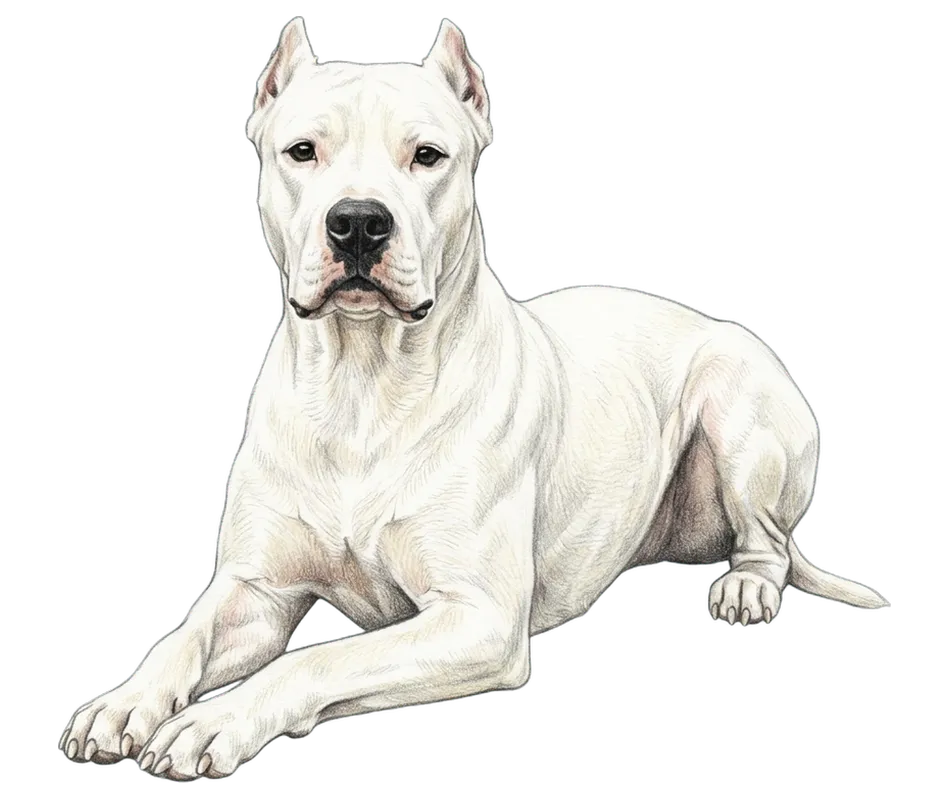
The Dogo Argentino is a large, athletic guardian developed in early twentieth-century Argentina to hunt big game as part of a pack — a heritage that shaped a dog of striking physical courage, keen intelligence, and deep loyalty to its family. Living well with one means embracing a powerful, high-energy companion that needs an experienced, patient handler, early and ongoing socialization, and vigorous daily outlets for both body and mind, alongside a low-maintenance white coat that still calls for sun-care on light skin and a warm layer in cold weather. Thoughtful breeding, calm confident guidance, and consistent routine bring out the steady, devoted companion this breed is capable of being.
Daily-care planners
House-training
Moderate to house-trainHouse-training a Dogo Argentino generally goes smoothly, since the breed is intelligent and bonds closely with its family, but its independent streak means motivation and consistency matter more than repetition alone. Frequent, calm trips outside after meals, naps, and play, paired with warm praise for every success, build the habit efficiently; food-motivated reward-based methods tend to work especially well. Supervision and a predictable schedule in the early weeks carry the routine home.
Walks
Very high exercise needsWalking a Dogo Argentino is first and foremost an exercise-quantity challenge: this athletic hunting breed needs substantial daily activity — brisk walks, jogging, or structured play — to stay physically and mentally settled, and an under-exercised Dogo is far more likely to be restless or reactive at home. Because of a strong prey drive, a secure harness, a sturdy leash, and reliable recall training matter from puppyhood, especially anywhere small animals or wildlife might appear. The short white coat and light skin tolerate heat reasonably well but sunburn easily, so sunscreen or shade during peak midday sun is worth planning for, while the same thin coat offers little insulation, so a warm layer helps on cold walks. Structured leash manners and calm, positive exposure to new dogs and people on walks pay off for life, since this powerful adult is far easier to guide confidently than to physically manage after the fact.
Plan walksTemperament
The Dogo Argentino was developed in the 1920s in Córdoba, Argentina, when brothers Antonio and Agustín Nores Martínez set out to create a big-game hunting dog capable of working in packs against wild boar and puma while remaining safe and biddable around people. That dual demand — formidable physical courage paired with trainability — shaped a breed that is confident, athletic, and quick-thinking, with a strong bond to its family and a natural instinct to watch over them.
At home, a well-raised Dogo Argentino is typically affectionate, loyal, and eager to be close to its people, often described as a gentle giant within the household. That guardian heritage does mean a watchful, reserved streak with unfamiliar people, so early, extensive, positive socialization and confident, reward-based training from puppyhood are essential to raising a stable, well-mannered adult. This is an intelligent but independent-minded breed, not a reflexive follower, and it responds far better to calm consistency and clear structure than to harsh handling.
The pack-hunting background also shows up around other dogs: many Dogos are selective rather than automatically social, particularly with unfamiliar dogs of the same sex, so thoughtful, gradual introductions and lifelong supervision matter. Their strong prey drive, inherited from hunting quick, powerful game, means small animals and off-leash recall around wildlife need active management. Dogo Argentinos are athletes that need substantial daily exercise and mental engagement to stay content, and while many are patient and affectionate with the children they are raised alongside, their size and strength mean play should always be supervised.
What life with a Dogo Argentino asks of you
Grooming & coat
- Grooming effort
- Low grooming
- Shedding
- Seasonal shedding
- Coat
- Short coat
Exercise & enrichment
- Daily exercise
- Very high exercise needs
- Mental stimulation
- High mental stimulation
- Trainability
- Independent thinker
Temperament & sociability
- With people
- Reserved with strangers
- With dogs
- Selective with other dogs
- With kids
- Good with considerate children (supervise)
- Barking / noise
- Quiet
- Chase instinct
- High prey drive
- Time alone
- Moderate separation-anxiety risk
Home & climate fit
- Hot weather
- High heat tolerance
- Cold weather
- Low cold tolerance
- House-training
- Moderate to house-train