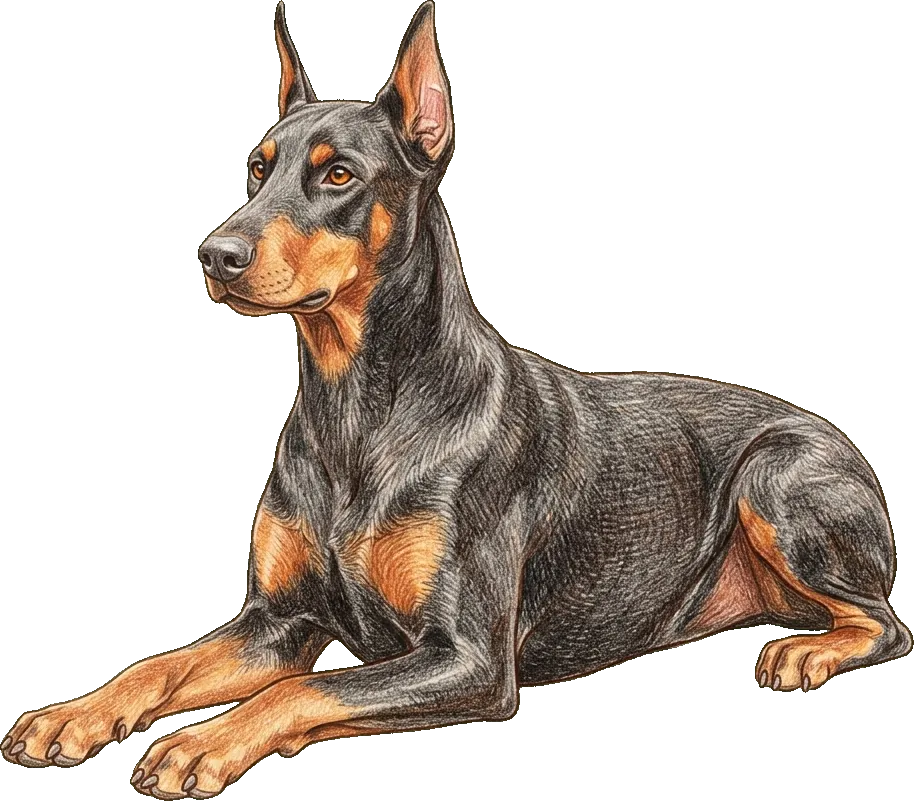
Doberman Pinscher
The Doberman Pinscher is a large, athletic, and deeply loyal companion whose good behaviour depends on real daily exercise and close involvement in family life. Living well with one means channelling their intense focus and energy into purposeful mental work and steady physical activity. This guide sticks to daily life: house-training, walks, the temperament to expect, and the practicalities of sharing your home with a sensitive, trainable dog.
Daily-care planners
House-training
Easy to house-trainDobermans are among the most trainable breeds. Early structure and a predictable outdoor schedule typically produce fast results with minimal setbacks.
Walks
High exercise needsAthletic and built for speed — Dobermans make excellent jogging and running companions once adult. They enjoy purposeful, brisk walks and can handle significant distance. Loose-leash training comes naturally to this breed when started early. A well-exercised Doberman is noticeably calmer and easier to live with; they don't do well with minimal activity.
Plan walksTemperament
Dobermans are athletic and exceptionally people-oriented dogs, and consistent activity and routine help channel their intense drive. They are highly trainable and eager to please, meaning early structure and a predictable schedule lead to fast house-training.
This is an energetic, muscular dog built for speed that does not do well with minimal activity. While they can adapt to various living situations, they thrive when given purposeful brisk walks, distance running, and engaging mental work. A well-exercised Doberman is much calmer indoors, but they need an owner committed to providing that substantial daily physical and mental outlet.
Because they are large, strong, and highly sensitive to their environment, they do best with experienced owners who can provide calm, positive training. They can live nicely with children if socialised early and supervised, but their size and reserved nature mean careful introductions are essential. They bond very closely with their people and dislike being left alone, making them prone to separation anxiety if isolated for long hours.
When it comes to other animals, the breed tends to be selective with unfamiliar dogs and has a moderate prey drive. Calm introductions and ongoing, positive socialisation from puppyhood are the best ways to help them share a home peacefully with other pets.
Developed in late-nineteenth-century Germany by a tax collector named Karl Friedrich Louis Dobermann to be a loyal, alert companion, the breed retains that deep, handler-focused bond today. For homes anywhere, this means the Doberman is fundamentally a companion animal that needs to live indoors as part of the family, not as an outdoor dog left to its own devices.
What life with a Doberman Pinscher asks of you
Grooming & coat
- Grooming effort
- Low grooming
- Shedding
- Seasonal shedding
- Coat
- Short coat
Exercise & enrichment
- Daily exercise
- High exercise needs
- Mental stimulation
- High mental stimulation
- Trainability
- Eager to please
Temperament & sociability
- With people
- Reserved with strangers
- With dogs
- Selective with other dogs
- With kids
- Good with considerate children (supervise)
- Barking / noise
- Moderately vocal
- Chase instinct
- Moderate prey drive
- Time alone
- High separation-anxiety risk
Home & climate fit
- Hot weather
- High heat tolerance
- Cold weather
- Low cold tolerance
- House-training
- Easy to house-train