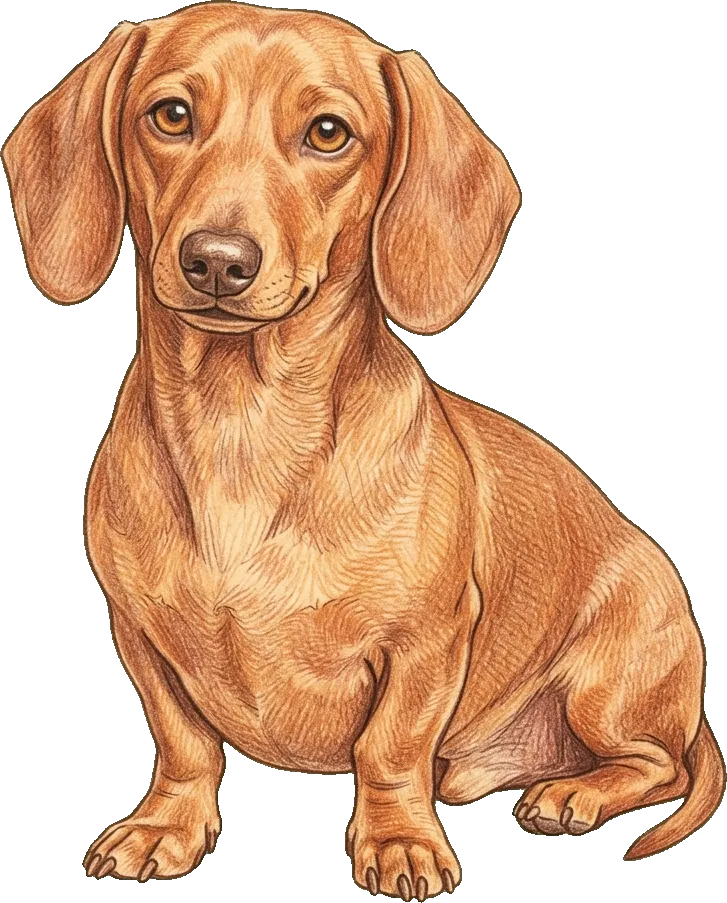
Dachshund
The Dachshund is an independent, scent-driven companion that brings a big personality to a small frame. Living well with one mostly comes down to protecting their long back with stair-free environments and staying patient through notorious house-training challenges. This guide focuses on daily life, from sniff-heavy flat-ground walks to managing their vocal nature at home.
This breed comes in several varieties — smooth, wirehaired and longhaired coats, in standard and miniature sizes. Grooming and some traits differ between them; the details below reflect the most common variety, so confirm your dog's specific type with your breeder or vet.
Daily-care planners
House-training
Challenging to house-trainDachshunds are widely regarded as one of the harder breeds to housetrain. Cold or wet weather resistance is the norm — waterproof pads near the door and short, frequent outdoor trips help more than schedule changes alone.
Walks
Moderate exercise needsA long back means steep hills, rough terrain, and jumping are best avoided. Flat, smooth routes with gentle gradients are generally preferred, and shorter sessions prevent fatigue. Harnesses are recommended over neck collars for this build. Sniff-focused walks — nose to the ground — are natural enrichment and tire them well within sensible distances.
Plan walksTemperament
Dachshunds are deeply independent dogs bred to think for themselves, though their distinctive long backs mean owners must prioritize flat-ground walks and strictly avoid stairs during play.
They can adapt well to both apartments and houses with yards, provided their moderate exercise and mental stimulation needs are met daily. Because they have a high tendency to vocalize, apartment dwellers should be prepared to work on quiet settling and offer puzzle toys or scent games to keep their minds engaged indoors.
With people, they tend to be polite rather than overtly fawning, and they can fit into families with children, first-time owners, or seniors, provided interactions are supervised and gentle. Their moderate tolerance for children means kids must be taught how to support their long backs properly, and training should focus on positive, patient reinforcement rather than expecting immediate obedience.
When it comes to other animals, they are often selective with unfamiliar dogs and may not share a home easily. Their very high prey drive means they are prone to chasing cats or smaller pets, so careful introductions and secure management are essential.
Originally bred in Germany to go to ground after badgers and burrowing game, this heritage explains their digging instincts and determination. In modern homes, this translates to a dog that thrives on harness-led, sniff-focused walks where they can engage their noses safely on smooth routes.
What life with a Dachshund asks of you
Grooming & coat
- Grooming effort
- Low grooming
- Shedding
- Seasonal shedding
- Coat
- Short coat
Exercise & enrichment
- Daily exercise
- Moderate exercise needs
- Mental stimulation
- Moderate mental stimulation
- Trainability
- Independent thinker
Temperament & sociability
- With people
- Politely friendly
- With dogs
- Selective with other dogs
- With kids
- Good with considerate children (supervise)
- Barking / noise
- Vocal
- Chase instinct
- High prey drive
- Time alone
- Moderate separation-anxiety risk
Home & climate fit
- Hot weather
- High heat tolerance
- Cold weather
- Low cold tolerance
- House-training
- Challenging to house-train