Chinese Crested
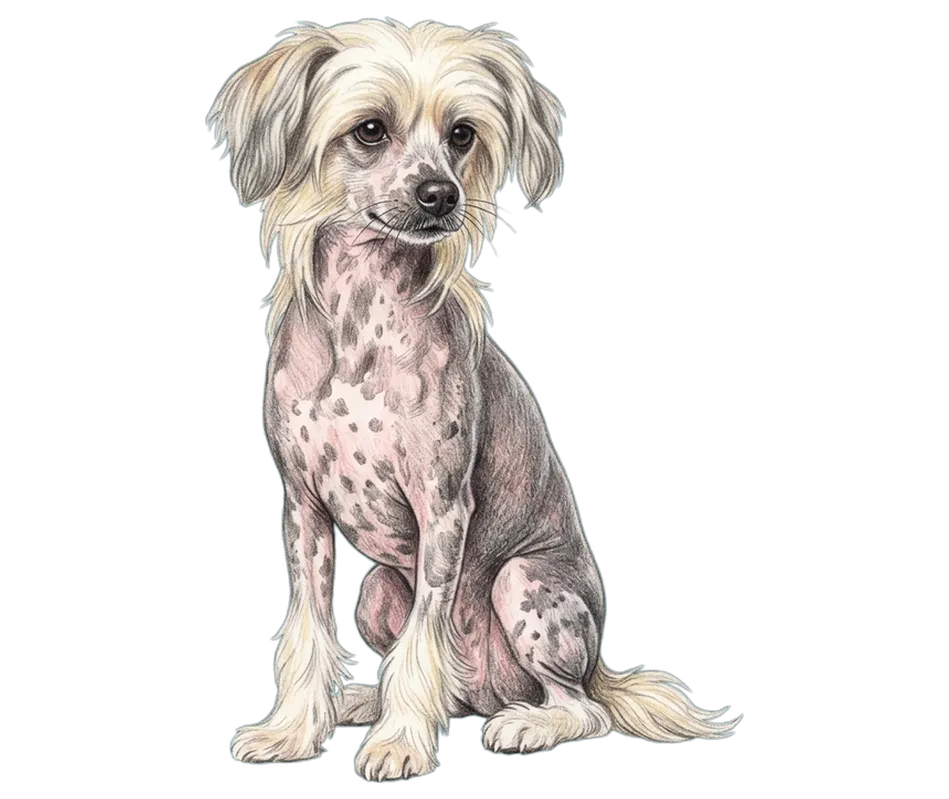
The Chinese Crested is a small, spirited companion best known for its striking looks — most commonly the Hairless variety, with its soft crest of hair, plumed tail, and furry "socks," though every litter can also produce fully-coated Powderpuff littermates. Bred above all to be a devoted lap dog, this breed thrives on closeness with its people and can struggle when left alone too long. Living well with a Chinese Crested means gentle handling of sensitive skin (moisturizing and sun protection for the Hairless variety), patient positive-reinforcement training for a clever and sometimes willful mind, and a temperature-controlled home with supervised play for such a small body. With that thoughtful care, this affectionate little dog gives back many times over.
Daily-care planners
House-training
Moderate to house-trainHouse-training a Chinese Crested takes real consistency: like many toy breeds, they have a small bladder and quick metabolism, so trips outside need to be frequent, especially after meals, naps, and play. Their intelligence works in an owner's favor once a routine clicks, but a stubborn streak means corrections rarely speed things along — warm praise, a fixed schedule, and crate- or pen-supported supervision between outings build the habit faster and with far less frustration. Because a Hairless puppy also needs protection from cold and hot pavement, timing outdoor trips to comfortable weather helps keep the whole process pleasant for everyone.
Walks
Moderate exercise needsDaily walks for a Chinese Crested are about comfort and companionship more than mileage — moderate exercise keeps this small, playful dog fit without overtaxing it. A well-fitted harness rather than a collar protects the trachea common to small toy breeds, and short, positive leash sessions started early make walks a calm, enjoyable ritual rather than a tug-of-war. Temperature matters more than distance: the Hairless variety chills quickly and benefits from a sweater or coat in cool weather, while sun exposure calls for shade, timing walks outside peak sun, or a light sun-safe covering to protect bare skin. Reading a dog's own signals — shivering, reluctance to keep moving, or eagerness to head home — is the simplest guide to keeping every walk comfortable.
Plan walksTemperament
The Chinese Crested's exact origins are debated, but the breed as we know it today was shaped into a devoted companion dog, prized above all for the close bond it forms with its family. Two coat varieties — Hairless and Powderpuff — can appear in the same litter and share the same temperament, so the difference is entirely cosmetic rather than behavioral. What both share is a genuinely people-oriented nature: this is a breed that wants to be near its person, often quite literally, curled in a lap or tucked under a blanket.
That devotion comes with real sensitivity. Chinese Cresteds are alert little watchdogs, quick to notice visitors or unfamiliar sounds, and can be vocal about it, so teaching a reliable "quiet" cue early prevents nuisance barking from becoming a habit. They are also intelligent and can be surprisingly willful for their size; harsh corrections tend to backfire on a dog this sensitive, while short, upbeat, reward-based sessions build a responsive, confident companion. Early, gentle socialization helps them meet new people and situations with curiosity rather than wariness.
Energy-wise, the breed is moderate rather than driven — playful bursts around the house and a daily walk satisfy most individuals, though a bored, understimulated Chinese Crested can turn to barking or other attention-seeking behavior. Because they are so attached to their people, gradual practice with being alone for short, calm periods from puppyhood helps prevent separation distress later. With children, their small size and (for the Hairless variety) delicate skin mean play is best supervised and kept gentle — this is a breed better suited to calm handling than boisterous roughhousing, and most do well with other dogs and household pets when introductions are relaxed and positive.
What life with a Chinese Crested asks of you
Grooming & coat
- Grooming effort
- Moderate grooming
- Shedding
- Minimal shedding
- Coat
- Hairless
Exercise & enrichment
- Daily exercise
- Moderate exercise needs
- Mental stimulation
- Moderate mental stimulation
- Trainability
- Eager to please
Temperament & sociability
- With people
- Enthusiastically friendly
- With dogs
- Sociable with other dogs
- With kids
- Good with considerate children (supervise)
- Barking / noise
- Moderately vocal
- Chase instinct
- Low prey drive
- Time alone
- High separation-anxiety risk
Home & climate fit
- Hot weather
- Moderate heat tolerance
- Cold weather
- Low cold tolerance
- House-training
- Moderate to house-train