Chesapeake Bay Retriever
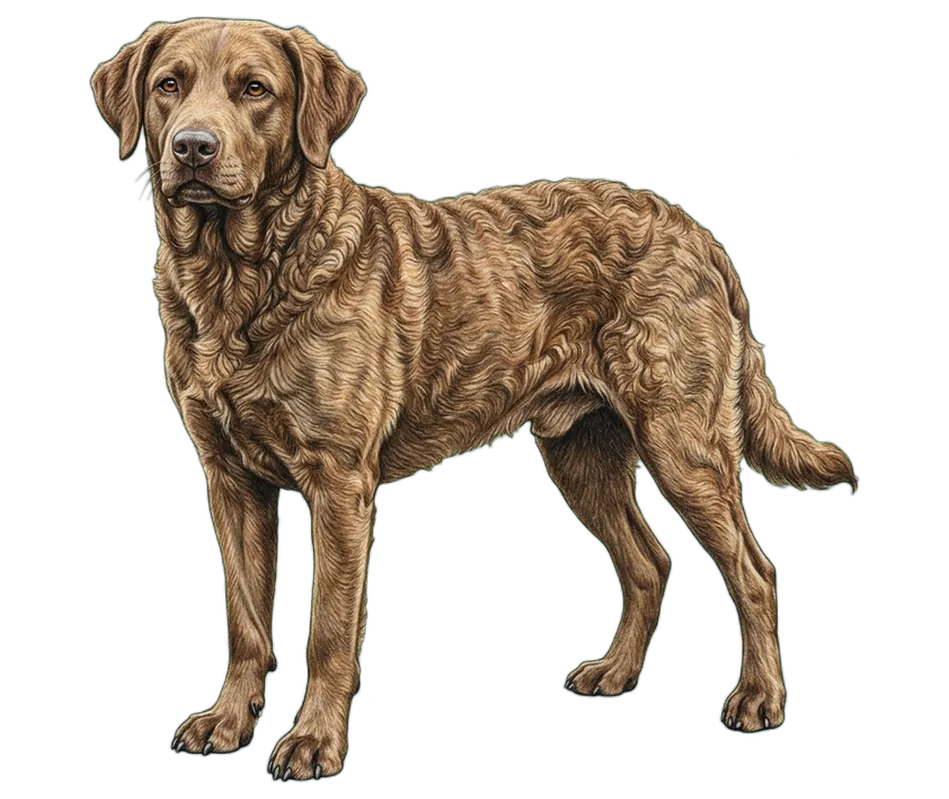
The Chesapeake Bay Retriever was developed along Maryland's rough, icy waters to retrieve waterfowl all day in conditions few other dogs could handle — a heritage that shaped a powerful, weatherproof swimmer with a distinctive wavy, oily double coat and a famously independent, problem-solving mind. Living well with one means embracing a devoted, watchful family companion that needs real physical and mental work, confident early socialization to soften natural wariness of strangers, and lifelong attention to joints, eyes, and a deep chest that benefits from sensible feeding habits. Given a job to do and a patient, consistent hand, the Chessie repays it with steady loyalty and a calm presence at home.
Daily-care planners
House-training
Moderate to house-trainHouse-training a Chesapeake Bay Retriever generally goes smoothly with a consistent routine, though their independent streak means they respond better to patient repetition than to correction. Frequent, calm trips outside after meals, naps, and play, paired with warm praise for every success, build the habit steadily; because this is a large-breed puppy, growth and coordination take a little time to catch up with intent, so consistency and supervision matter more than speed.
Walks
High exercise needsThe Chesapeake Bay Retriever's walking needs are shaped by its working drive rather than by distance alone: this is a breed built for sustained activity, and daily walks alone rarely satisfy a dog bred for hours of retrieving work, so pairing walks with swimming, fetch, or training sessions helps meet its physical and mental needs. The dense double coat is a strong asset in cold or wet weather but retains heat, so on hot, humid days favor the cooler parts of the day and watch for heavy panting as a cue to slow down and offer water. Keep exercise low-impact while a large-breed puppy's joints are still developing, and start leash and recall training early, since a calm, attentive walking companion is easier to build with a young, teachable puppy than to retrofit onto a strong, independent-minded adult.
Plan walksTemperament
The Chesapeake Bay Retriever was developed in nineteenth-century Maryland to retrieve waterfowl through the rough, frigid waters of the Chesapeake Bay, often for hours at a stretch — a heritage that produced a rugged, powerful swimmer with a dense, oily, water-shedding coat and a mind built to solve problems on its own rather than wait for constant direction. At home this independence shows up as a dog that is affectionate and deeply loyal to its family, but thinks for itself more than many other retriever breeds, so patient, consistent, reward-based guidance works far better than repetition or force.
That working heritage also makes the Chessie naturally watchful and somewhat reserved with unfamiliar people, so early, positive socialization across many settings, people, and situations is essential to raise a confident adult that is discerning rather than anxious or overprotective. They form close bonds with their families and can be genuinely protective of home and household, which is exactly why calm, well-managed introductions matter from puppyhood on. With other dogs they tend to be selective, doing best with thoughtful introductions and supervision rather than assumed instant friendliness.
Bred for full days of demanding fieldwork, Chesapeake Bay Retrievers carry real physical and mental energy that needs an outlet — long walks, swimming, retrieving games, and training work all help. Their coat handles cold water remarkably well but offers less relief in hot, humid weather, so exercise and access to shade and water matter as temperatures rise. They are typically good with the children they are raised alongside, though their size, strength, and watchful instincts mean interactions with young kids and unfamiliar children benefit from supervision and guidance for both sides.
What life with a Chesapeake Bay Retriever asks of you
Grooming & coat
- Grooming effort
- Moderate grooming
- Shedding
- Seasonal shedding
- Coat
- Short coat
Exercise & enrichment
- Daily exercise
- High exercise needs
- Mental stimulation
- High mental stimulation
- Trainability
- Independent thinker
Temperament & sociability
- With people
- Politely friendly
- With dogs
- Selective with other dogs
- With kids
- Good with considerate children (supervise)
- Barking / noise
- Moderately vocal
- Chase instinct
- High prey drive
- Time alone
- Moderate separation-anxiety risk
Home & climate fit
- Hot weather
- Moderate heat tolerance
- Cold weather
- High cold tolerance
- House-training
- Moderate to house-train