Cardigan Welsh Corgi
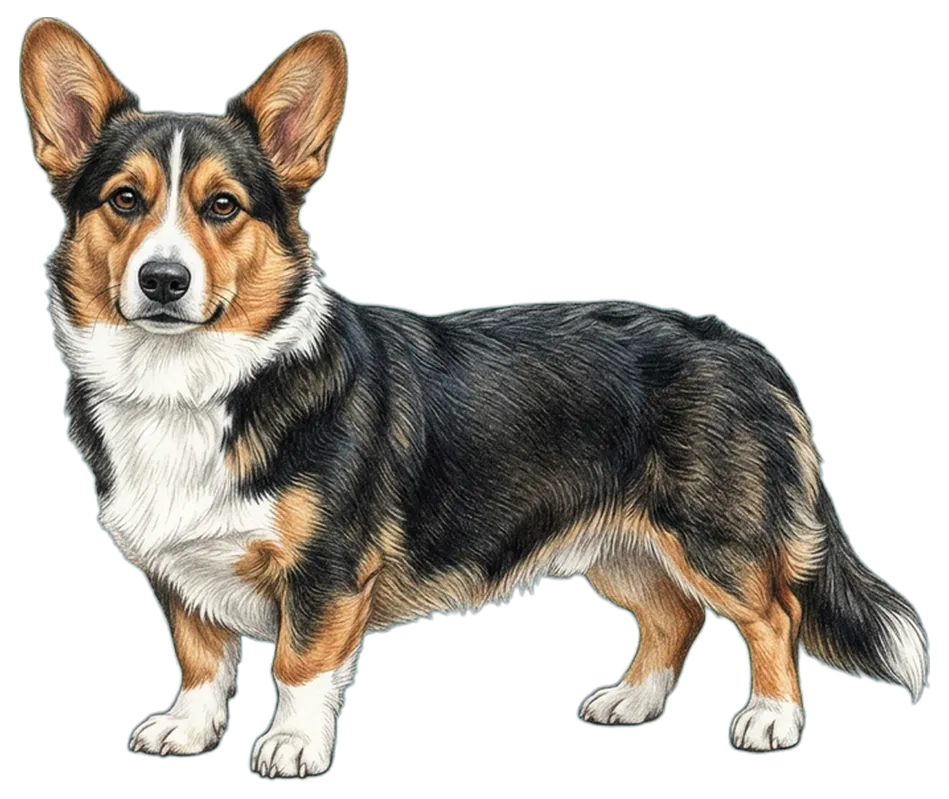
The Cardigan Welsh Corgi is an ancient, low-slung herding breed from Wales — long-tailed, sturdy-boned, and even-tempered, bred to move cattle by nipping at heels and ducking safely under kicks. Living well with one means honoring a working dog's mind in a small body: daily exercise and mental engagement, a lean weight and careful lifting to protect a long spine, and steady grooming for a heavy double coat. Patient, reward-based training channels their intelligence and herding instincts into a calm, devoted family companion rather than a bored one.
Daily-care planners
House-training
Moderate to house-trainHouse-training a Cardigan generally goes smoothly, since they are food-motivated, eager to please, and pick up a routine quickly — though their independent streak means they may occasionally test whether the routine still applies. A predictable schedule of trips outside after waking, eating, and play, paired with calm, consistent praise for success, builds the habit faster than any correction would. Because of their long back, use a ramp or carry a young puppy over thresholds and stairs rather than encouraging jumping during this early stage.
Walks
Moderate exercise needsThe Cardigan's walking needs are about engagement more than distance: a brisk daily walk plus some mental work — a scent game, a short training session, a controlled herding-style activity — satisfies this breed better than a long, aimless stroll alone. Keep an eye out for overheating in warm weather, since their low build and dense double coat trap heat close to the ground, and treat heavy panting or lagging as the cue to head for shade and water. Because of their long spine, favor level ground over repeated jumping on and off furniture or high steps, and keep leash walks free of sudden, hard lunges. A calm, well-structured walk routine channels their herding instincts productively and keeps both body and mind satisfied.
Plan walksTemperament
The Cardigan Welsh Corgi is one of Britain's oldest herding breeds, developed in Wales to drive cattle by nipping at their heels and dropping low to dodge a kick — work that favored a dog that was sturdy, clever, and level-headed rather than excitable. That heritage shows at home as a companion that is affectionate and loyal to its family, generally more even-keeled and less prone to shrill excitement than its Pembroke cousin, though every dog has its own personality.
Cardigans are intelligent and eager to please, which makes them responsive to reward-based training, though their herding instincts mean movement — running children, cyclists, other pets — can trigger an instinctive nip or chase. Early, consistent training that redirects this drive into games and structured exercise heads off the habit long before it becomes a pattern. They tend to be watchful of newcomers and will vocalize to announce them, so socialization from puppyhood helps keep that alertness from tipping into wariness.
With other dogs Cardigans are generally tolerant when properly introduced, and their moderate prey drive means small pets need thoughtful, supervised introductions rather than being assumed automatically safe. They do well with children in homes that understand and manage the herding instinct — supervision during active play helps everyone, two-legged and four-legged, enjoy it.
Their heavy double coat sheds year-round with a heavier seasonal blow, so regular brushing keeps shedding and matting in check and is a normal part of coat care rather than a problem to fix. That same coat handles cold weather comfortably, but Cardigans still overheat more easily than a taller dog would, given how close their body sits to the ground on a hot day, so warm-weather exercise belongs in the cooler parts of the day.
What life with a Cardigan Welsh Corgi asks of you
Grooming & coat
- Grooming effort
- Moderate grooming
- Shedding
- Heavy shedding
- Coat
- Medium coat
Exercise & enrichment
- Daily exercise
- Moderate exercise needs
- Mental stimulation
- High mental stimulation
- Trainability
- Eager to please
Temperament & sociability
- With people
- Politely friendly
- With dogs
- Tolerant of other dogs
- With kids
- Good with considerate children (supervise)
- Barking / noise
- Moderately vocal
- Chase instinct
- Moderate prey drive
- Time alone
- Moderate separation-anxiety risk
Home & climate fit
- Hot weather
- Moderate heat tolerance
- Cold weather
- High cold tolerance
- House-training
- Moderate to house-train