Bullmastiff
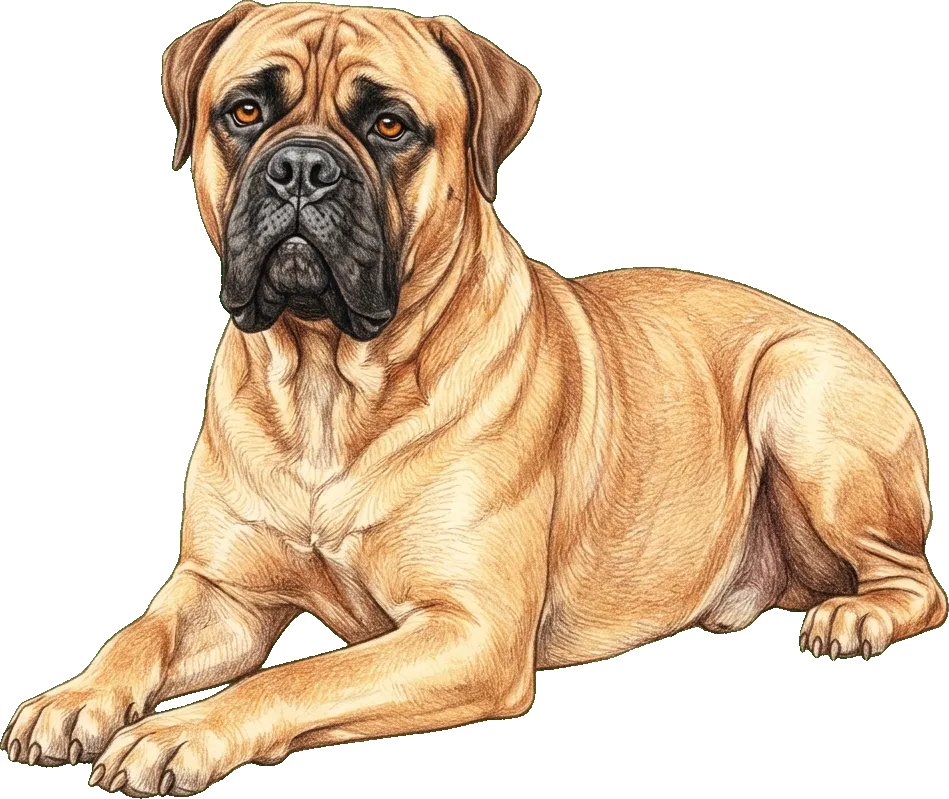
The Bullmastiff is a large, powerful guardian bred in England to quietly track and hold poachers — a job that shaped a dog that is confident and watchful outdoors yet remarkably calm, gentle, and devoted at home. Living well with one means embracing a people-oriented giant that needs to be indoors with its family, alongside a short easy-care coat, real sensitivity to heat, and the lifelong joint, heart, and weight care that a fast-growing large breed deserves. Early socialization and patient, kind guidance bring out the steady, affectionate companion this breed is meant to be.
Daily-care planners
House-training
Moderate to house-trainHouse-training a Bullmastiff is usually straightforward, since they are eager to please their family and take well to a steady routine. As with any large breed, a puppy's slower physical maturity rewards patience and a predictable schedule: frequent, calm trips outside after meals, naps, and play, paired with warm praise for every success, build the habit faster than any correction. Consistency and supervision in the early weeks are what carry it home.
Walks
Moderate exercise needsThe Bullmastiff's main walking constraint is heat, not distance. Moderate daily exercise keeps this giant fit and lean, but their heavy build and short muzzle make them prone to overheating, so favor the cool of early morning or evening and treat heavy panting or slowing as a cue to head home and offer water. Keep sessions low-impact while a large-breed puppy's joints are still developing, and use a comfortable harness and steady leash training early, because a calm, well-mannered walk is far easier to teach a 20-pound puppy than a 120-pound adult. A predictable daily routine keeps both body and mind content.
Plan walksTemperament
The Bullmastiff was developed in nineteenth-century England to work alongside gamekeepers, tracking and pinning poachers without harming them — a heritage that shaped a dog of quiet confidence rather than noise or aggression. At home this shows up as a calm, steady, and deeply affectionate companion that bonds closely with its family and often seems unaware of its own considerable size, happy to lean against a favorite person or settle at their feet.
That guardian background does mean a Bullmastiff is naturally watchful and reserved with strangers, so early, positive socialization and patient, reward-based training are essential to raise a confident, well-mannered adult. They are intelligent and independent thinkers, not reflexive followers, and respond best to kind consistency; harsh handling only undermines trust in such a powerful dog. With other animals they can be selective, so thoughtful introductions and supervision help everyone get along.
Bullmastiffs are moderate in their energy — daily walks and gentle play keep them fit without the demands of a high-drive working breed. Their short coat is low-maintenance but offers little defense against heat, and their build and shortened muzzle make hot, humid weather genuinely risky, so exercise belongs in the cool of the day. They are gentle and patient with the children they are raised with, though their sheer size means play with small children should always be supervised so no one is accidentally knocked over.
What life with a Bullmastiff asks of you
Grooming & coat
- Grooming effort
- Low grooming
- Shedding
- Seasonal shedding
- Coat
- Short coat
Exercise & enrichment
- Daily exercise
- Moderate exercise needs
- Mental stimulation
- Moderate mental stimulation
- Trainability
- Balanced
Temperament & sociability
- With people
- Reserved with strangers
- With dogs
- Selective with other dogs
- With kids
- Gentle with children (always supervise)
- Barking / noise
- Quiet
- Chase instinct
- Moderate prey drive
- Time alone
- Moderate separation-anxiety risk
Home & climate fit
- Hot weather
- Low heat tolerance
- Cold weather
- Moderate cold tolerance
- House-training
- Moderate to house-train